Having the right lawn care schedule is crucial for a lush, green lawn. Every step in your maintenance routine counts. Whether it’s dethatching, soil aeration, or fertilizing.
Having the right grass for your area is a good start (read our state-by-state guide here), but carrying out the right maintenance task at the right time of the year is crucial to having the perfect lawn.
Do you think it’s overwhelming? Well, it isn’t if you break it down into easy an easy-to-follow to follow maintenance schedule.
Read below and learn how to simplify your schedule and grow the perfect lawn.
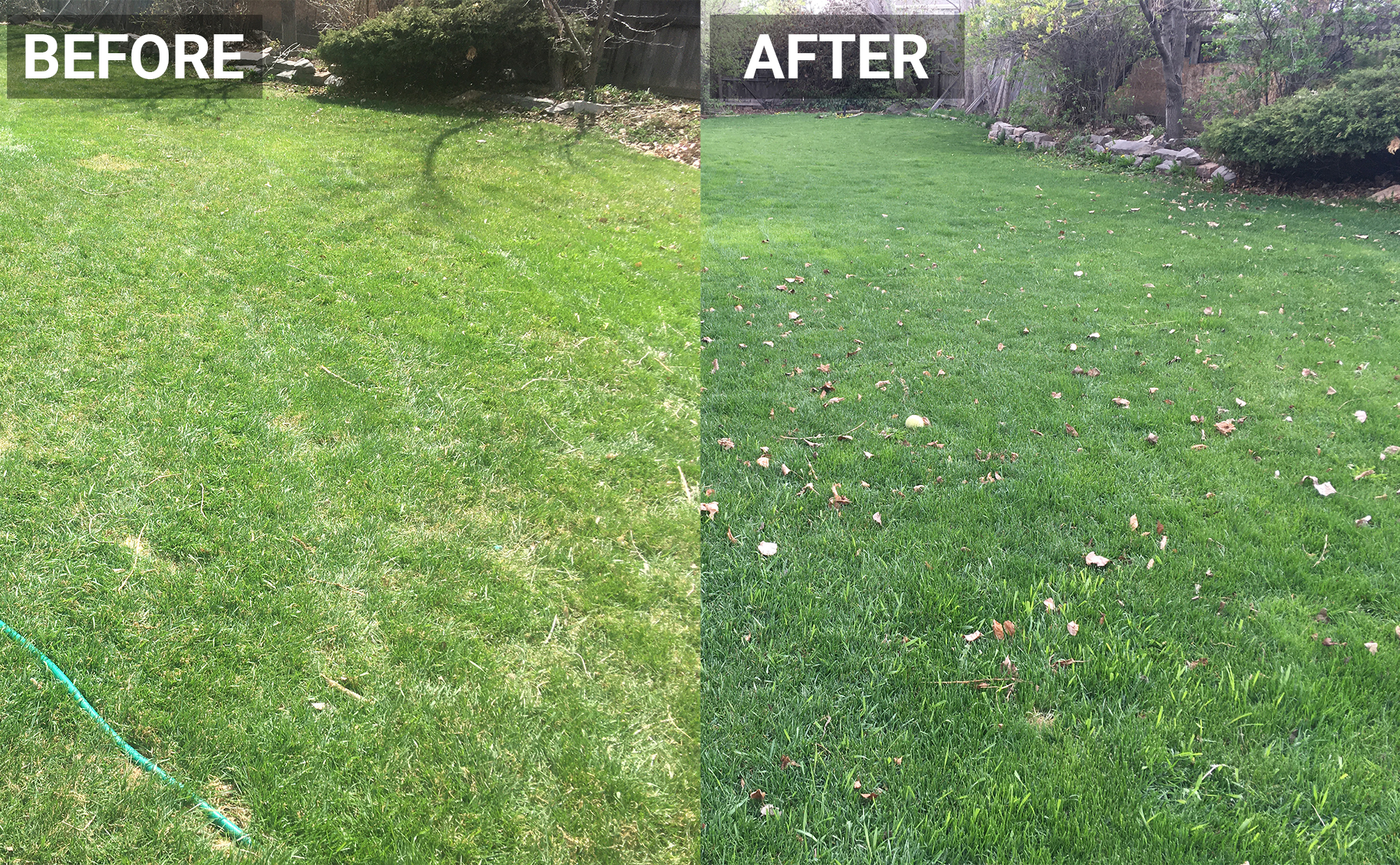
Lawn Care Schedule – Super Simple Version
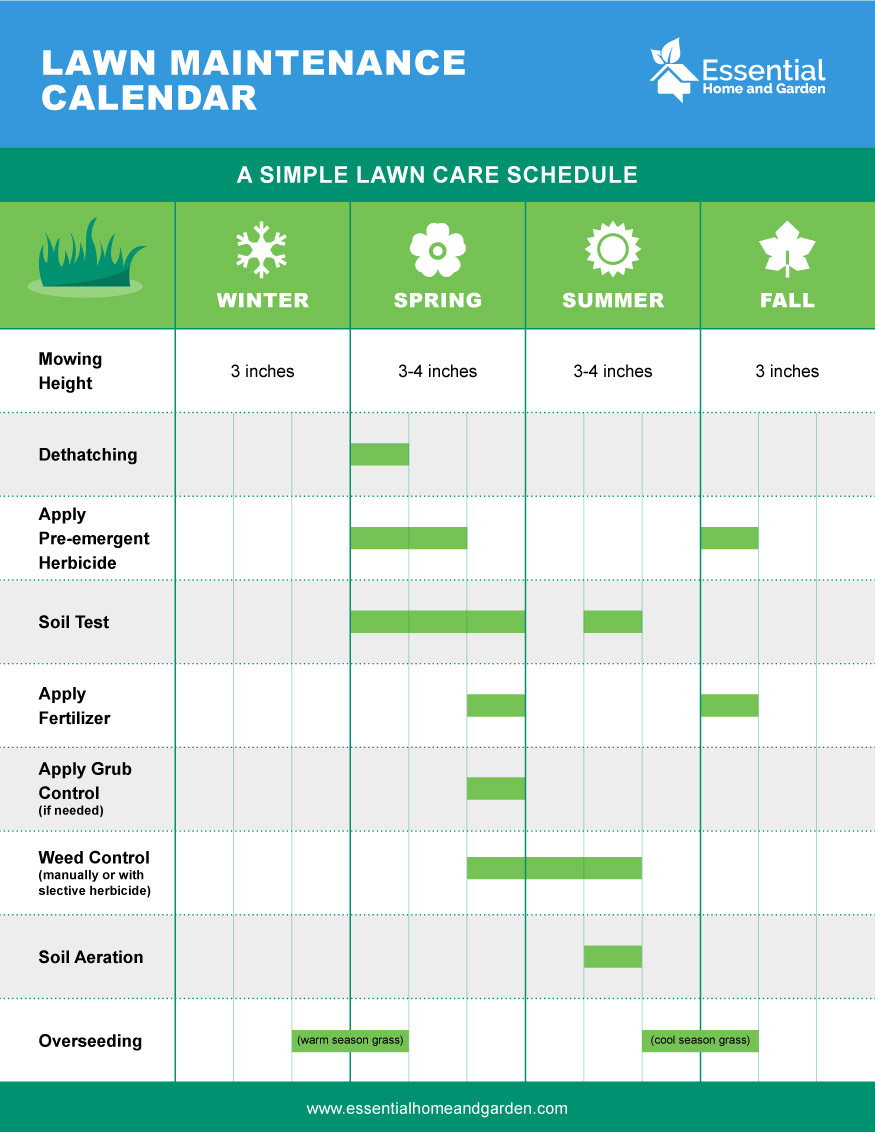
Short on time? Below you will find a quick summary of the overall lawn maintenance schedule.
Just below this table, you will also find an easy-to-follow printable version.
| Spring | Summer | Fall | Winter | |
|---|---|---|---|---|
| Mowing | 3-4 in. | ~4 in. | Lowered | If growing |
| Fertilize | Yes | Optional | Yes | No |
| Aeration | No | Late Summer | No | No |
| Dethatch | If needed | No | No | No |
| Herbicide | Pre-emergent | Weed control | Pre-emergent | No |
| Overseed | No | If needed | No | No |
Printable Lawn Maintenance Calendar
Here is the gear the schedule below calls for.

- Motor 13 amp
- Width 15 in
- Depth 5 positions

MySoil Soil Test Kit
- Measures 13 nutrient levels, incl. nitrogen and pH
- Type Mail-in lab test
- Results 6 to 8 days

Scotts Turf Builder EdgeGuard DLX Broadcast Spreader
- Holds Up to 15,000 sq ft of product
- Setup No assembly, pre-calibrated
- Spreads Seed and fertilizer

Scotts GrubEx1 Season Long Grub Killer
- Covers 5,000 sq ft
- Lasts Up to 4 months
- Apply Spring or early summer

- Tines Hollow, heat treated
- Type Manual plug aerator
- Tip Water dry soil first

- Bag 10 lb
- Covers 4,000 sq ft
- Grass Any type
We may earn a commission if you buy through this link. It costs you nothing extra.
1. Spring Lawn Care Schedule
Resume Regular Mowing
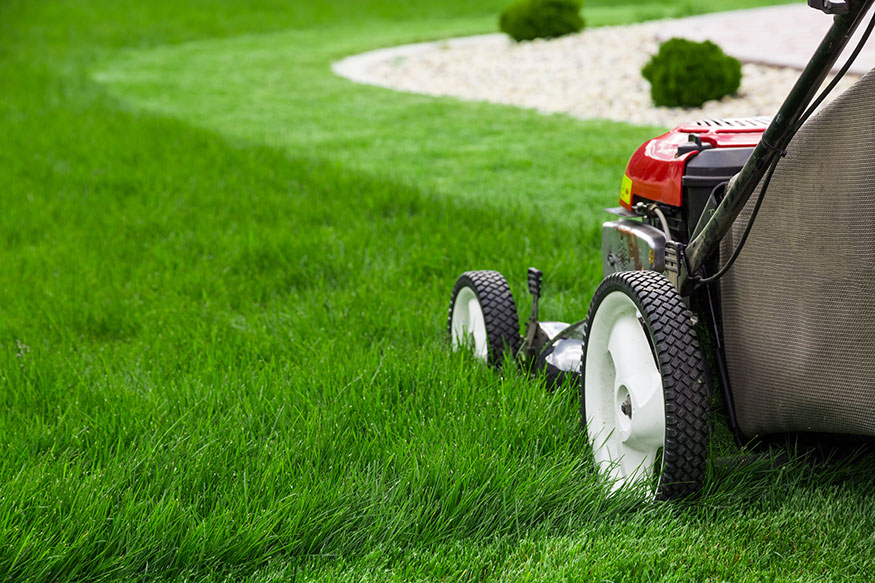
With winter behind us, it’s time to resume your regular mowing schedule. This also means ensuring your lawn mower is in prime condition, you can find a great guide on lawn mower maintenance here.
Check your mower blades. Sharp mower blades are a non-negotiable. They cleanly cut off the grass tops rather than tearing or shredding them — a problem that can leave your lawn vulnerable to disease.
Don’t stop there. Show your mower some love by tuning it up. This means procuring a new air filter and replacing the spark plug if it’s seen better days. And, of course, remember to fuel it up with fresh gas.
The ideal mowing height in spring is 3-4 inches to keep your lawn lush and healthy.
A hand sharpener is enough to touch up a mower blade. The Sharpal 103N is listed for mower blades as well as pruners, loppers and hedge shears.
Dethatch your Lawn
Dethatching removes the dead grass, roots, and debris layer, known as thatch, between the soil and grass blades.
This practice helps improve the health and appearance of your lawn by promoting better water, nutrients, and air circulation in the soil.
You will need
A dethatcher – These come in a few different types:
- Power dethatchers (gas or electric) – our recommended type
- Dethatching rakes
- Tow behind dethatchers
Sun Joe AJ805E 15-Inch Electric Dethatcher and Scarifier
An electric dethatcher with a 13 amp motor. It also comes with a scarifier blade reel.
- 15 inch working width
- 5-position depth control
- Removable collection bag for the thatch
We may earn a commission if you buy through this link. It costs you nothing extra.
The video below demonstrates dethatching with a gas model.
Apply a Spring Pre-emergent
Pre-emergents herbicides are chemicals you apply to your lawn that prevent weed seeds from growing roots and shoots. This spring application targets summer annuals.
Apply the pre-emergent herbicide in early spring, before weed seeds germinate, depending on your zone and common lawn weeds.
You will need
Either a granular or liquid pre-emergent herbicide. If you prefer the liquid type then we recommend Dimension 2E.
If you would rather a granular application then I would go for The Anderson’s 0.48 Barricade Herbicide.
Test Your Soil
Test your soil to determine nutrient needs and select the right fertilizer accordingly. Make sure you choose a good soil test kit that tests for N, P, K, and pH levels.
A soil test will also help you decide if your soil needs amendments.
You will need
A soil test kit – The soil savvy kit is a good one.
Alternatively, you can use a service such as Sunday Lawn Care. When you sign up with Sunday, you get a soil test kit that tells you everything you need and sends you what your lawn needs (such as organic fertilizers) to improve the soil.
Another mail-in option is the MySoil test kit. The lab measures 13 nutrient levels, including nitrogen and pH, and sends results in 6 to 8 days with recommendations on what to apply.
Apply Fertilizer and Grub Control
If you used the soil test kit listed above, you will likely know the fertilizer you need.
It is a great idea to talk to your local garden center and ask them to assist with a fertilizer choice.
Apply the fertilizer in early-mid spring if you have a cool-season grass and mid-late spring if you have a warm-season grass type.
If you have had grub problems in the past, then this is also the time to apply a grub preventer.
Read this article for more info on how to deal with grubs.
You will need
- A suitable Fertilizer
- We recommend Sunday Lawn Fertilizer– they create a formula for your specific lawn (use code EHG20 for $20 off) – Read Full Review.
- A grub preventer
For prevention, Scotts GrubEx1 goes on a dry lawn in spring or early summer. Its listing says one application kills and prevents grubs for up to 4 months, and the 14.35 pound bag covers 5,000 square feet.
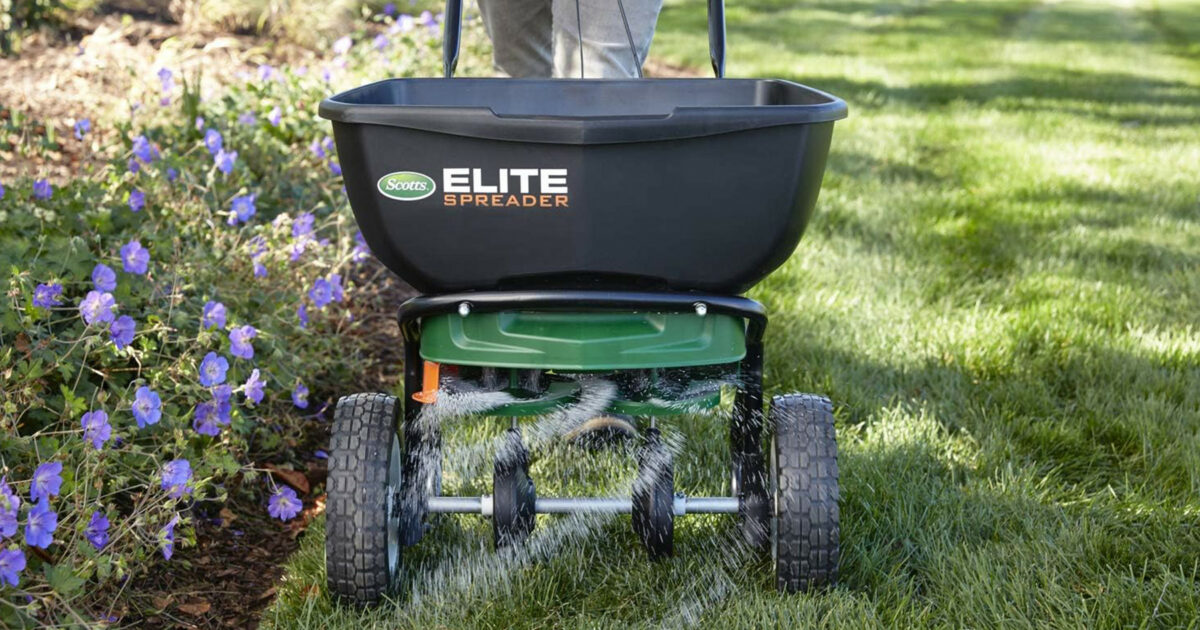
Scotts Turf Builder EdgeGuard DLX Broadcast Spreader
A walk-behind broadcast spreader puts granular fertilizer and grub control down evenly.
- Holds up to 15,000 square feet of Scotts lawn products
- Comes pre-calibrated, with no assembly
- EdgeGuard side shield keeps product off driveways and beds
We may earn a commission if you buy through this link. It costs you nothing extra.
2. Summer Lawn Care Schedule
Mow a bit higher
Set your lawn mower in the summer to about 4 inches, which may be its tallest setting. This helps your grass root system stay strong and fight off any weeds that survived the spring.
Keep in mind that different grasses have varying heat tolerance – so be sure to research your relevant grass types here.
Mow regularly enough that you don’t need to cut off more than the top 1/3 of the grass blade each time.
keep on top of weeds
From late May to early July, handle any weeds not stopped by the pre-emergent herbicide. You can pull these weeds by hand or use herbicides, also known as weed and feeds.
If you use herbicides, wait for about 3 weeks between uses.
You may need
- A suitable selective herbicide
Mid Summer Fertilizer Application (optional)
Experts often recommend using mid-summer fertilization for your lawn. But, keep in mind that this might make your grass grow rapidly, leading to frequent mowing.
To find the best fertilizer for your lawn, refer to your soil test results and seek advice from garden centers. You can also check our grass-specific fertilizer suggestions.
Remember, a well-maintained lawn is all about the details. Beautiful lawns require attention to detail. Use a high-quality brush cutter to trim the edges. This helps keep your lawn looking clean and tidy.
You will need
- A fertilizer
- We recommend Sunday Lawn Fertilizer or speaking to your local garden center.
Aerate in late summer
Towards the end of summer, you will want to aerate your lawn to relieve soil compaction.
There are many ways to do this, but the quickest and most cost-effective way to do this is to rent a core aerator machine.
You will need
- An Aerator
- There are many types of aeration tools available, but we recommend hiring one.
LawnVigor Manual Lawn Core Aerator
For a small lawn, a manual core aerator does the job without renting a machine. It pushes hollow tines into the ground and lifts out plugs of soil.
- Hollow, heat-treated steel tines
- Made for compacted soil
- Water dry soil before you use it
We may earn a commission if you buy through this link. It costs you nothing extra.
Overseed your lawn (optional)
Overseeding is the process of planting new seeds on existing grass to make your lawn full and dense. This is usually done after aeration.
If your lawn isn’t looking thin and patchy, overseeding can be the solution.
Remember that the seed type you choose is important here, so be sure to read this guide to help you choose the best grass types for overseeding.
Once you’ve sprinkled the new seeds, water your lawn 2-3 times daily for the first three weeks. After that, cut it back to irrigating only 1-2 times weekly.
Scotts Turf Builder Sun & Shade Mix is one option for lawns that get both sun and shade. The 5.6 pound bag combines seed, fertilizer and soil improver.
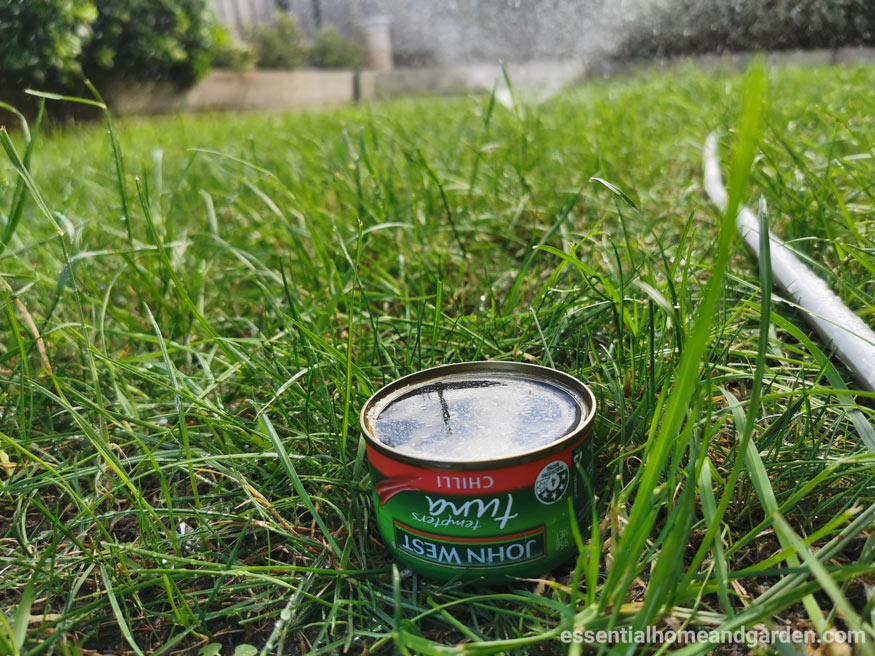
Use the tuna can rule to make sure you are watering correctly
A rain gauge does the same job as the tuna can. This AcuRite measures up to 5 inches and can be hung or staked into the ground.
[cboxarea id=”cbox-bI4AuthWxEfpuLp6″]
3. Fall Lawn Care Schedule
Mow a bit lower
As late fall approaches, it’s a good idea to lower your lawn mower setting to about 1.5-2 inches shorter than your summer setting. If you live in a cooler region, this can help avoid snow mold.
For those in warmer areas, shorter grass makes it more difficult for fallen leaves to mat down the grass.
Apply Fall Pre-emergent
If you overseeded, you must wait at least 50 days before doing this step.
Before the temperature drops consistently below 70 degrees, you should apply a pre-emergent herbicide to stop the winter annual weeds coming through.
You will need
- Either A Pre-emergent liquid herbicide
- We recommend Dimension 2EW
- OR A granular pre-emergent herbicide
Apply Fall Fertilizer
Now is the time to get your lawn ready to survive the winter months. Applying a ‘winterizer’ fertilizer is an important part of your annual lawn care plan.
Apply your lawn fertilizer in late September or early October.
You can learn more about winterizer fertilizers in our article here.
You will need
- A Winterizer fertilizer
- Once again, speak to your garden center about which is right for your lawn. Scotts Turf Builder WinterGuard Fall Lawn Food is a good all-round choice.
Scotts Turf Builder WinterGuard Fall Lawn Food, 10 lb
A fall lawn food for any grass type. The listing says it builds strong, deep roots for a better lawn next spring.
- One 10 lb bag covers 4,000 square feet
- Apply in fall, to a wet or dry lawn
- For use on any grass type
We may earn a commission if you buy through this link. It costs you nothing extra.
4. Winter Lawn Care Schedule
Depending on your location, there may not be a lot to do in winter.
If your yard is snow covered, then it’s a matter of waiting till the snow melts, and if you prepared your lawn correctly, it should have survived and be ready to thrive.
If you live in a southern area where snow or extreme cold doesn’t slow down the grown much, then you will still need to mow and keep on top of any weeds.
Mowing
Mowing your lawn during winter is fine, provided the grass continues to grow and could do with a bit of sprucing up. However, remember these crucial tips to prevent any harm to your lawn:
- Stay Safe, Avoid Wet Grass: Do not mow when the grass is wet. This not only creates potential safety issues but might also cause damage to the grass.
- Watch Out for Frost: Avoid cutting grass right before frost sets in. The sudden cold can injure the freshly cut grass.
- Take Care with Frosty Grass: Stay off the grass when it’s frosty. Walking on frozen, brittle blades of grass can cause damage.
- Adjust Mower Height: Set your mower deck at a higher level than what you utilize in other seasons. This way, you avoid scalping the turf during the cold times.
- Clean up Clippings: Never forget to gather up grass clippings after mowing. If left behind, they can block sunlight and encourage the growth of diseases.
By observing these guidelines, you can maintain a healthy lawn even through the chill of winter.
Other Winter Tips
Avoid heavy lawn traffic: Frequent foot traffic on a dormant lawn can harm it by compacting the soil and damaging the grass. Try to keep off the lawn, refrain from parking vehicles on it, and steer clear of placing heavy objects on it.
Ice melting tips: Should your lawn become icy, make sure you de-ice it cautiously. Some de-icing products are crafted specifically to be lawn-safe. Certain common de-icing items, like rock salt, could potentially harm your lawn.
Safe Paw is one salt-free and chloride-free ice melt. Its listing says it will not harm grass and garden beds the way rock salt does, and that it melts down to -2°F.

I have some young mustard greens and turnips, can I use Sunday fertilizer on these ?
Sunday is a lawn fertilizer, not a garden fertilizer.