Hey there, cozy enthusiasts!
Before you spend a cent on heating this winter, I want you to walk around your house and find the heat you are already losing. The cheapest warmth is the warmth you stop throwing out the door.
Five of the twelve ideas below cost nothing at all.
The rest are small buys that pay you back in comfort. And if you are still deciding what to heat with in the first place, I put together a guide to the cheapest heating options that pairs nicely with this one.
Heating can be almost half of an average family’s winter energy bill, according to the Department of Energy’s home energy checklist.
That is exactly why I sort this list cheapest first and flag what is renter-safe. Here is how to read it: every item ends with a line showing what it costs and whether you can do it in a rental without losing your deposit.
The Free Fixes
The next five cost zero dollars and zero cents.
1. Find the big leaks first, because your windows are probably innocent
Photo: u/ravens0rbust on Reddit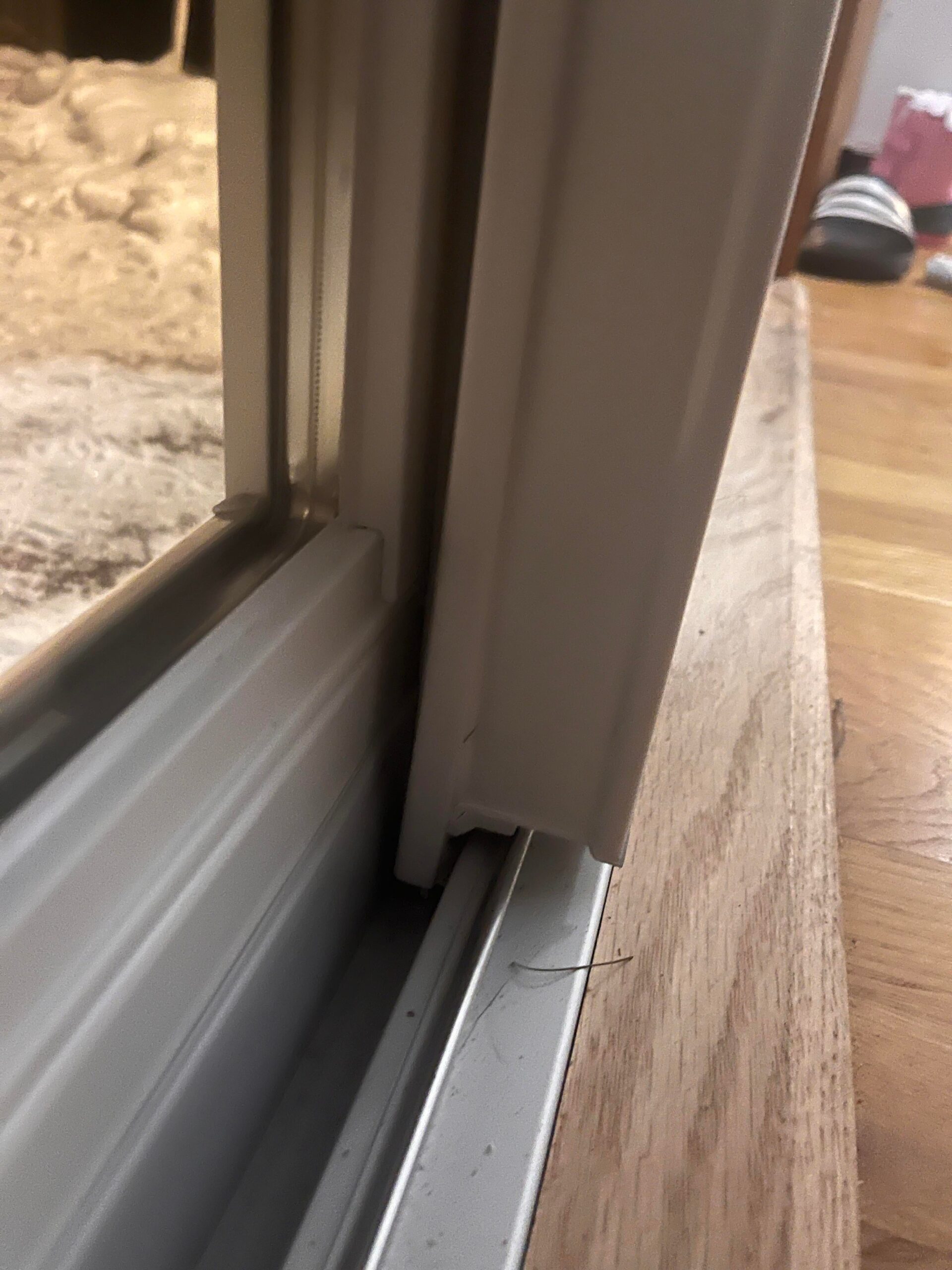
I used to blame the windows. The DOE’s home energy checklist says the worst culprits are usually not windows and doors at all, but the gaps where pipes go through walls, spaces around chimneys and recessed lights, and unfinished areas behind cupboards and closets.
On a windy day, run your hand around those spots and the edges of exterior doors, like the sliding door above, where you can see daylight under the frame.
If a leak whistles or feels drafty, you have found your money hole. Seal the biggest ones first, and know that all the small cracks in a house can add up to as much as an open window or door.
Cost: Free | Renter-safe: Yes
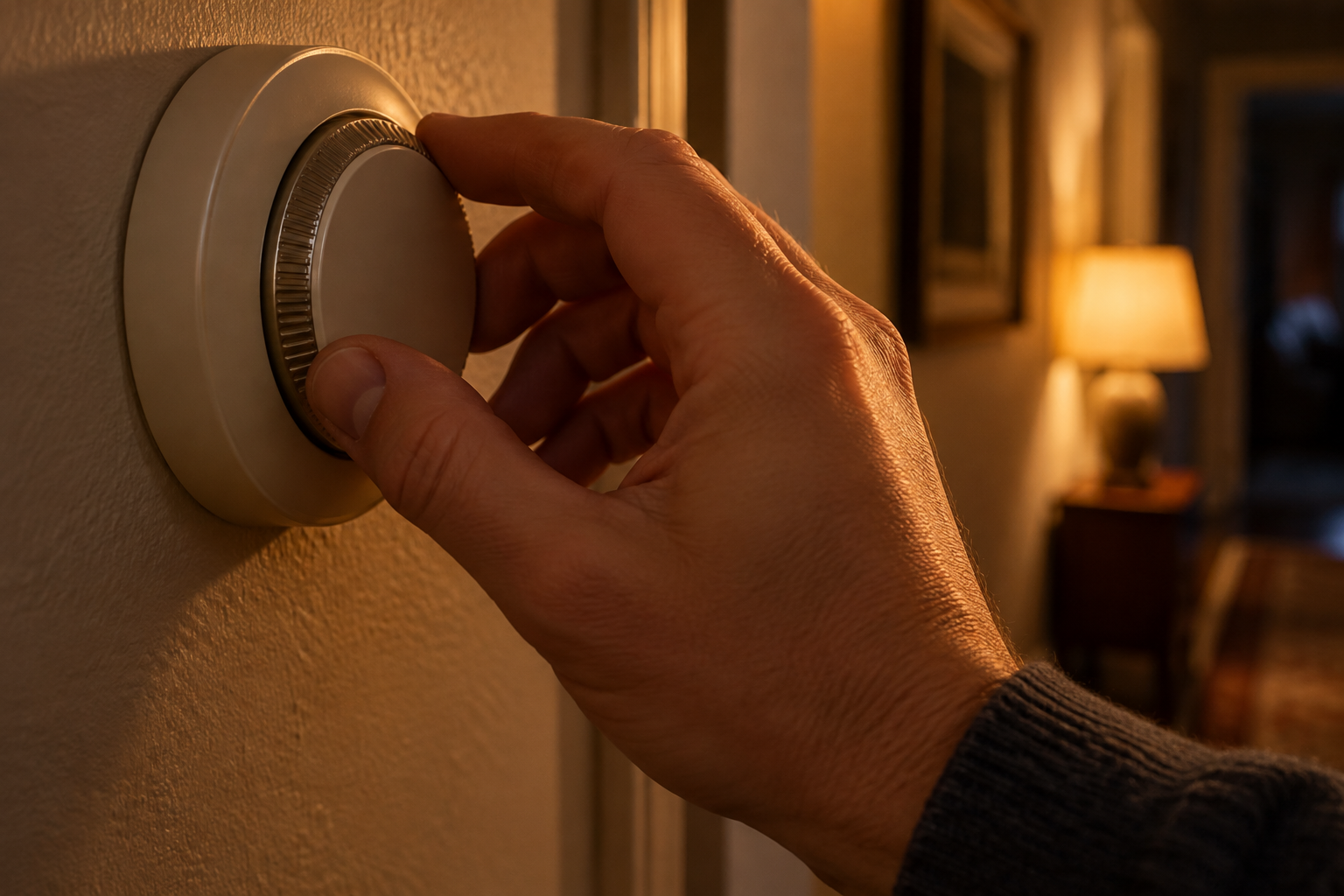
2. Turn the thermostat back 7 to 10 degrees at night (your blanket won’t mind)
The Department of Energy recommends setting it back 7 to 10 degrees for 8 hours a day while you are asleep or away, which can shave as much as 10% a year off your heating bills. A house loses heat more slowly when the indoor temperature is lower, so the setback actually works in your favour.
A programmable thermostat makes it automatic, or you can just turn it down by hand when you leave. Your heating bill will notice before your toes do.
Cost: Free | Renter-safe: Yes
3. Let the sun in by day, shut the curtains at night
South-facing windows are free heaters. The DOE says open the curtains during the day to let sunlight and warmth in, then close everything at night to trap the heat.
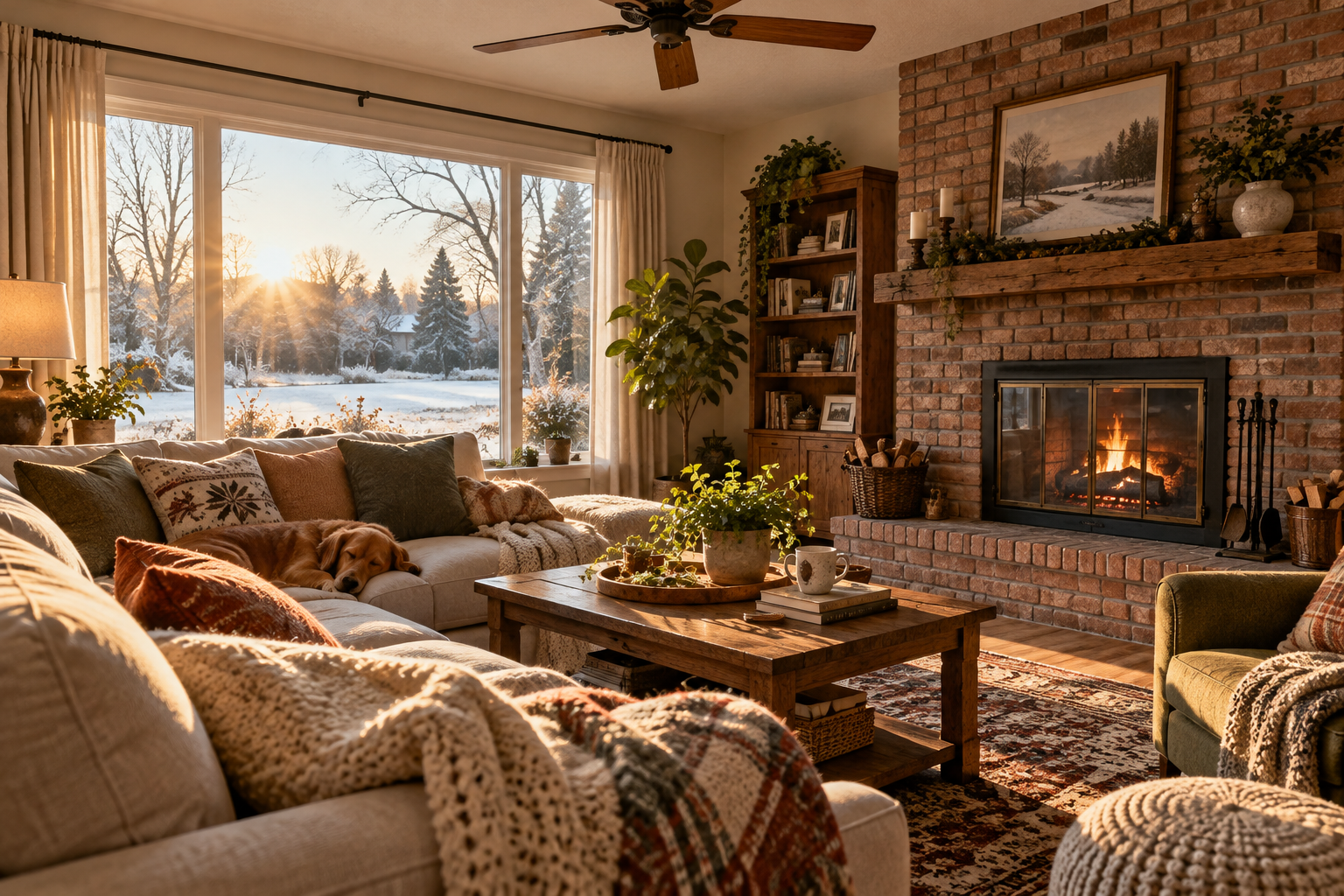
At my place this is a two-minute habit that runs on sunlight and stubbornness. Free warmth from the sun beats paying your utility company for the same thing.
Cost: Free | Renter-safe: Yes
4. Flip the ceiling fan to clockwise on low
This one surprised me. Per the DOE, reversing the motor so the fan spins clockwise at low speed creates an updraft that pushes warm air down from the ceiling into the room.
It won’t change the temperature, but it helps you feel warmer, which is the entire point. Turn it off when nobody is in the room, because a fan cooling an empty chair is just performance art.
Cost: Free | Renter-safe: Yes
5. Close the fireplace damper when the fire is out
An open damper with no fire in the fireplace is a chimney-shaped hole in your heating budget. Warm air rises straight up and out, all night, every night.
When the embers are cold, close the damper.
When you light the next fire, open it again. That is the whole trick.
Cost: Free | Renter-safe: Yes
Cheap Buys
Now for the small spends. None of these should bankrupt anyone before the holidays.
6. Lay a draft stopper along the bottom of the door
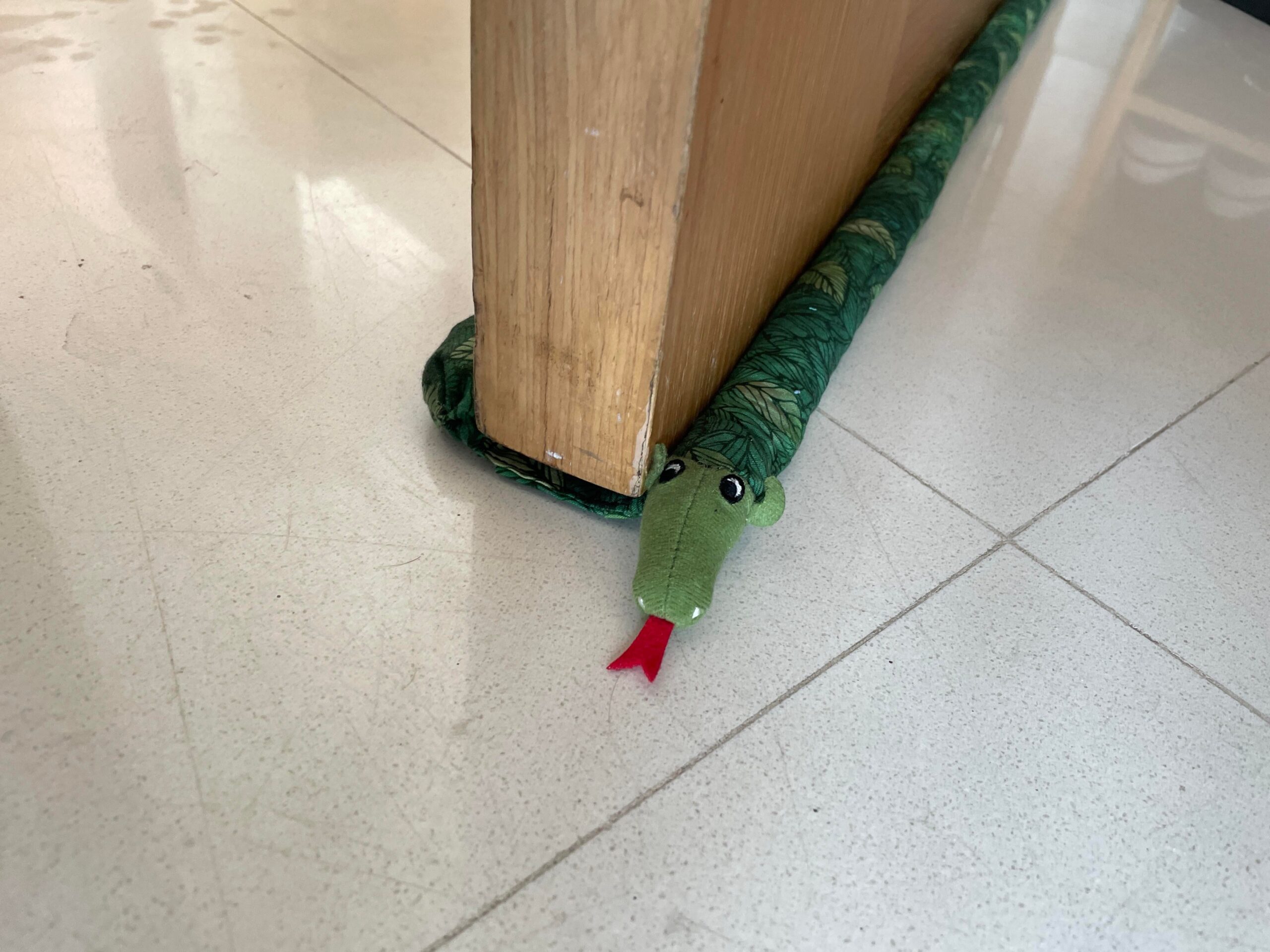
A fabric tube across the bottom of a door blocks the stream of cold air sneaking under it. The knitted snake at the top of this page, made by Reddit user u/SerendipityJays, is exactly the idea, and it’s a lot cuter than a rolled-up towel.
If you’d rather buy one, a slide-under stopper moves with the door so you never have to kick it back into place. The one below is for interior doors: for an exterior door with a threshold, fit a door sweep instead (item 7).
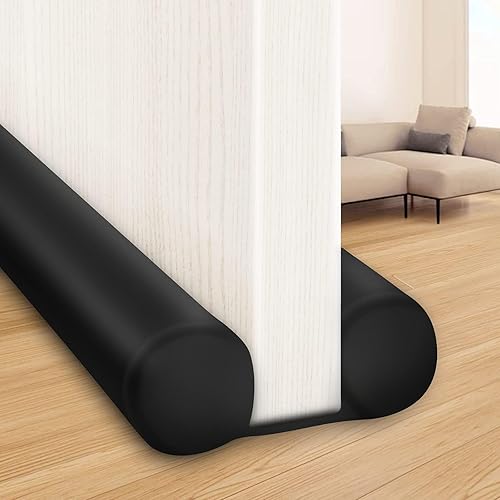
MAXTID Large Door Draft Stopper, 36 Inch
A slide-under foam stopper that moves with the door, so you never kick it back into place. The listing says it is for interior doors, not exterior doors with a threshold.
- 2 inch foam, covers gaps of 0.5 to 1.7 inches
- 36 inches, cuts down to fit 30 to 34 inch doors
- No screws or adhesive: it slides under the door
We may earn a commission if you buy through this link. It costs you nothing extra.
Cost: Cheap | Renter-safe: Yes
7. Weatherstrip the moving parts, caulk the still ones
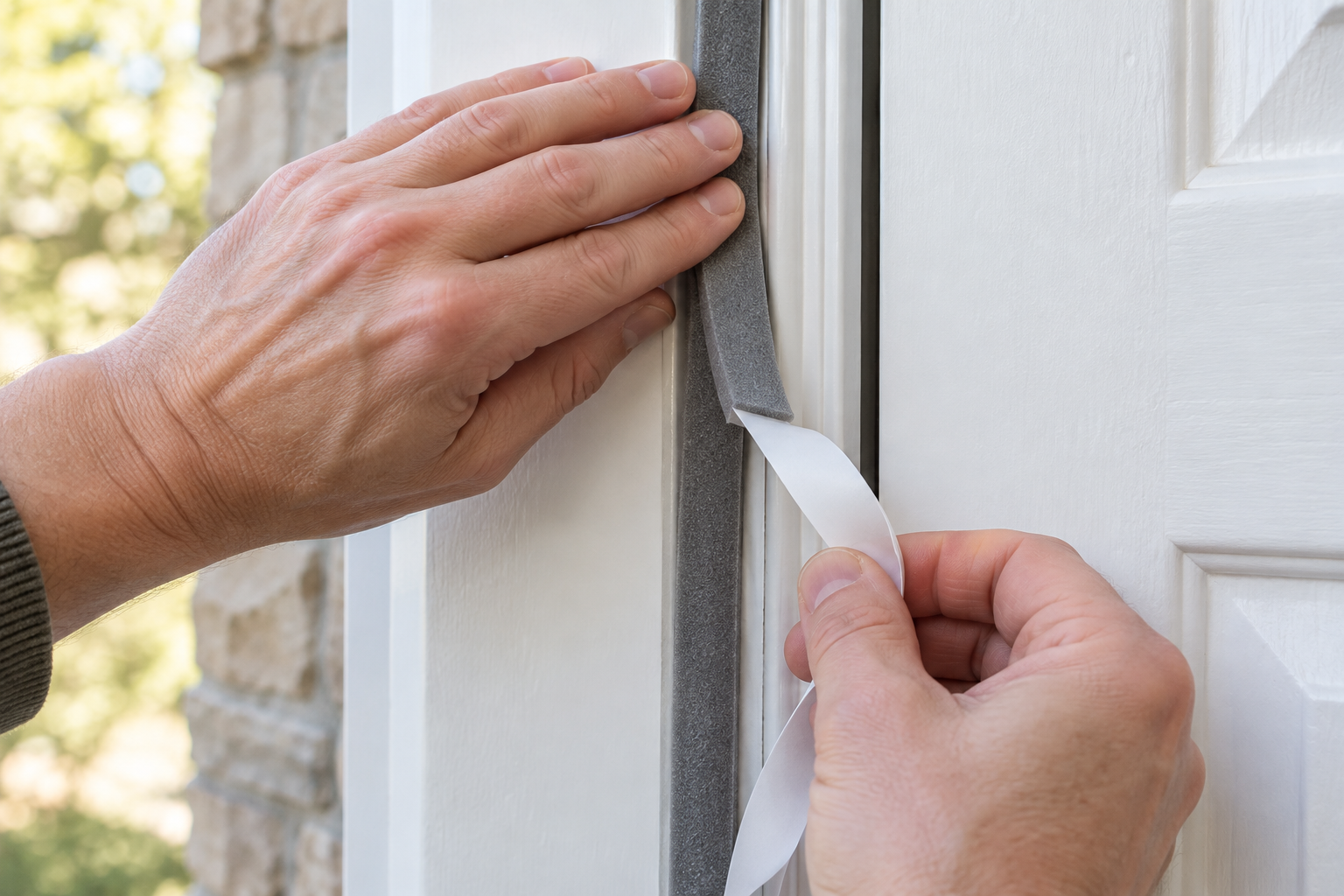
The DOE draws a clean line here: caulk small fixed gaps, weatherstrip the parts that move, like doors and window sashes. Door frames get self-adhesive foam weatherstrip tape, and the gap under an exterior door gets a slide-on door sweep.
In general, weatherstripping, caulking and insulation are the low-cost ways to cut air leaks, per the DOE. Renters, ask the landlord before you break out the caulk gun, because foam tape peels off but caulk is a commitment.
Cost: Cheap | Renter-safe: Ask first for caulk; foam tape peels off
8. Shrink film on the windows you never open
Plastic window coverings reduce cold air transfer through the glass, per the DOE, and the home energy checklist lists rope caulk or film for leaky windows as a weekly-check item. A shrink film kit goes on with double-sided tape, then a hair dryer pulls the plastic tight.
The photo below is a renter’s window right after the landlord put plastic up. It looks cloudy and saggy because it hasn’t been shrunk yet: the hair dryer step is what pulls it tight and clear.
I won’t quote you a savings figure, because I don’t have a primary source for one.
Photo: u/ResidentCaterpillar on Reddit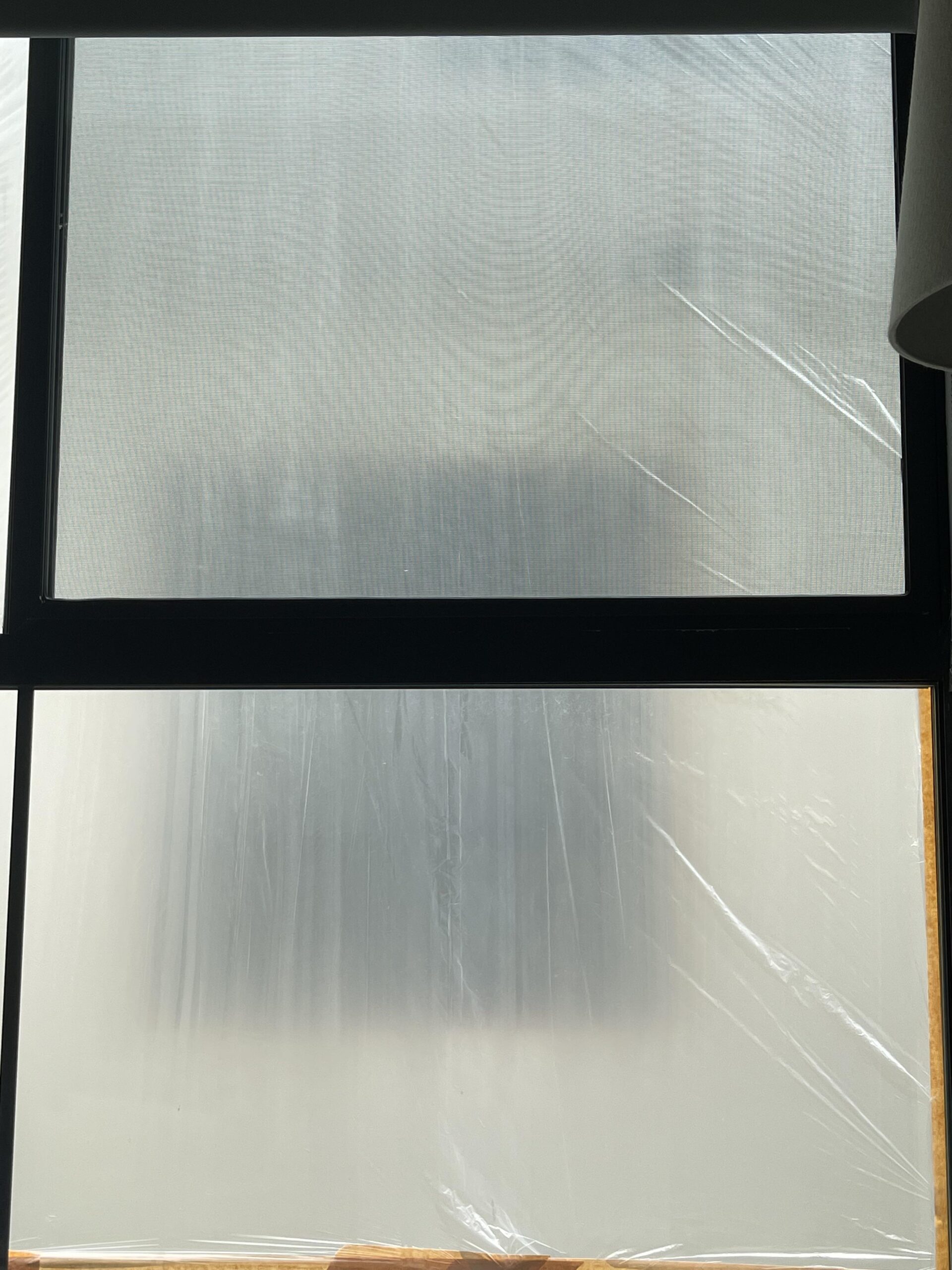

Duck Brand Window Insulation Kit, Up to 10 Windows
Shrink film for the windows you don't open all winter. You need scissors and a hair dryer, and the listing says it removes easily when the season is over.
- Two 62 x 210 inch rolls of film plus two rolls of tape
- Covers up to 10 standard 3 x 5 foot windows
- Clear once it is shrunk tight
We may earn a commission if you buy through this link. It costs you nothing extra.
Cost: Cheap | Renter-safe: Yes
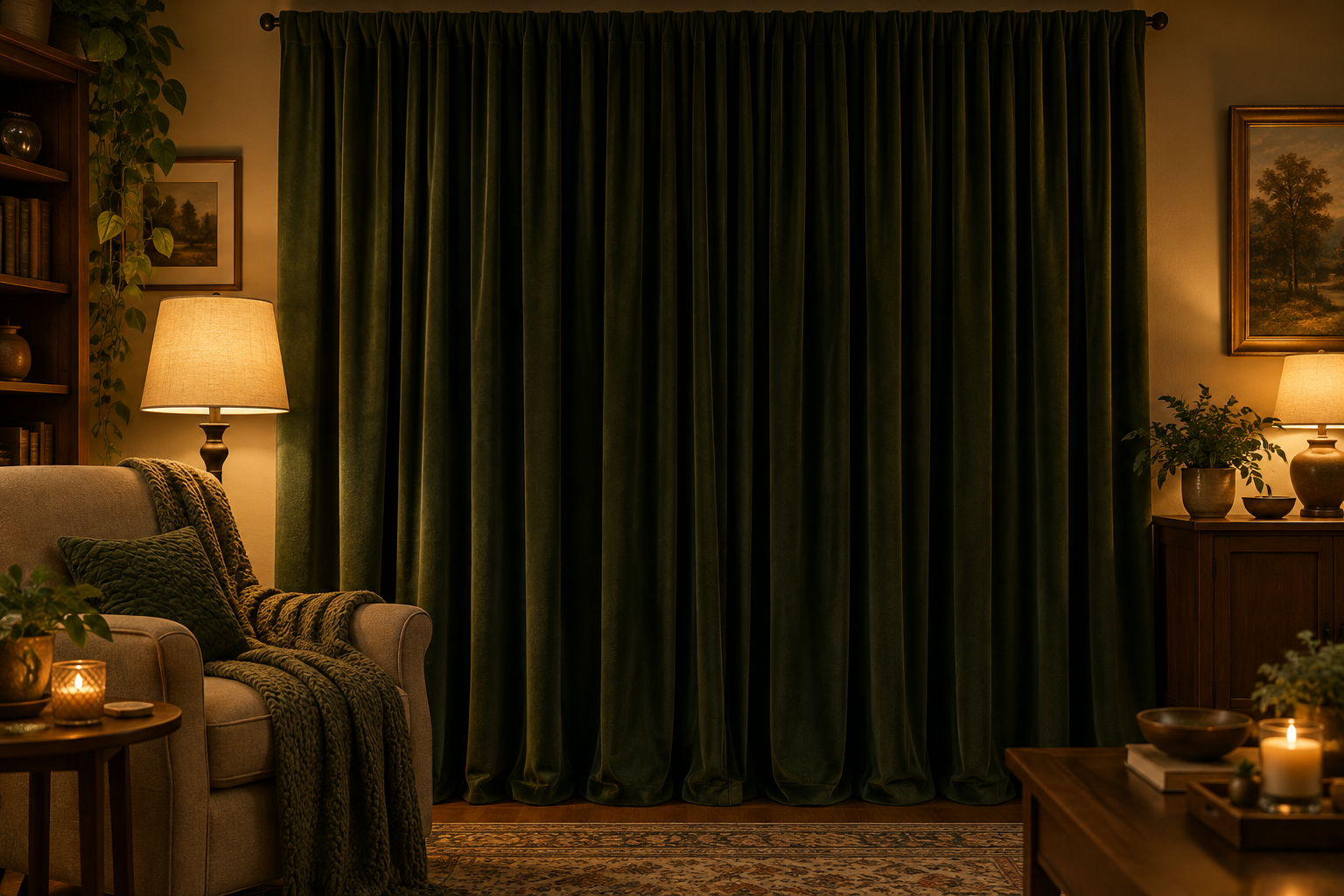
9. Thermal curtains, closed at night, hung close to the glass
According to the DOE, about 30% of a home’s heating energy is lost through windows, so dressing them properly matters. Hang thermal curtains close to the glass and floor length, then close them at night.
The serious step up here is cellular shades. The DOE’s fact sheet says window attachments can save 15% of a household’s annual heating and cooling energy compared with vinyl blinds, and honeycomb shades got the highest savings of all shading types in Berkeley Lab simulations by trapping air in their cells.
One budget confession: the photo below shows moving blankets hung over a window as a stop-gap. That is a fair move on a window you never open, but remember they block the daylight that item 3 wants you to harvest.
Photo: u/jlowry71 on Reddit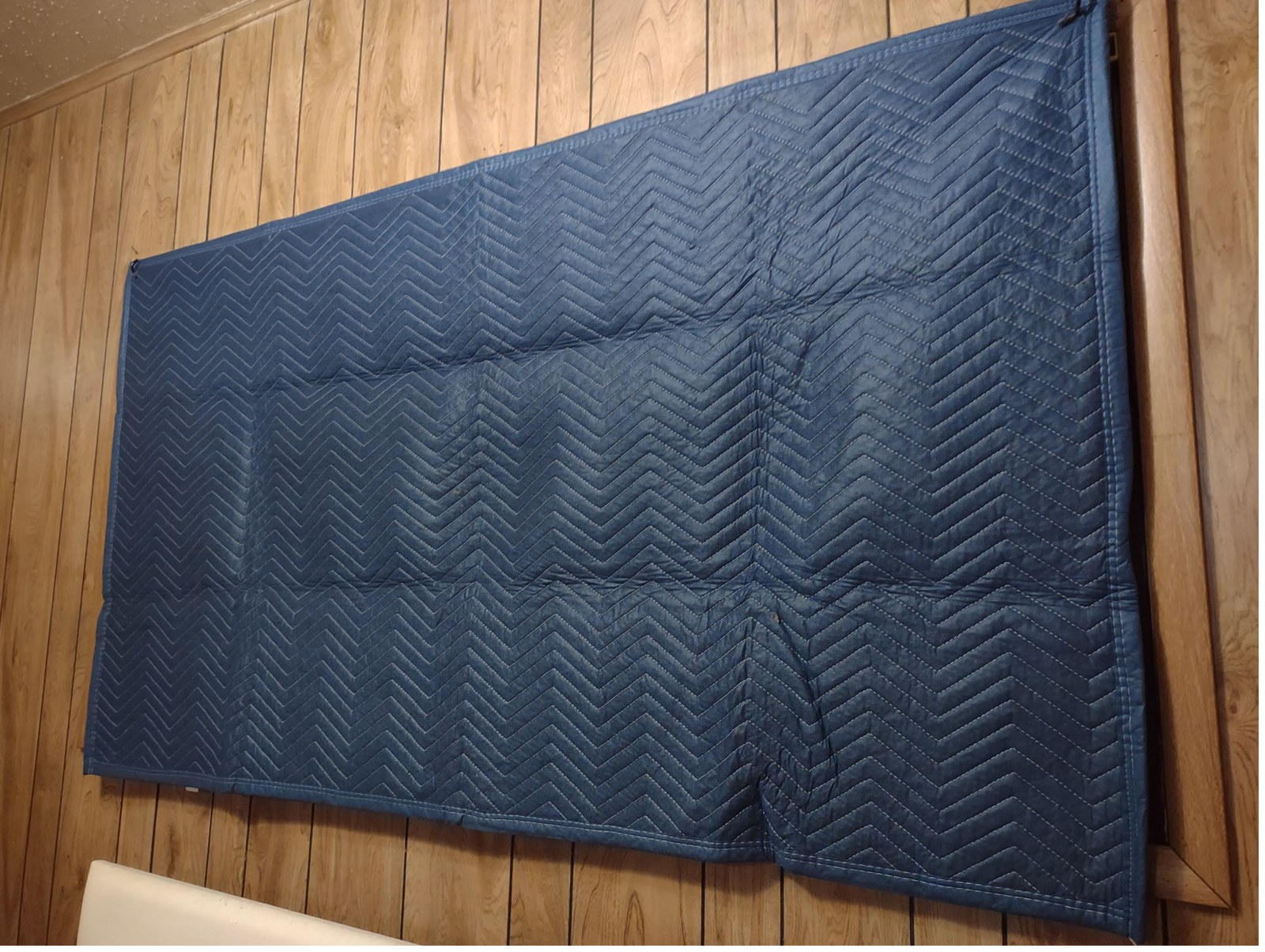

NICETOWN Lined Blackout Curtains, 2 Panels
Heavy, lined panels to close at night. The listing describes triple weave fabric that insulates against winter chill; it gives no savings figure, and neither do I.
- 2 panels, each 52 x 84 inches
- Sewn-in black liner
- Grommet top fits a standard rod
We may earn a commission if you buy through this link. It costs you nothing extra.
Cost: Cheap | Renter-safe: Yes with a tension rod
10. Rugs on bare floors
Bare floors in winter have the personal warmth of a handshake from a robot. A rug on a cold floor changes how the room feels underfoot immediately.
I’m not going to invent a percentage for this one, because I don’t have a source that gives one. Treat it as comfort, and comfort counts.
Cost: Cheap | Renter-safe: Yes
11. Change the furnace filter (the most boring fix on this list)
The DOE says dirty filters cut airflow, make the system work harder and drive up costs. Check the filter every month in winter, change it if it is dirty, and replace it at least every three months.
If your furnace keeps switching on and off instead of running steady, a clogged filter is one suspect, and I have a whole piece on short cycling furnaces. While you’re at it, my guide to return air vent filters covers the other filter half the house forgets.
Cost: Cheap | Renter-safe: Yes
When You Can
One bigger-ticket idea, with the honest limits attached.
12. Heat the room you are in, not the whole house
The DOE heating guide calls room heaters an inexpensive way to provide zone heating when a central forced-air system heats the house, and zoning works best where rooms can be closed off with doors. So yes, a space heater in the room you are actually sitting in is legitimate.
But let me be honest with you, because a heater is not a cheap way to heat the whole house.
The same guide does not recommend portable space heaters for whole-home heating, citing their inefficiency and burn and tripping hazards, and it warns that unvented combustion heaters release dangerous gases and should not be used. See the models I rate in my guide to quiet space heaters, work out what one costs to run with my space heater cost calculator, and read my ceramic vs fan heater comparison before you buy.
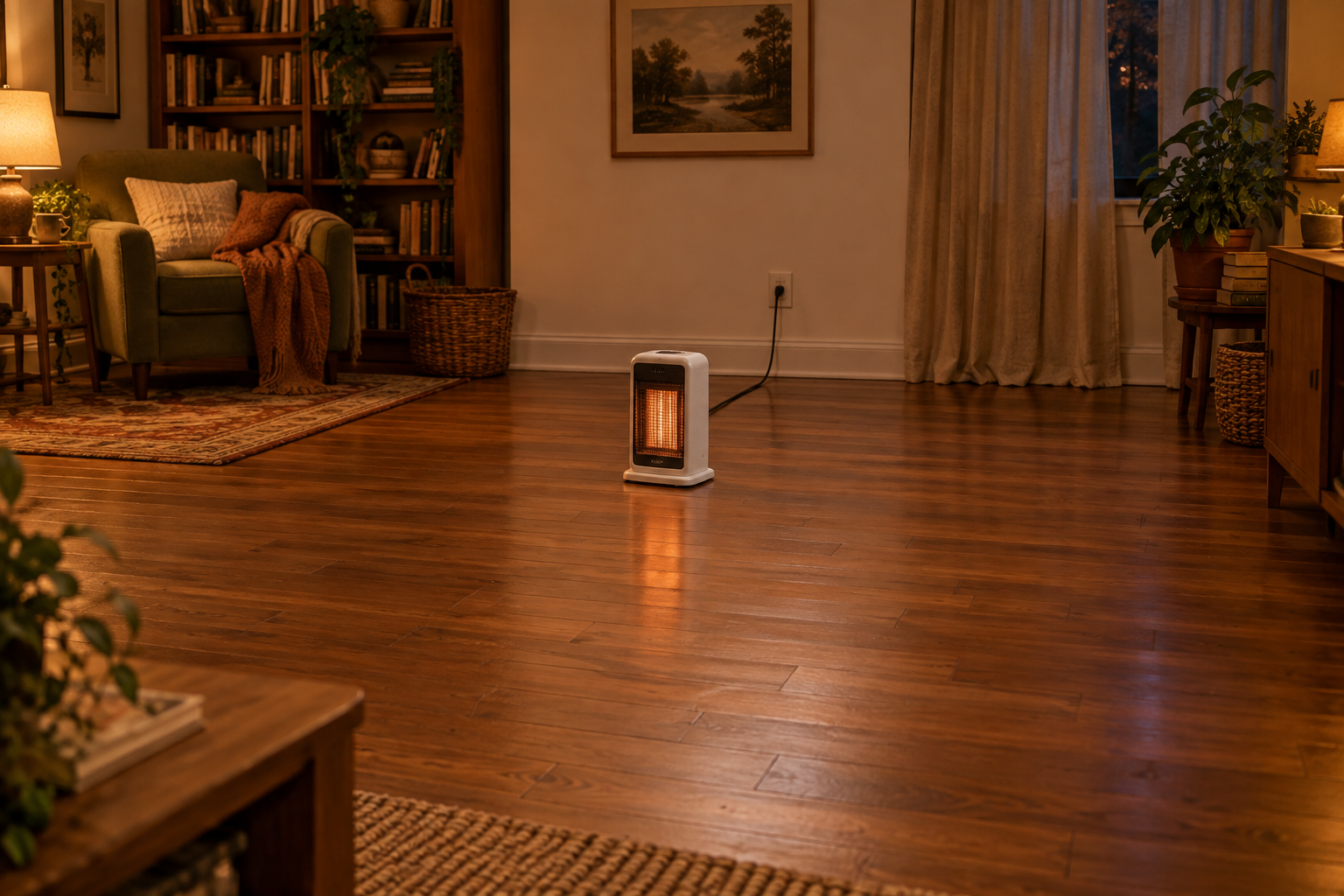
The safety rules are not optional, per NFPA and CPSC: keep the heater at least 3 feet from anything that can burn, including people; plug it directly into the wall outlet and never use an extension cord or power strip; choose one with a thermostat, overheat protection and tip-over shut-off; and turn it off and unplug it when you leave the room or go to bed.
If you are wondering how to warm up the coldest room in the house instead, my guide to heating a basement in winter goes deep on that.
Cost: A heater | Renter-safe: Yes
Skip These (They Backfire)
Not every “classic” tip survives contact with the evidence. These three are popular and still wrong, or at least riskier than they look.
Closing vents in empty rooms. I know, it feels obvious. But a Berkeley Lab study of a typical California house with its ducts outside the living space found that closing registers raised energy use, because extra duct leakage cancelled out the smaller heated area, and closing more than 60% of registers is not recommended at all since furnaces can trip the high-limit switch. In that study, at least, the shortcut cost money.
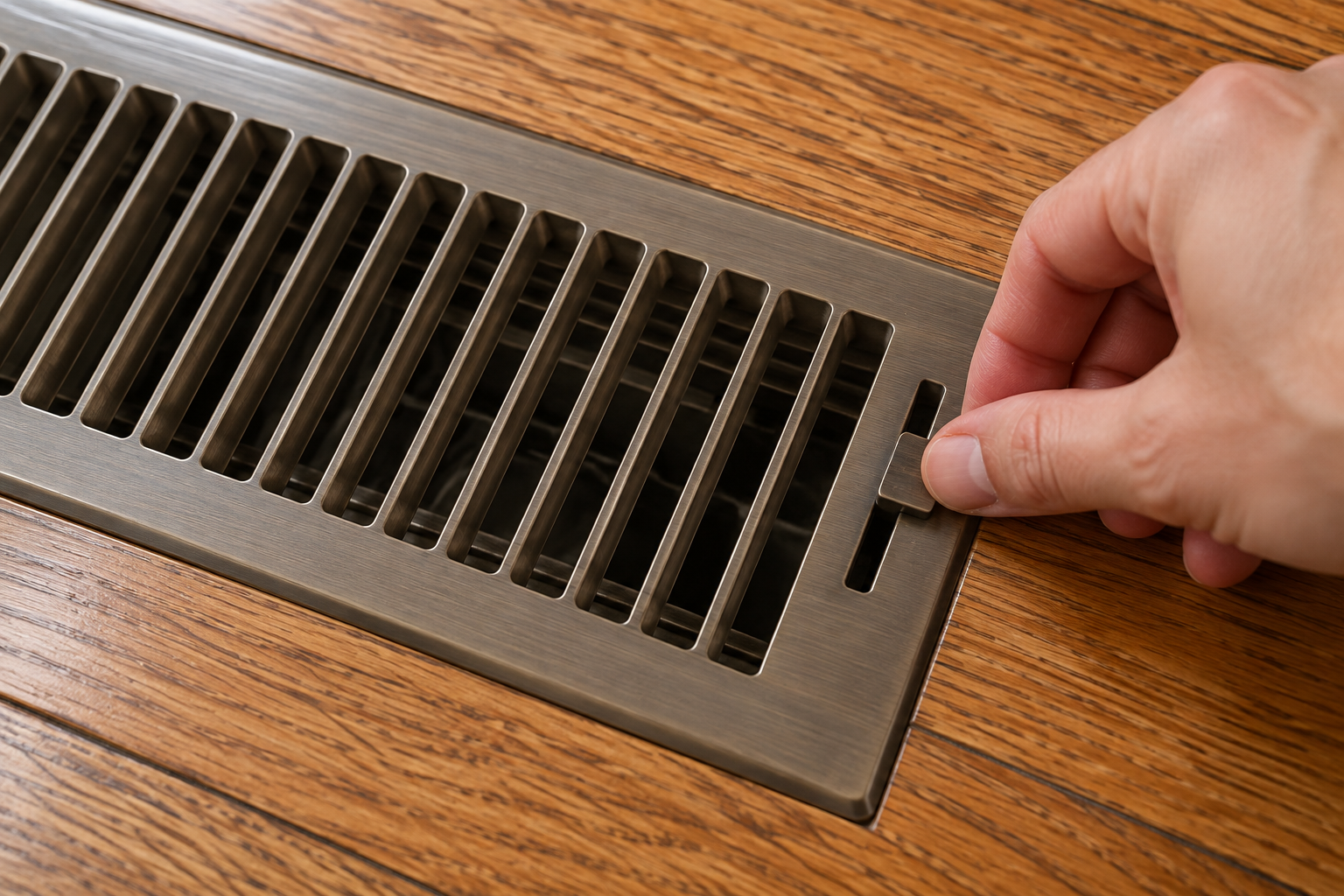
Shutting off rooms completely. The DOE heating guide says never shut off the heat entirely in an unused part of the home, because condensation and mold can form on cold walls, and keep all rooms at least 50°F so pipes do not freeze.
Heating with the oven. The DOE says appliances are not intended for space heating and can be unsafe as a heat source. The most it allows is leaving an electric oven door open after cooking to let the leftover heat out. That is leftover heat, not a heating plan.
FAQ
What is the cheapest way to keep a house warm in winter?
Find and seal your biggest air leaks, since they cost nothing to locate and all those small cracks together can add up to an open window or door. Then turn the thermostat back 7 to 10 degrees for 8 hours a day, which can save as much as 10% a year.
Does closing vents in unused rooms save money?
In the Berkeley Lab study, closing registers raised energy use in the house modelled because of extra duct leakage, and closing more than 60% of registers is not recommended at all. Keep rooms at least 50°F instead of shutting off heat entirely, so pipes do not freeze.
Which way should a ceiling fan spin in winter?
Clockwise, on low, so it creates an updraft that pushes warm air down from the ceiling. Turn it off when nobody is in the room.
Do thermal curtains actually keep heat in?
Closing curtains at night traps heat, since about 30% of a home’s heating energy is lost through windows. I don’t have a savings figure for thermal curtains specifically, but cellular shades can save 15% of annual heating and cooling energy compared with vinyl blinds.
Is it cheaper to heat one room with a space heater?
Zone heating with a room heater can be inexpensive when the rest of the house stays cool and rooms close off with doors. It is not a cheap way to heat a whole house, and any heater needs 3 feet of clearance and a direct wall outlet.
How can I stop drafts in a rental without damaging anything?
A slide-under draft stopper on interior doors needs no screws at all, and foam weatherstripping tape peels off when you move out. Shrink film on windows and thermal curtains on a tension rod are also renter-safe.
This article contains affiliate links. If you buy through them I may earn a commission at no extra cost to you.
