Every fire pit roundup on the internet is either a landscaping company flexing a $40,000 backyard or a parade of stock photos that have never met an actual shovel.
This list is different. Several of these fire pits were built by real people in their real backyards, and they shared the photos to prove it. One of them spent six years on the project and 12,000 Reddit users showed up to applaud.
The rest are the classic builds I keep coming back to: the paver ring, the cinder block square, the in-ground campfire circle. All of them are within reach of a normal human with a free weekend.
If you would rather buy than build, I get it. I keep a whole list of fire pit ideas you can build or buy for exactly that mood.
Photo: u/dredgehayt on Reddit
PIN IT and save this one for the weekend your backyard finally gets its glow-up.
1. The Sunken Pit That Took Six Years (and a Rented Excavator)
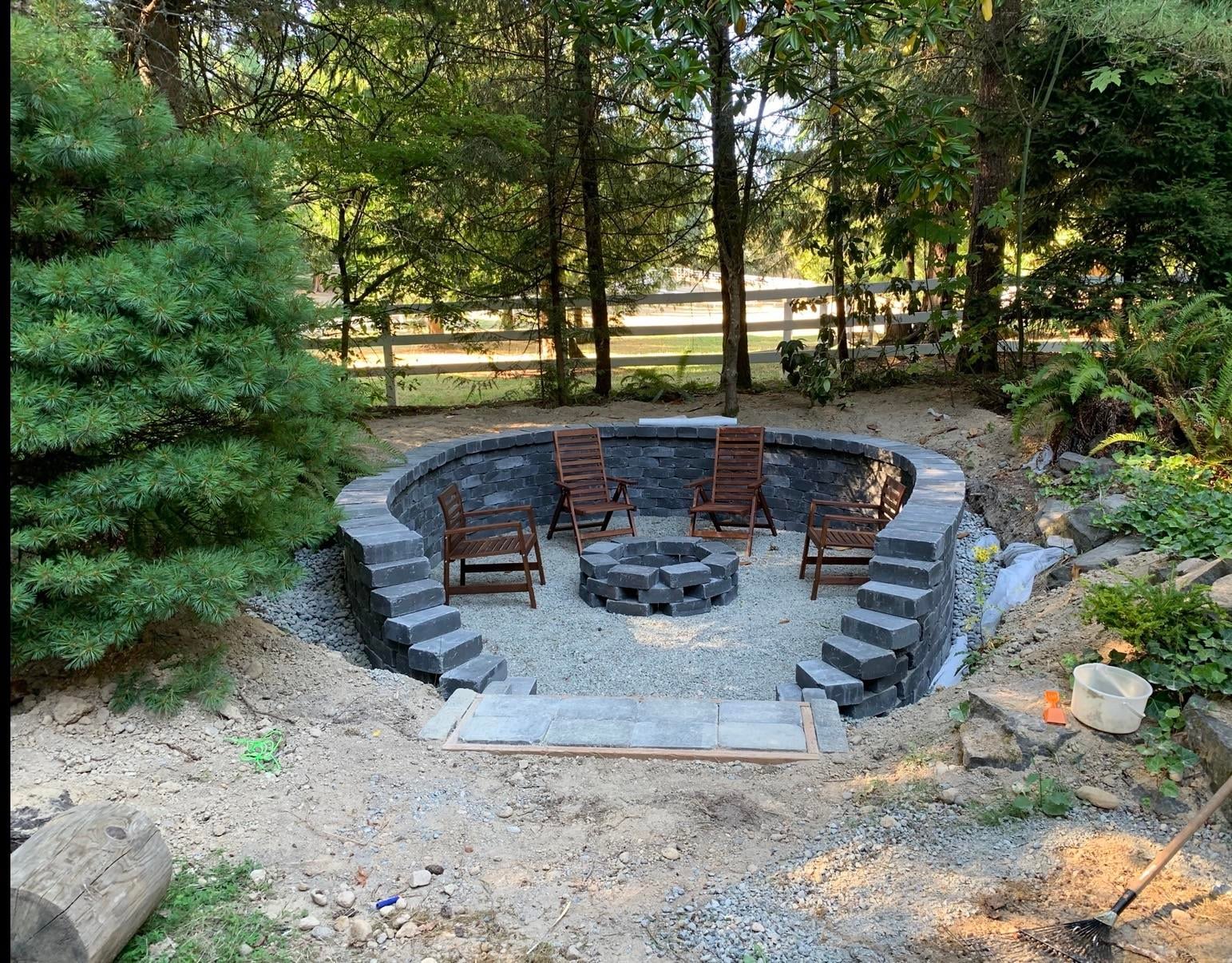
This is the one that broke Reddit. A sunken conversation pit carved into a wooded slope, ringed with retaining wall blocks, gravel underfoot and chairs circled around the flame.
The builder, u/dredgehayt, started in 2020 and finished in 2026. Six years, one rented mini excavator, and a result that looks like it belongs at a boutique campground.
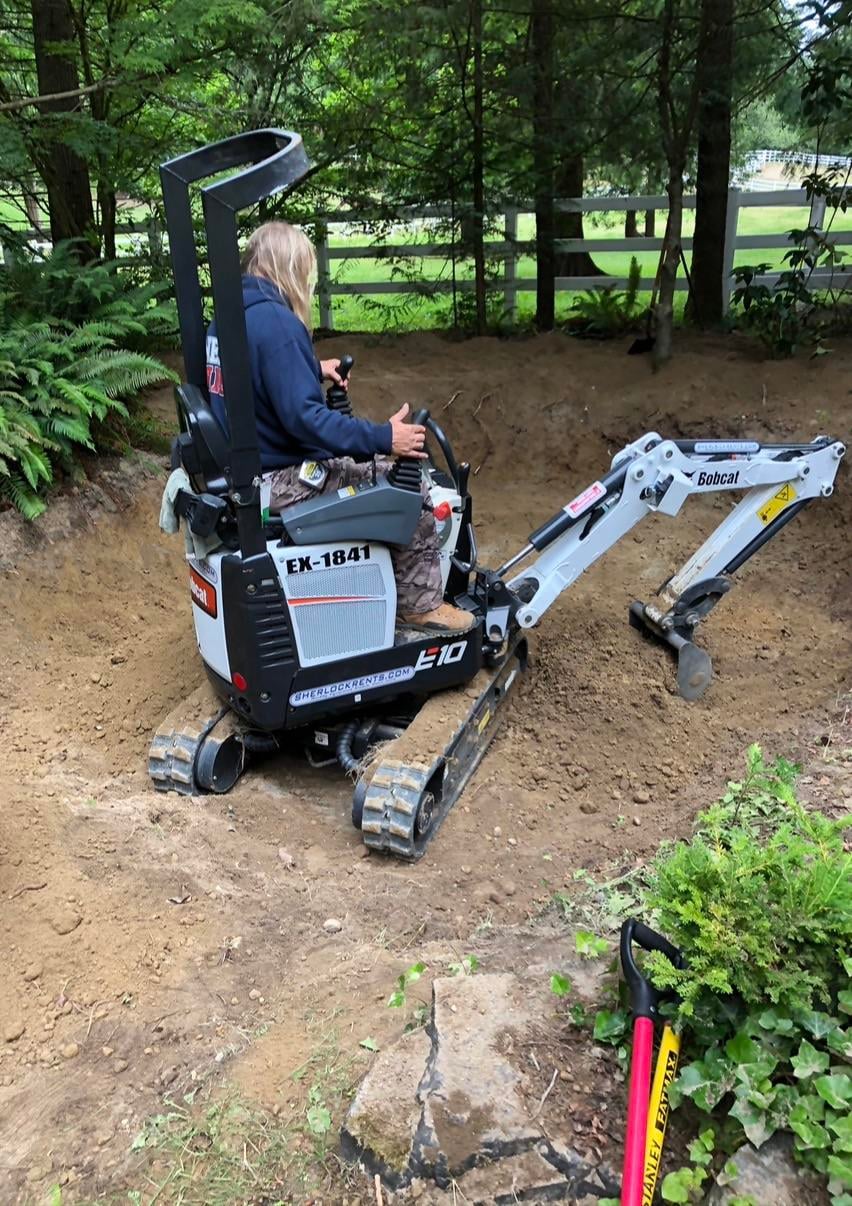
Photo: u/dredgehayt on Reddit
The lesson from the process photos: dig the bowl first, sort drainage before a single block goes down, then build the wall up the slope. A steel campfire ring insert at the centre keeps the block faces away from direct flame.
You do not need six years. You need a sloped corner, patience, and a long weekend with a digger.
2. The Weekend Paver Ring
The gateway build. A circle of tan retaining wall blocks on a gravel pad, done between Saturday coffee and Sunday dinner.
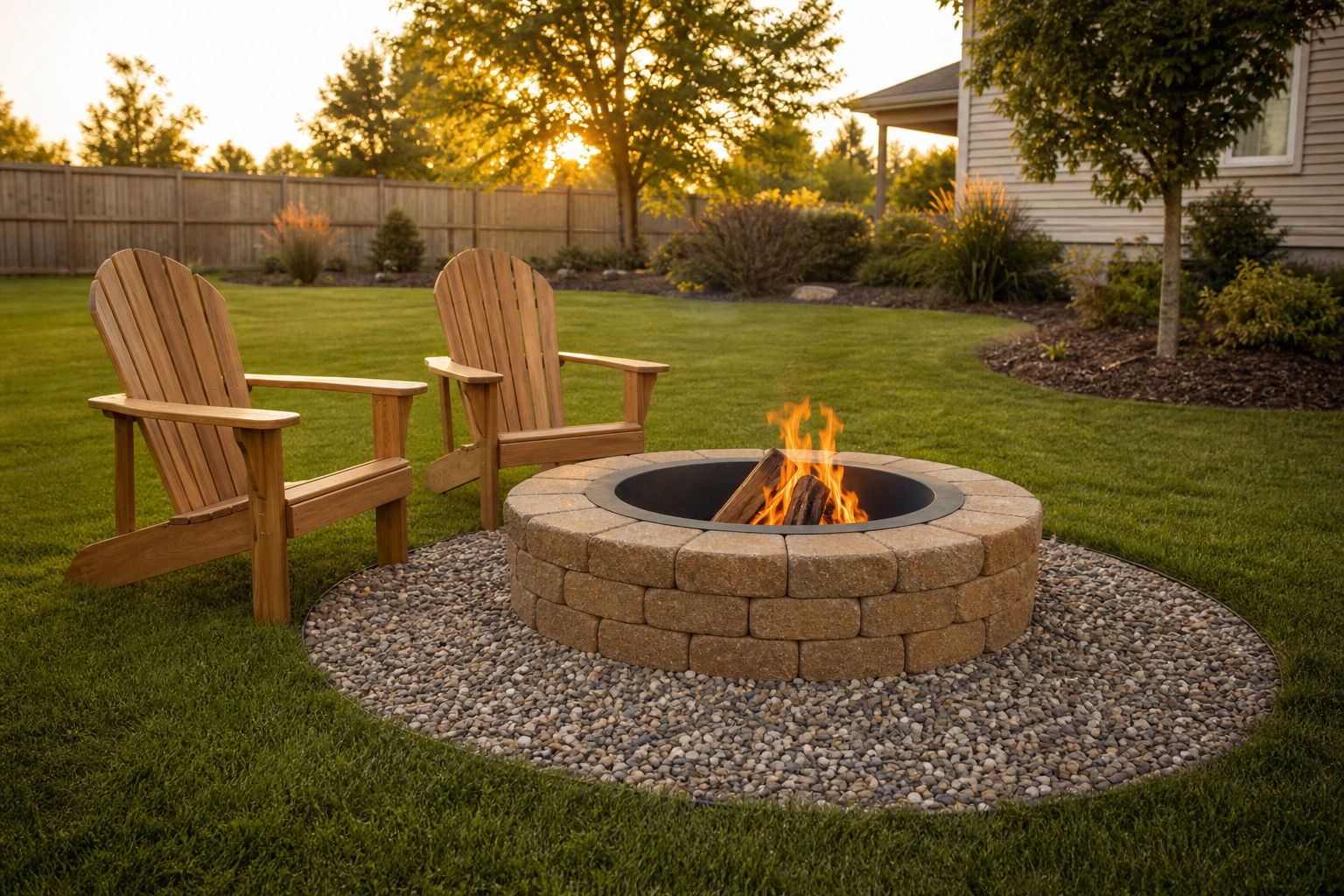
Stack the blocks three courses high, drop a steel ring insert inside, and glue the top course with landscape block adhesive so nobody’s elbow relocates it.
Budget a couple hundred dollars all in. The gravel apron is not decoration: it is your ember catcher.
3. The Whole Outdoor Room
Fire pit, curved seat wall, pergola, grill island. This aerial from u/GreenBaySlacker shows what happens when a fire pit stops being an object and becomes the anchor of an actual room.
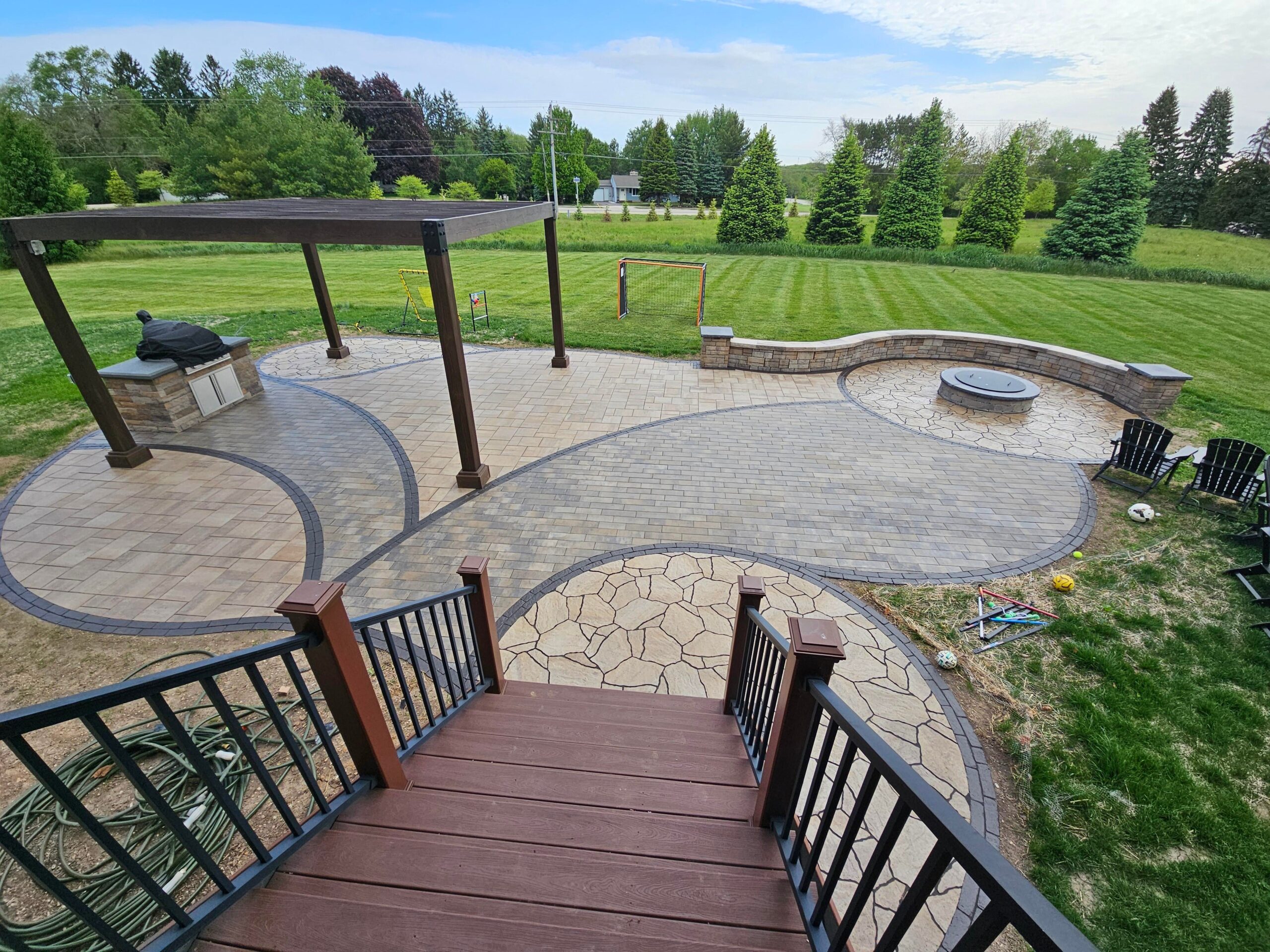
Photo: u/GreenBaySlacker on Reddit
The trick to steal even on a smaller scale: curve the seating toward the fire. A straight bench faces nothing; a curved wall faces everyone.
If a big hardscape project is calling your name, my DIY poolside landscape ideas run on the same principles.
PIN IT if this is the backyard you keep describing to anyone who will listen.
4. The Stump That Refused to Be a Problem
Tree stump removal quotes are outrageous. u/nickel8888 looked at their old stump and made a different call: ring it with wedge blocks and let it burn out slowly as the world’s most stubborn fire log.
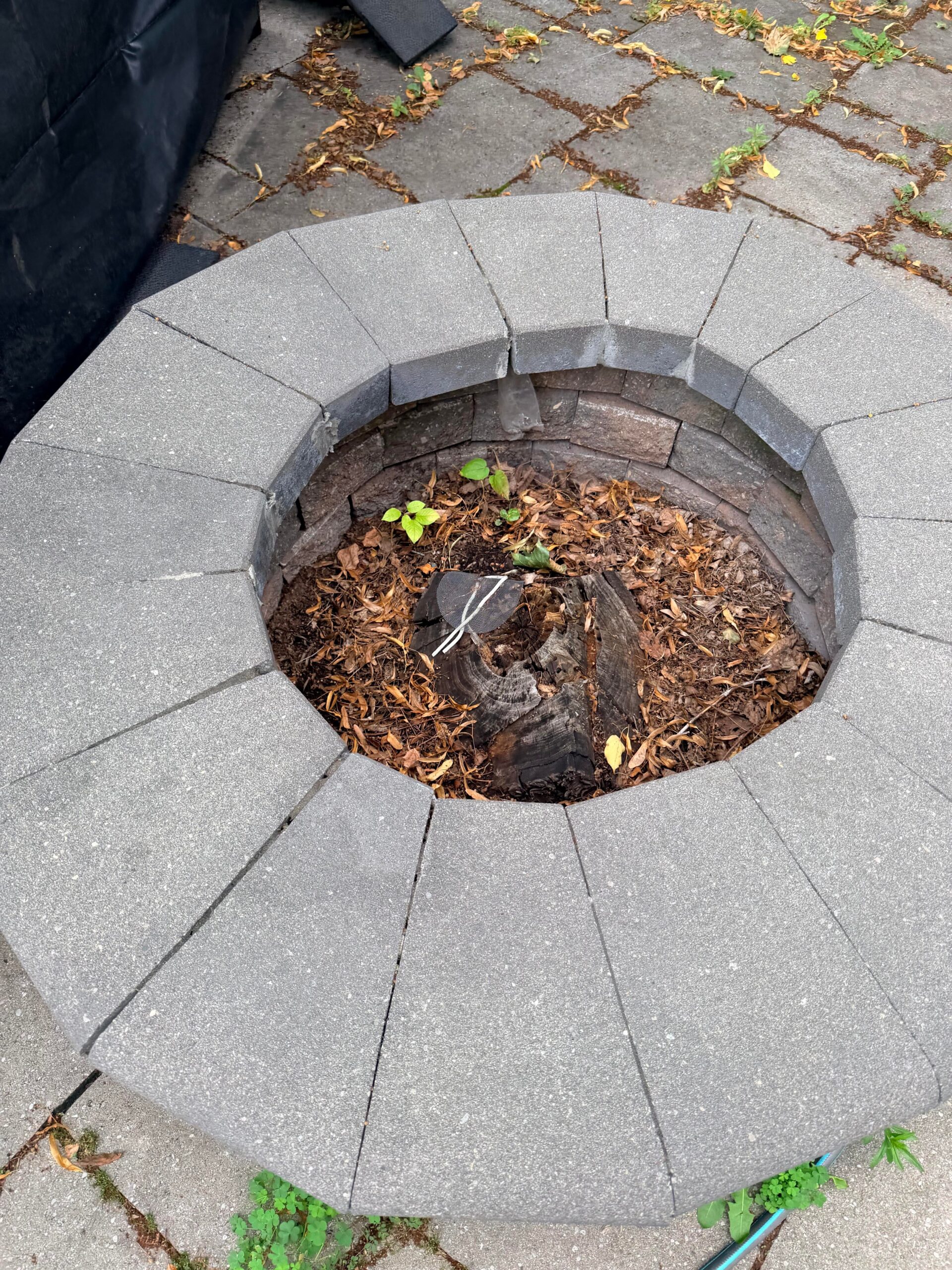
Photo: u/nickel8888 on Reddit
The block ring contains the fire while the stump does its slow exit. When it is finally gone, you are left with a ready-made in-ground pit where the roots used to be.
One safety note: only do this well away from structures and never on root systems that run under lawn you want to keep. Smouldering roots travel.
5. The $80 Cinder Block Special
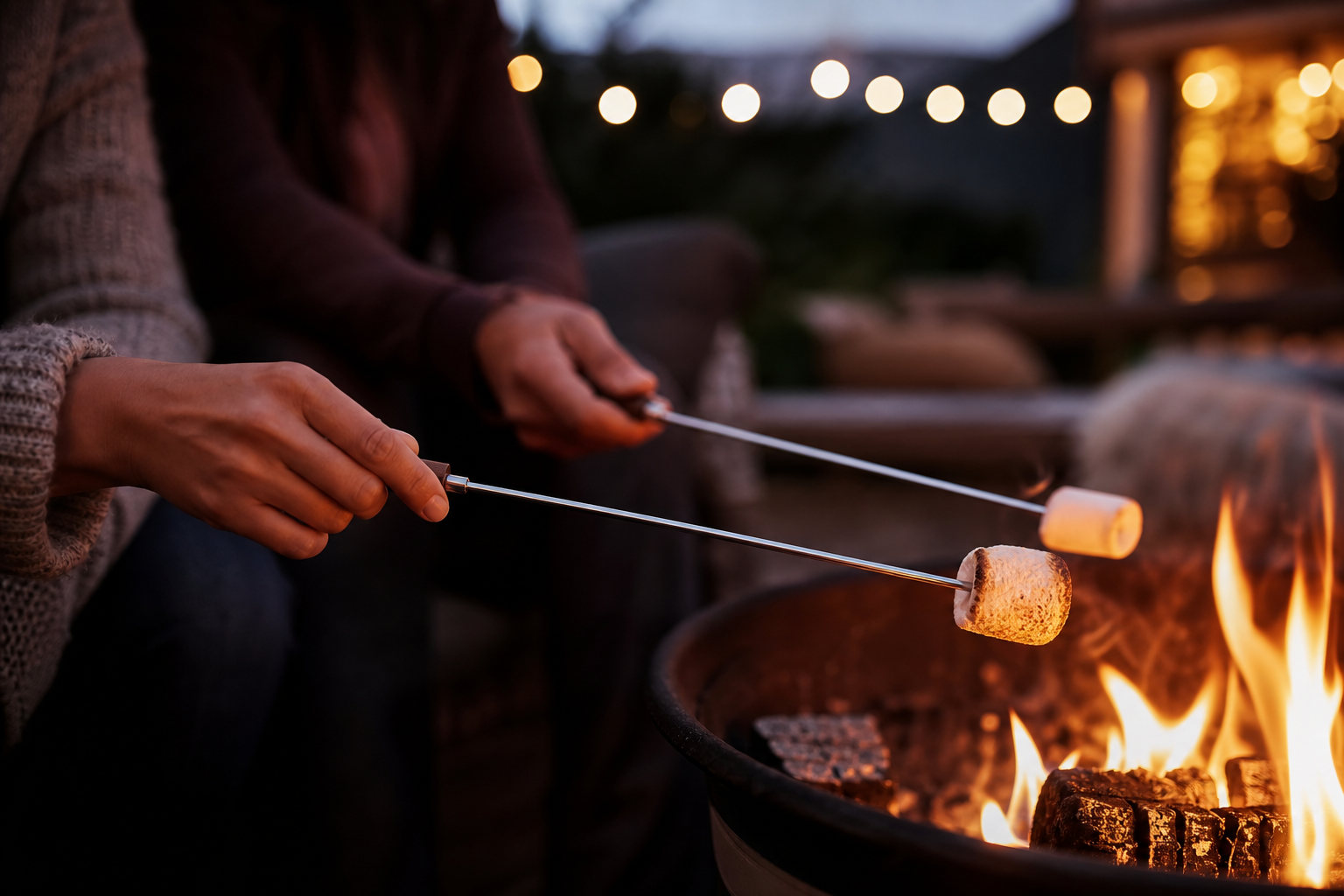
No shame in the cinder block pit. Around $80 in blocks, a steel liner so the concrete never takes direct flame, and you are roasting marshmallows by sunset.
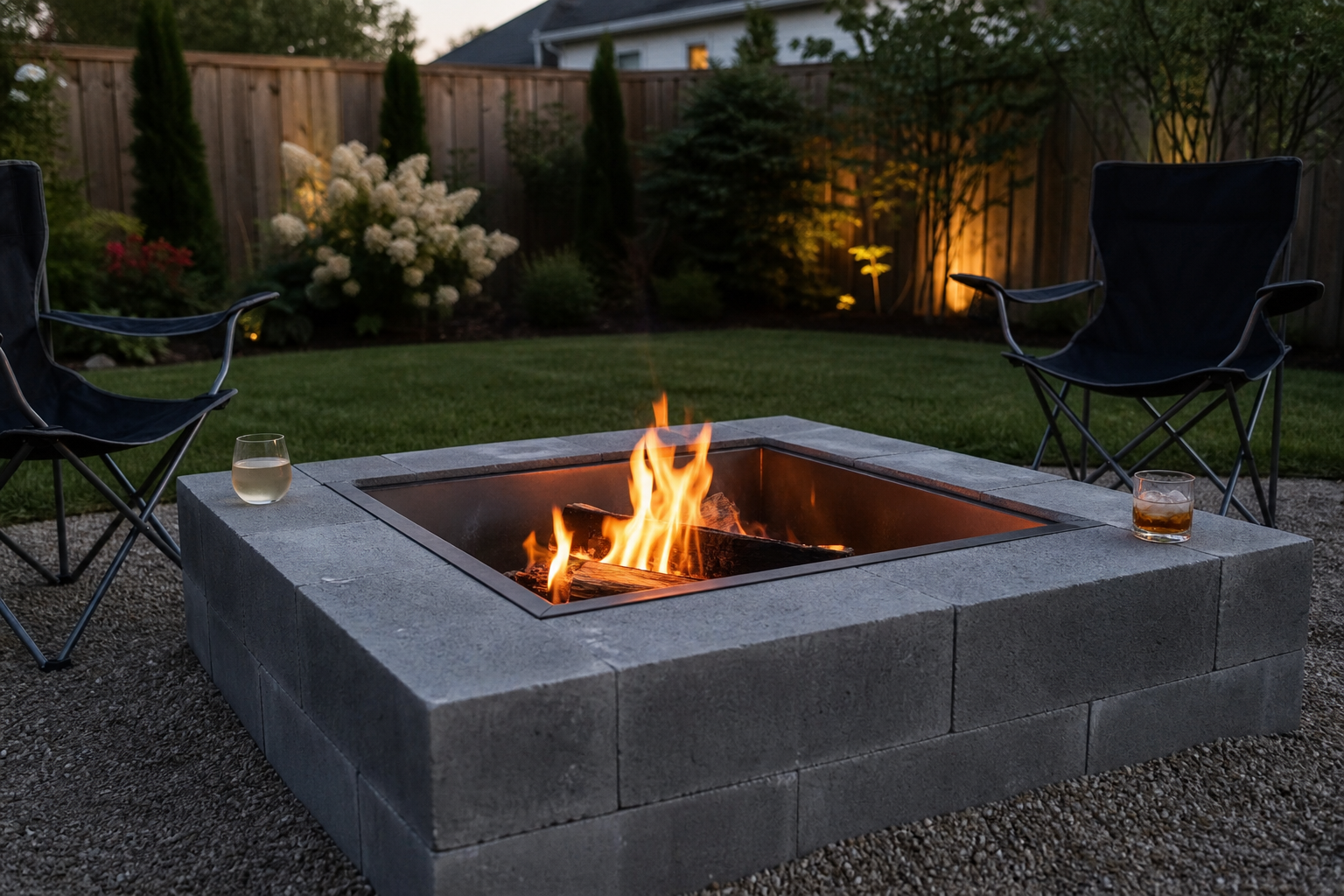
Use standard blocks laid with the cores sideways for airflow, or cap them for a cleaner look. Skip the river rocks inside: trapped moisture in stones near flame can make them pop.
A spark screen sized to your opening keeps the evening from getting more exciting than planned.
6. The In-Ground Campfire Ring
The minimalist move. Dig a shallow bowl, edge it with fieldstone, spread a wide gravel apron, and roll up log seats.
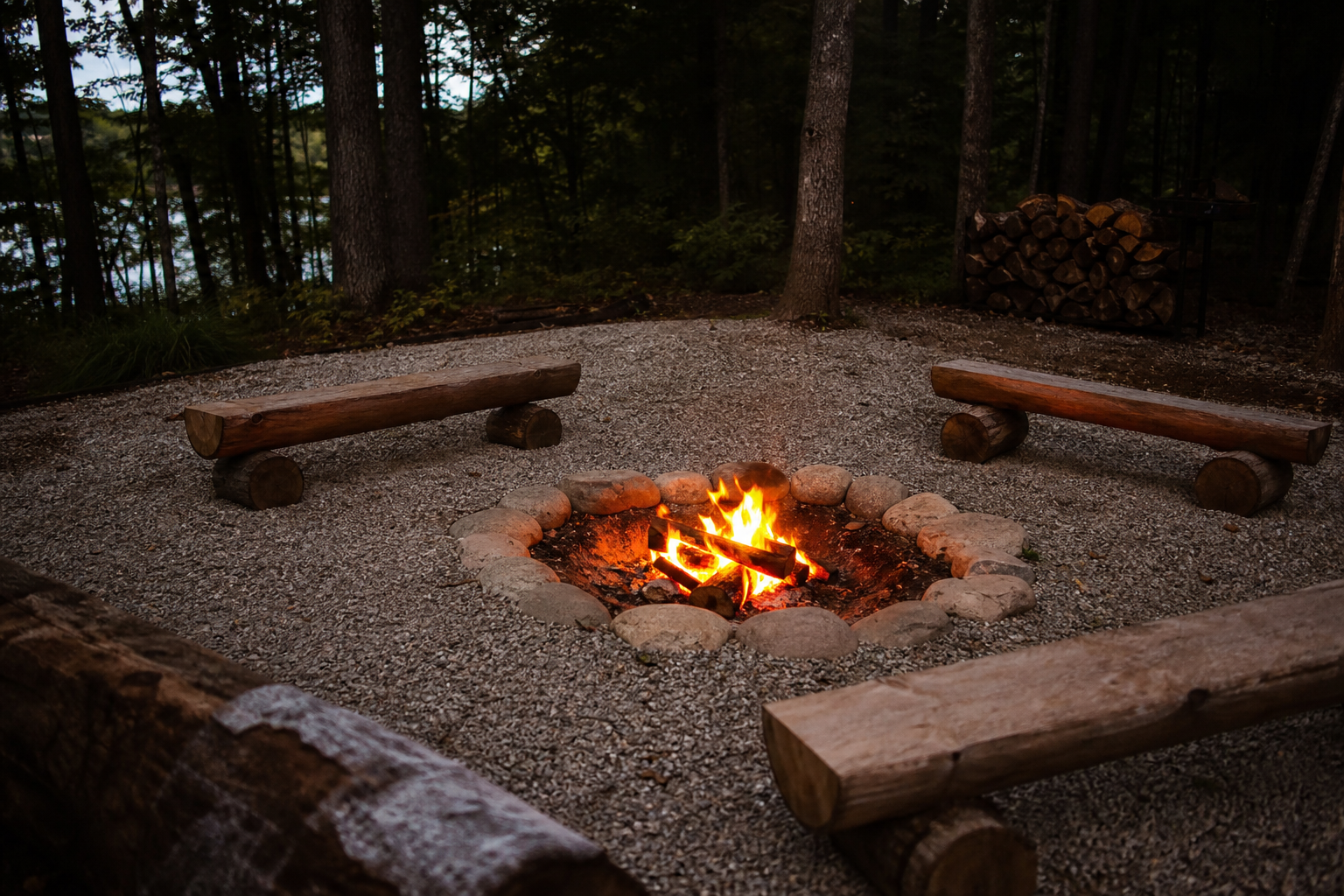
This is the cheapest build on the list if you have stones on your property. It is also the most campground-authentic, which is either the whole point or a dealbreaker depending on your household.
Burn quality firewood and the smoke stays civil. My guide to the types of firewood worth burning will keep you off the green wood.
7. The Steel Drum Rebel
A repurposed steel drum with cut-outs glowing from the inside is the punk rock option. Industrial, cheap, and weirdly beautiful once the flames get going.
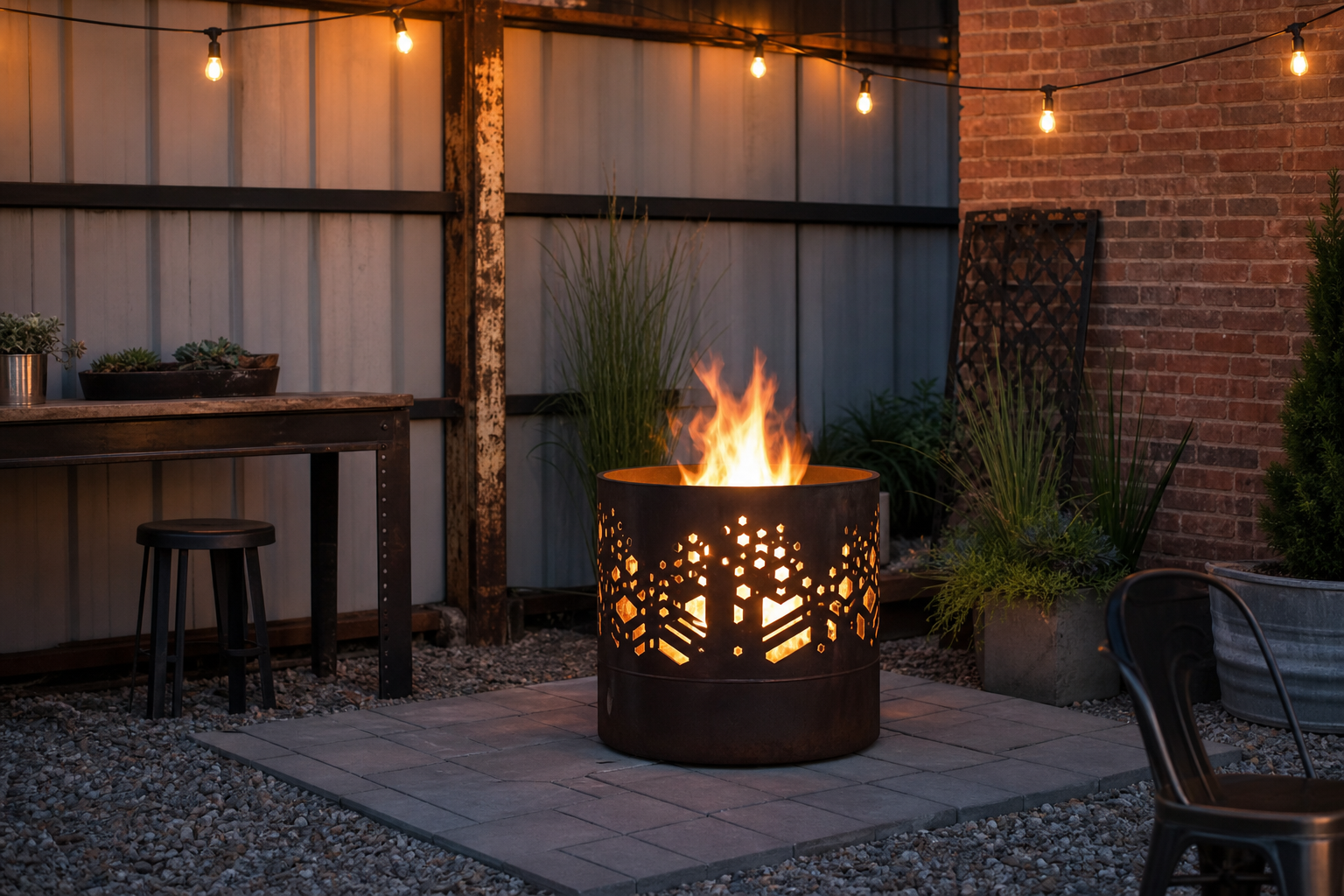
Source a drum that never held chemicals, burn off any coating outdoors before first proper use, and set it on a paver pad. Drill drainage holes in the base unless you enjoy rusty soup.
8. The Corner Nook for Yards With No Room
Small yard, same fire. Tuck a bench into a fence corner, park a compact fire bowl on gravel, and suddenly the dead corner is the most fought-over seat in the house.
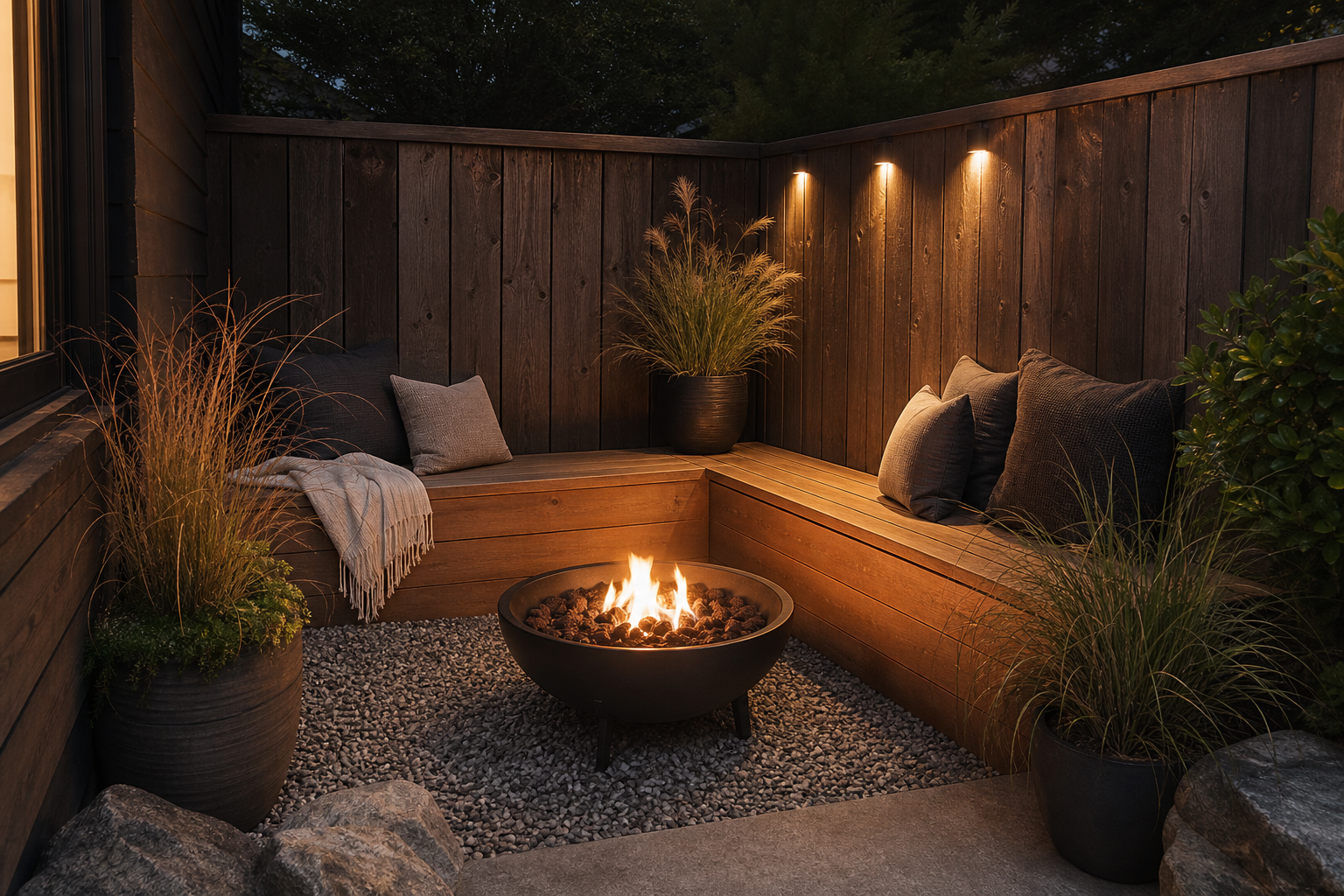
Keep the bowl portable so the corner can flex between fire nights and normal life. Clearance rules still apply in small spaces: mind the fence line and anything overhanging.
9. The Smokeless Upgrade
Here is the quiet cheat code: build the surround yourself, then drop in a smokeless fire pit insert. DIY charm outside, engineered airflow inside.
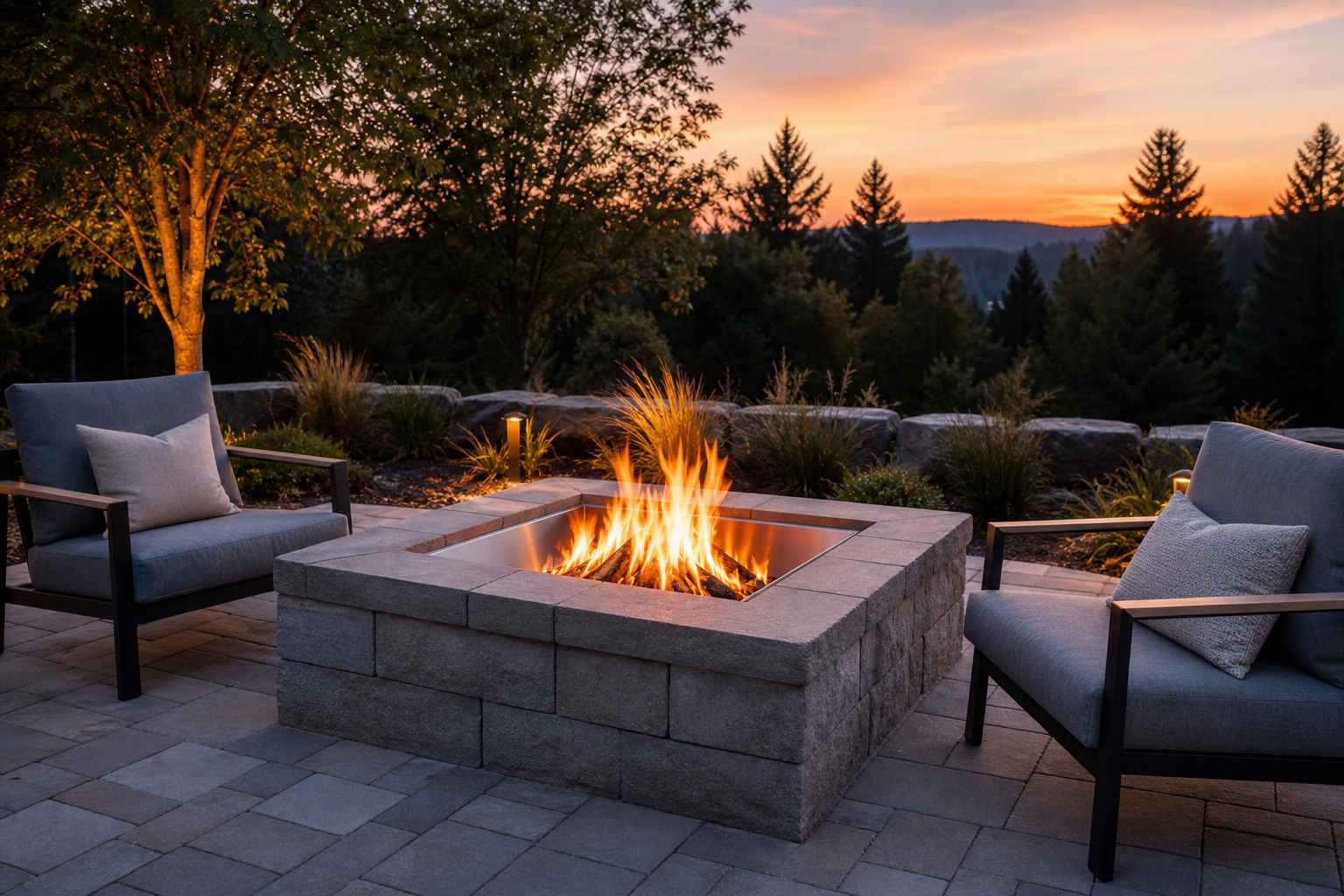
Double-wall inserts pull air through the base and reburn the smoke before it reaches your eyes. Your guests keep their seats instead of playing musical chairs with the wind.
This is also the answer if your neighbours are close and smoke diplomacy matters.
10. The Flagstone Lounge Circle
The finisher. An irregular flagstone circle, a low stacked-stone pit at centre, and Adirondack chairs that refuse to give up their occupants.
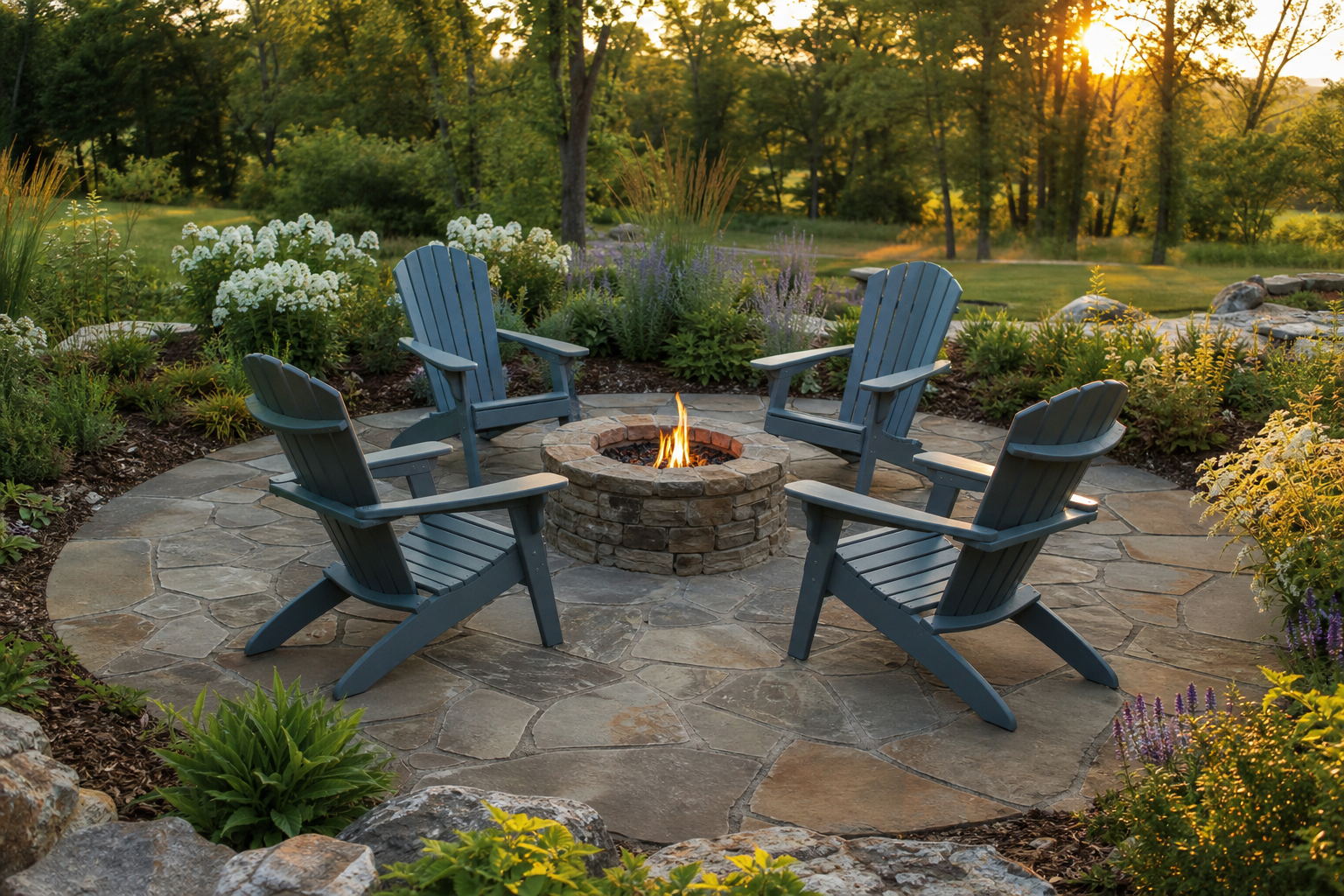
Flagstone forgives imperfect ground better than pavers, and the organic shapes hide wobbly cuts. Leave planting pockets at the edges and let the border soften in.
The Part Where You Actually Build One
Pick the build that matches your yard, your budget and your honesty about how many weekends you will really give it. The cinder block special this month beats the sunken masterpiece that never starts.
And if it takes six years? Apparently that works out fine. Ask the 12,000 people who cheered.
PIN IT so future-you remembers where the plan lives.
FAQ
What is the cheapest way to build a fire pit?
An in-ground ring edged with stones you already have, or a cinder block square at around $80. Both need a gravel apron and a safe distance from structures, which cost little but matter most.
How far does a fire pit need to be from a house or fence?
Most local codes call for 3 to 7.5 metres (10 to 25 feet) from structures, fences and overhanging branches. Check your local fire authority before you dig: rules vary and burn bans override everything.
What do you put in the bottom of a fire pit?
A few inches of gravel or sand for drainage and heat protection. In wood-burning pits, avoid glass, plain river rocks and anything glazed: trapped moisture and heat can crack or pop them.
Do I need a permit to build a fire pit?
Sometimes. Permanent pits, gas lines and pits in urban areas commonly need approval, while portable bowls usually do not. A ten minute call to your council or county saves an expensive redo.
How do you keep a sunken fire pit from filling with water?
Drainage first, blocks second. A gravel sump under the pit floor, a drain line running downslope if the ground allows, and a cover for the off season keep a sunken pit from becoming a pond.
This post contains affiliate links. If you buy through them we may earn a commission at no extra cost to you. We only recommend gear we would put in our own backyard.
