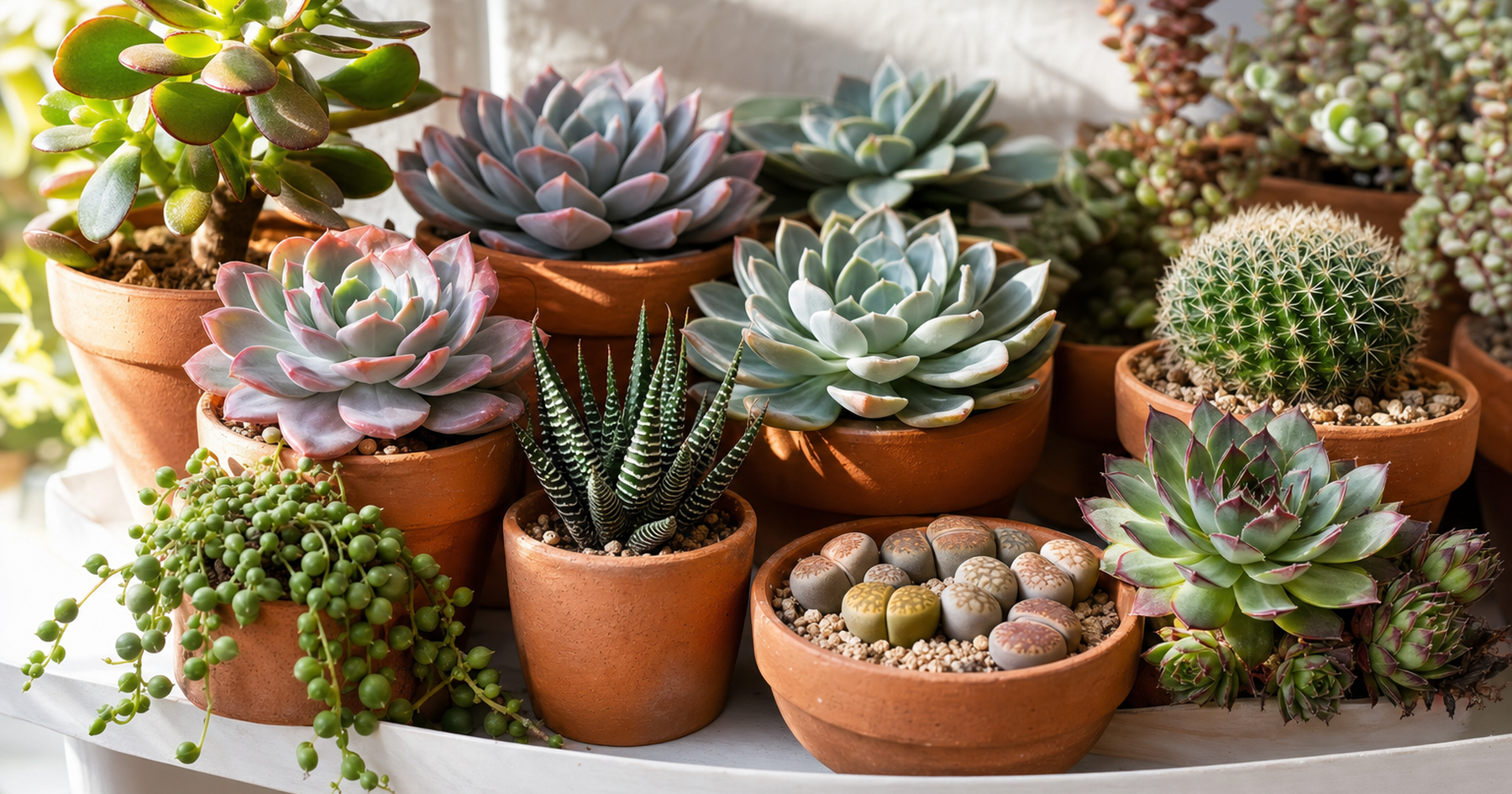
I had four of them on my windowsill before I knew one was technically a cactus. I’d been growing it for two years. Watering it. Talking to it. Then a friend pointed at it and said “that’s a cactus” and I said “no, it’s a succulent” and we were both right.
Succulents are everywhere right now. Weddings. Office desks. Every third Instagram post. And yet most of us who grow them would struggle to answer even basic questions about what they actually are or where they came from. I know I couldn’t.
These 12 facts changed how I look at the little rosettes on my shelf. I think they’ll do the same for you.
1. The Name Says It All
 Source: @thesucculentguy
PIN IT
Source: @thesucculentguy
PIN IT
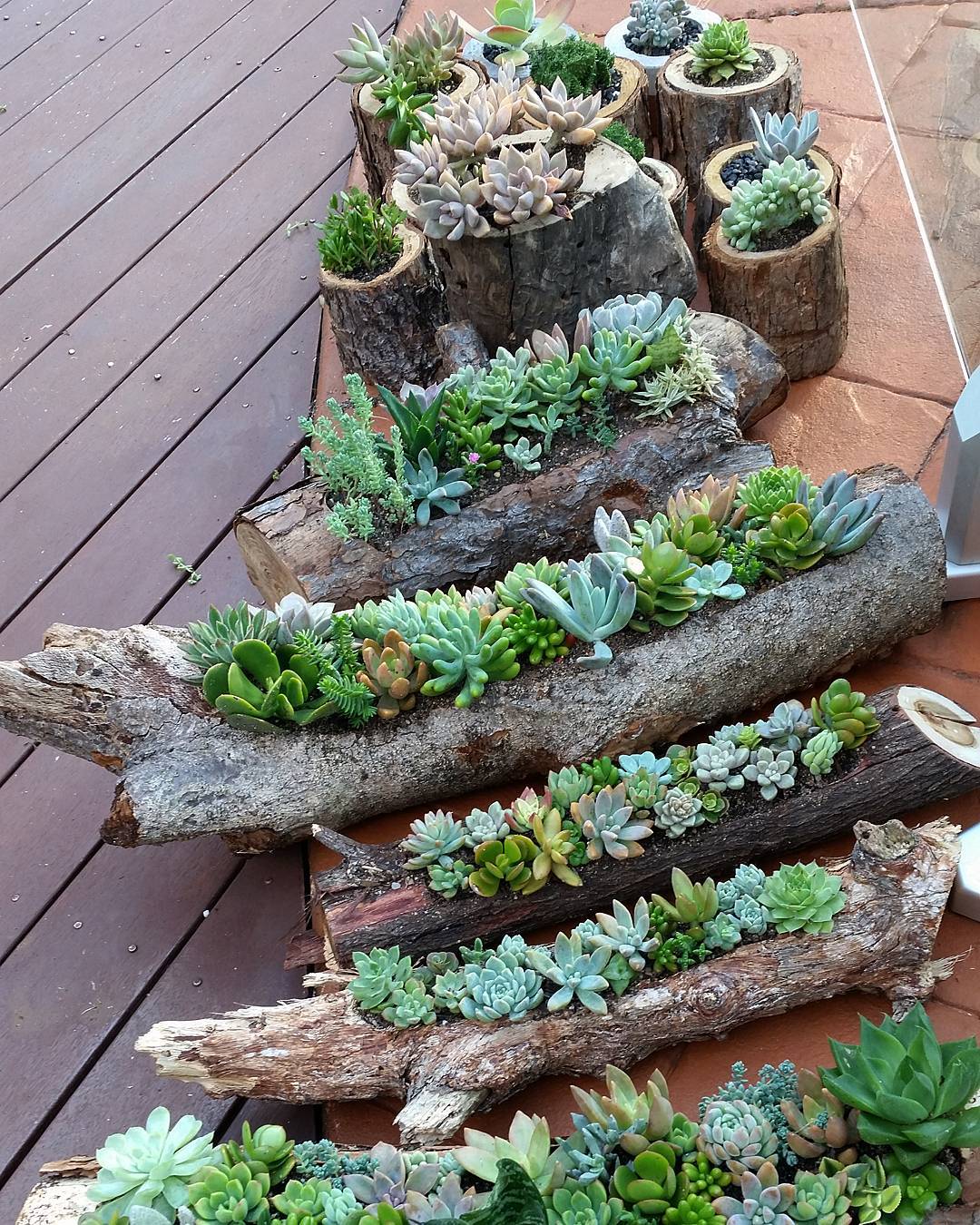
“Succulent” comes from the Latin word sucus, meaning juice or sap. That’s it. That’s the whole etymological story. These plants are called succulents because they’re juicy.
And when you look at a fat echeveria leaf, that feels exactly right. Those swollen, almost translucent leaves aren’t just pretty. They’re water-storage tanks. The plant fills them up during rain, then slowly draws on those reserves during dry spells. Juicy is both accurate and, honestly, a little flattering.
2. They’re Basically Beach Plants
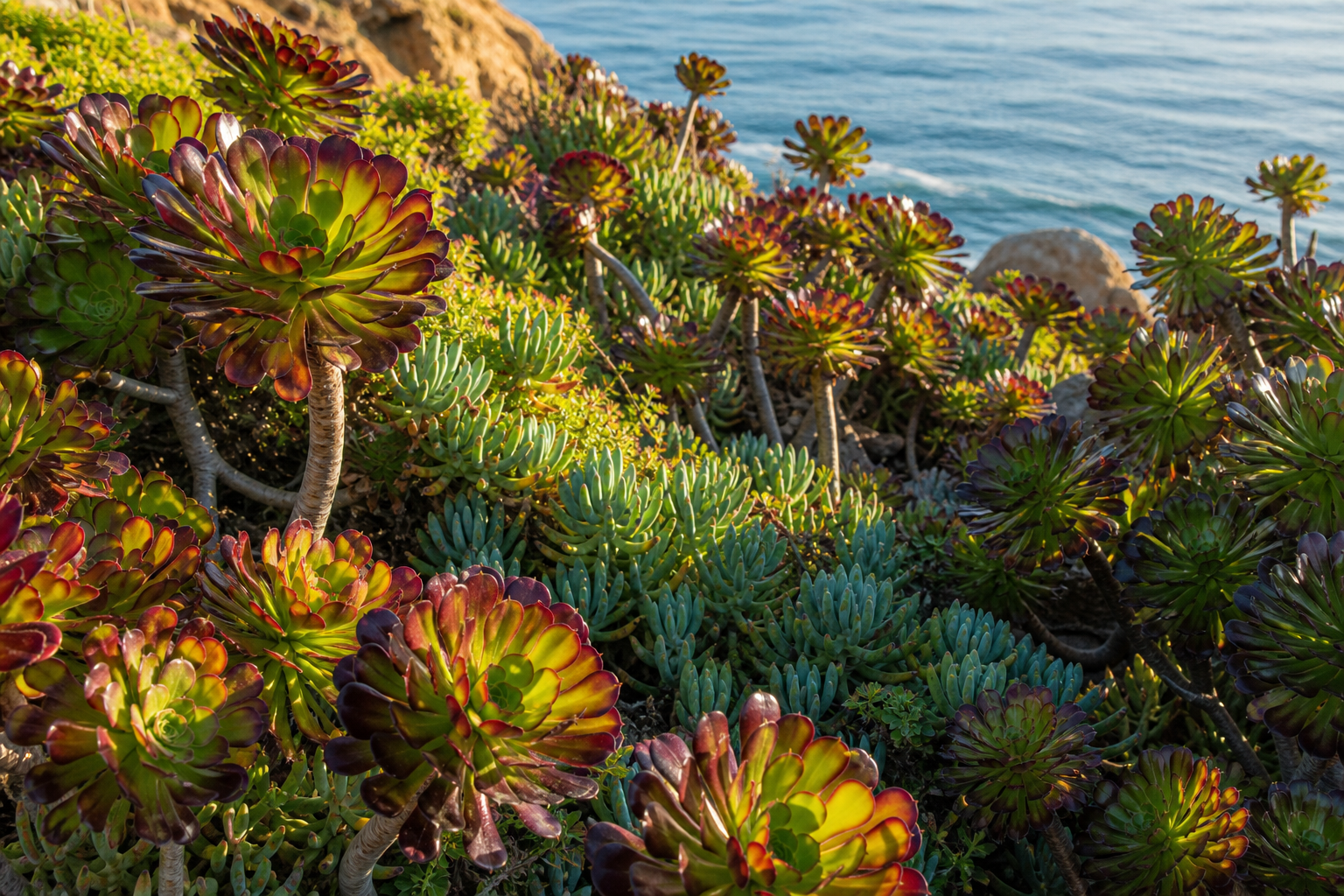
The mental image most people have is a cactus in a scorching desert. That’s not wrong, but it’s only part of the story. The majority of popular succulent species are native to coastal South Africa: a place with mild temperatures, rocky soil, and morning fog rolling in off the ocean.
They didn’t evolve to bake in 45-degree heat. They evolved in conditions not that different from a mild, breezy coastal garden. Some species come from jungle floors, where they live in dappled shade and humidity. Next time someone calls succulents “desert plants,” you can politely correct them.
Related: best outdoor plants for coastal gardens
3. The Cactus Plot Twist
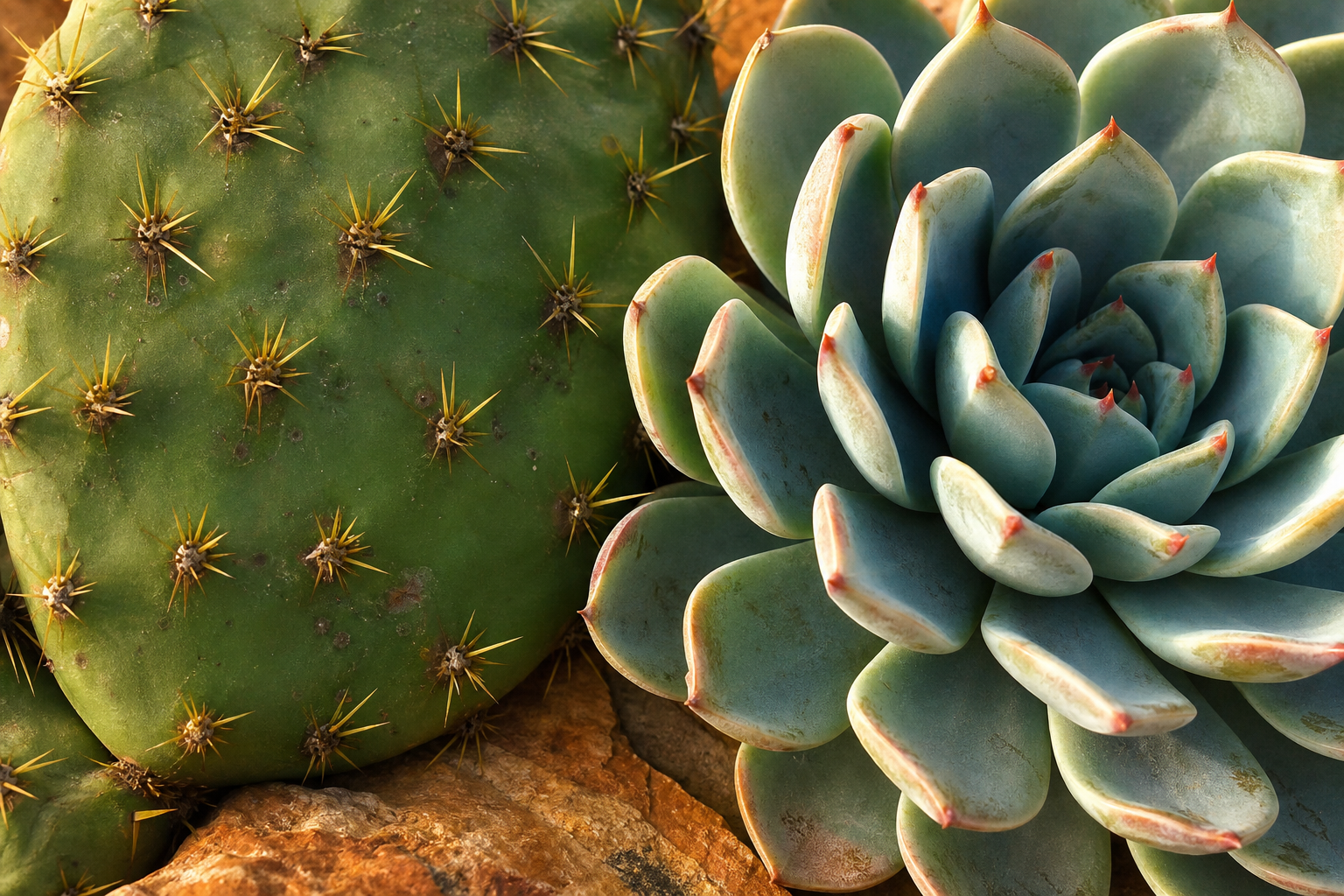
Here is the fact that ends more conversations than any other: all cacti are succulents, but not all succulents are cacti.
Succulents are defined by water storage in fleshy tissue (leaves, stems, or roots). Cacti do this, which makes them succulents. But “succulent” covers more than 60 plant families and an estimated 10,000 species. Cacti are one subset of that enormous group.
Think of it this way: all retrievers are dogs, but not all dogs are retrievers. Cacti are the retrievers of the succulent world.
4. They Make Their Own Sunscreen
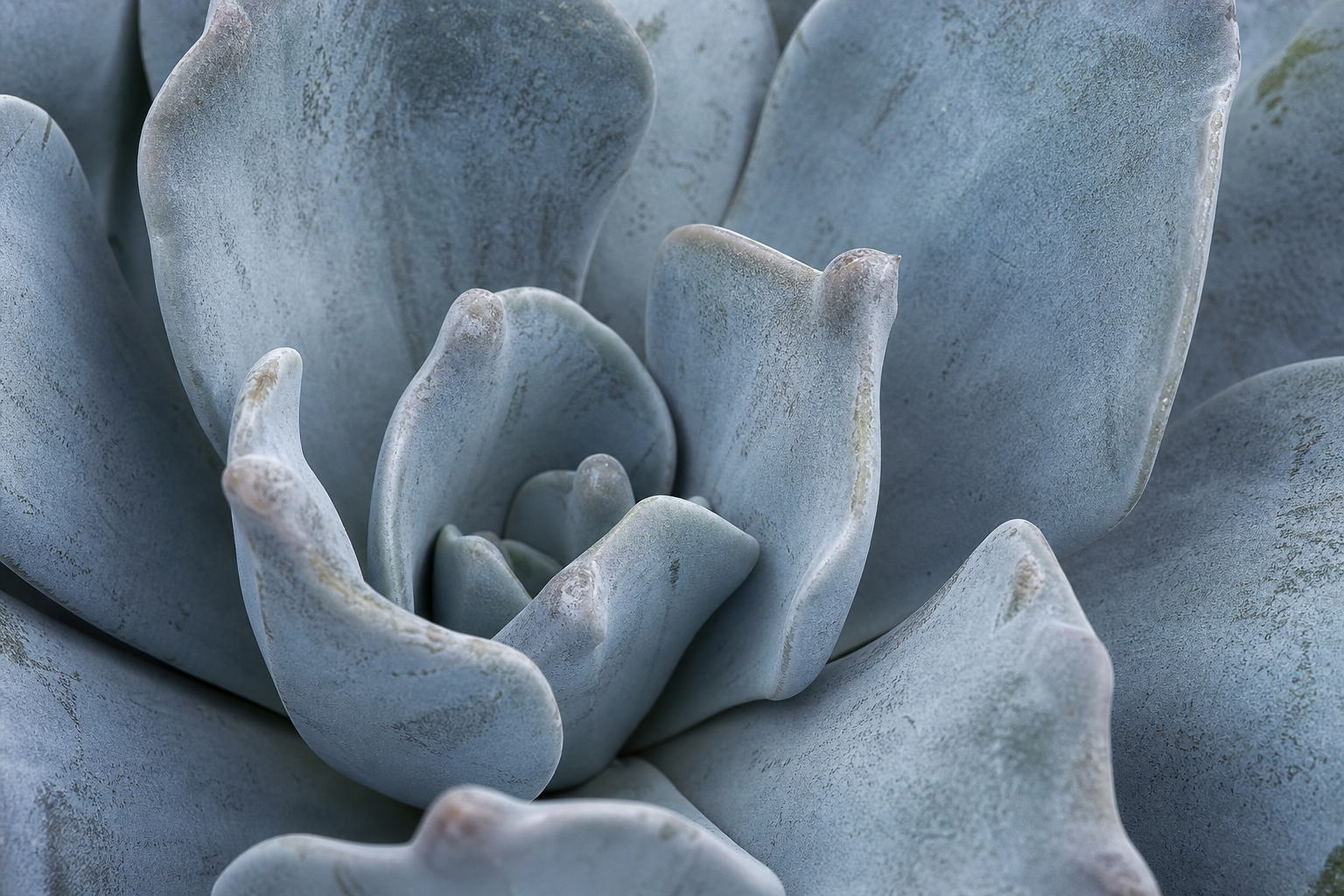
That chalky, dusty coating you see on some succulents is called farina. It’s epicuticular wax, and it functions as a natural sunscreen, protecting the plant from UV radiation and excess heat. It also slows water loss from the leaf surface, which is exactly what you want when water is scarce.
Here’s the important part: don’t wipe it off. I see this mistake constantly. The farina looks like dust and people clean it away, then wonder why their plant starts to struggle. Once removed, farina doesn’t grow back. Leave it alone. It’s doing its job.
A well-draining succulent and cactus potting mix (like this one on Amazon) will help any farina-coated plant thrive by preventing the root rot that damages them far more than sunburn ever will.
5. Stress Brings Out Their Best Colours
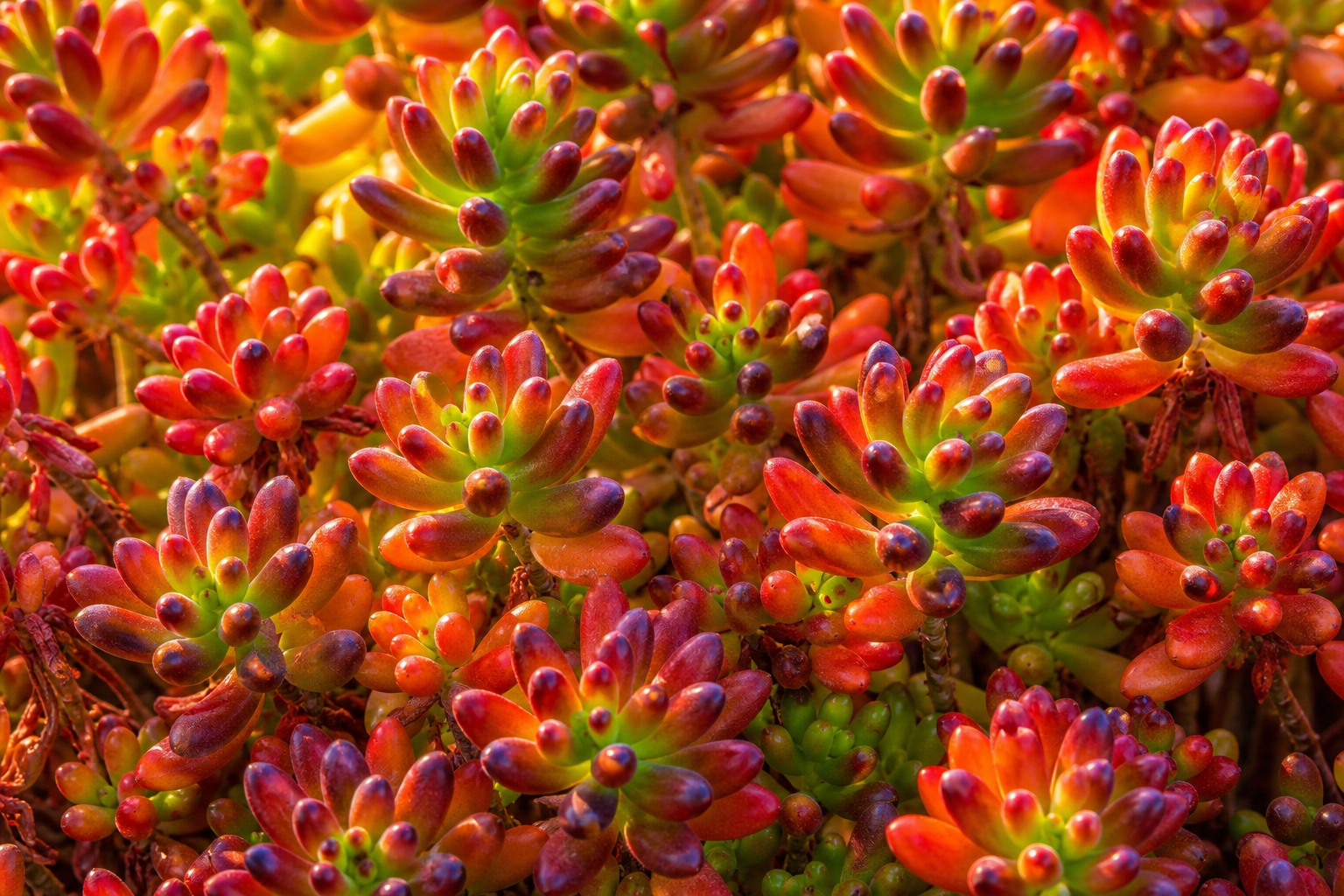
When a succulent turns vivid orange, deep red, or electric purple, it’s not just being photogenic. It’s stressed.
Cold temperatures, intense sun, drought, and nutrient scarcity all trigger colour changes in succulents. The plant produces pigments called anthocyanins as a stress response: nature’s version of putting up an umbrella. The result, from a purely aesthetic standpoint, is spectacular.
This is why colour-stressed succulents at nursery windows look so good. It’s also why a plant sitting in perfect, comfortable indoor conditions for months can look a little washed out. A bit of stress, in moderation, genuinely brings out the best in them.
6. Some Are Masters of Disguise
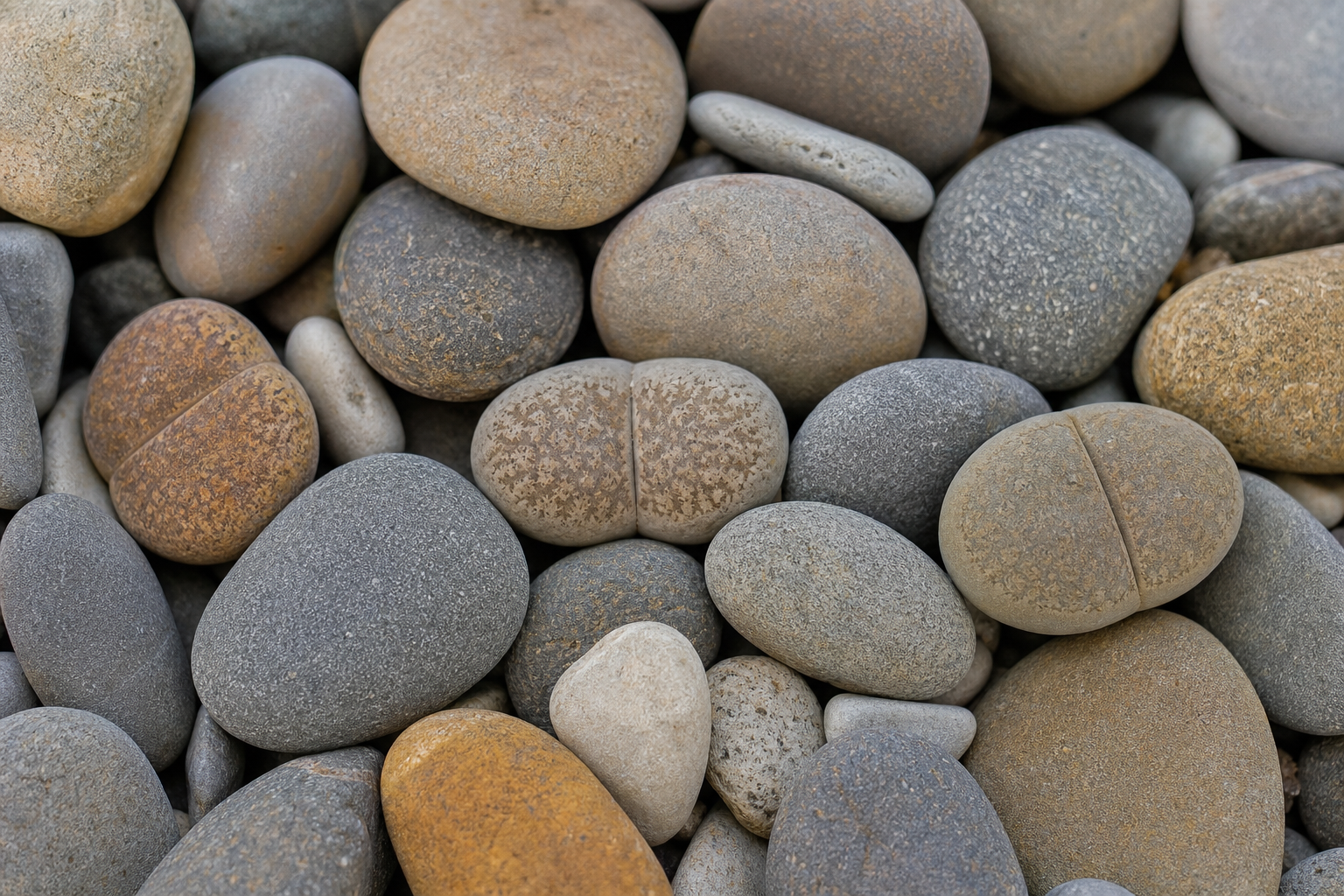
Lithops are a genus of succulents that look almost exactly like small stones. They sit low in sandy soil, split down the middle, and come in grey, tan, and brown. Predators walk right past them.
Then there’s Avonia papyracea, which takes things further still. It grows papery white scales all over its body and looks, frankly, like a small pile of bird droppings. Not a strategy I’d choose personally, but it works. Both plants evolved their disguises in the harsh, heavily grazed landscapes of southern Africa, where being eaten was the primary threat. Form follows function, even when the function is to look like something entirely unappetising.
7. They’ve Outlived Entire Civilisations
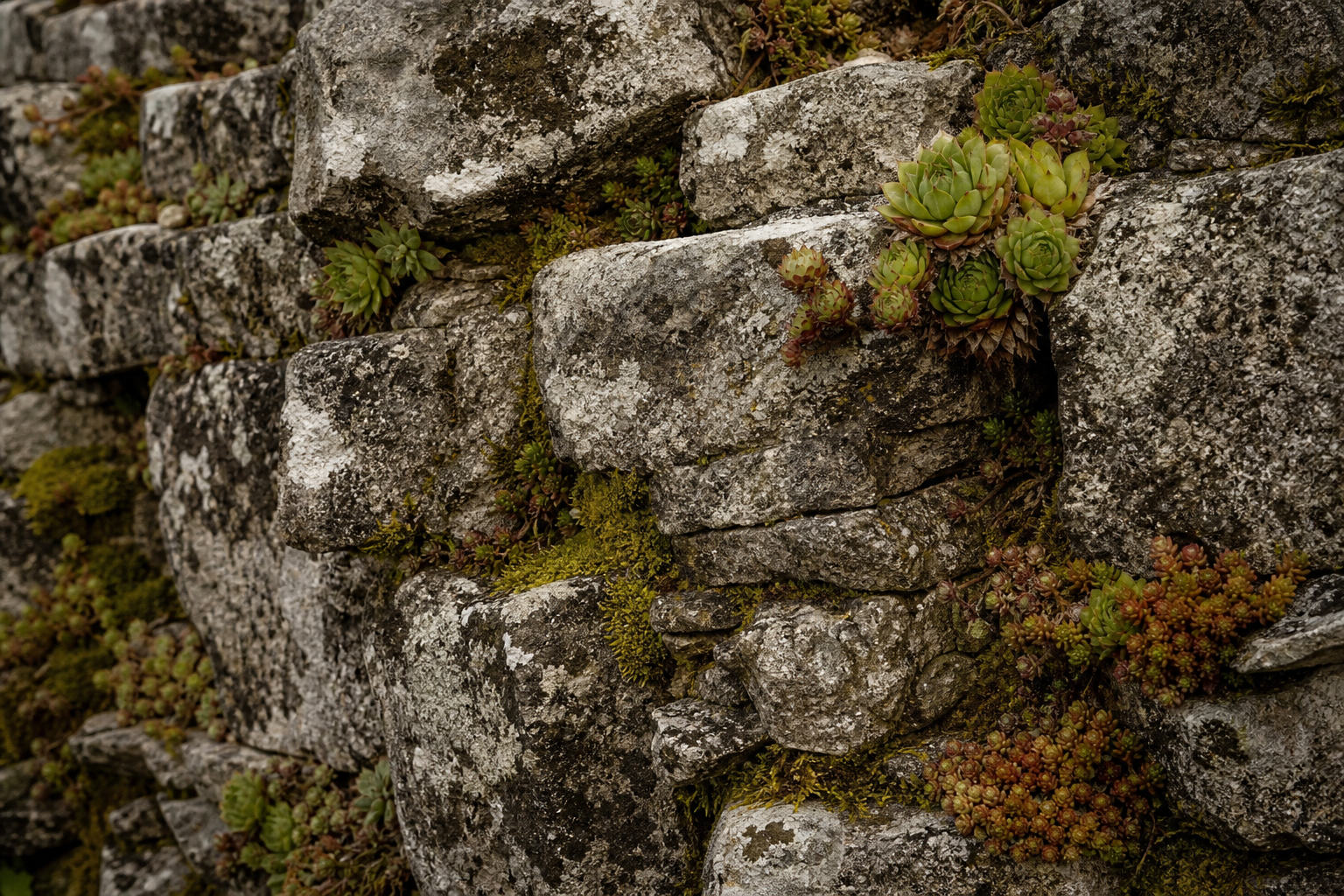
Some succulent species have been traced back 5 to 10 million years. To put that in context: our earliest human ancestors appeared around 2 to 3 million years ago. Succulents were already here, dealing with drought and predators, long before we showed up.
Ancient Egyptians were among the first people to cultivate them deliberately. They planted succulents on temples and in tombs, attributing mystical and therapeutic properties to them. Aloe vera was already documented in Egyptian medical texts around 1500 BCE. So when you dab some aloe on a sunburn today, you’re following a practice that’s over 3,500 years old.
8. The Size Range Will Break Your Brain
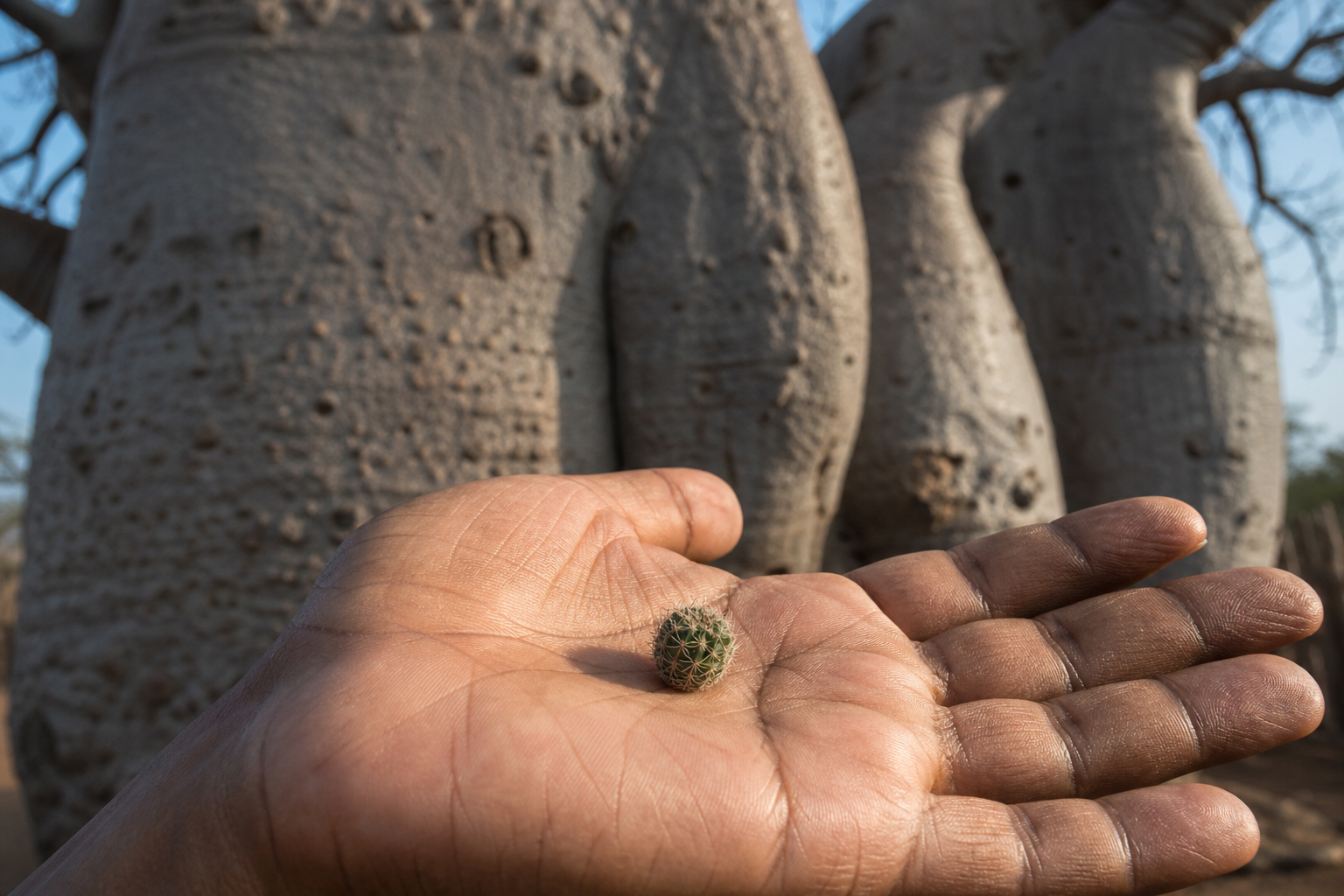
On one end: Blossfeldia liliputana, the world’s smallest known cactus (and therefore one of the world’s smallest succulents). At full maturity, it’s about half an inch in diameter. You could fit several on a 50-cent coin.
On the other end: the baobab tree (Adansonia), which is also a succulent. The trunk stores vast quantities of water and can reach 28 metres in girth. There are individual baobabs on the African continent that have been alive for over 1,000 years.
Both are succulents. The word “succulent” contains multitudes.
9. You’ve Probably Already Eaten One
 Source: @davidsurop
PIN IT
Source: @davidsurop
PIN IT
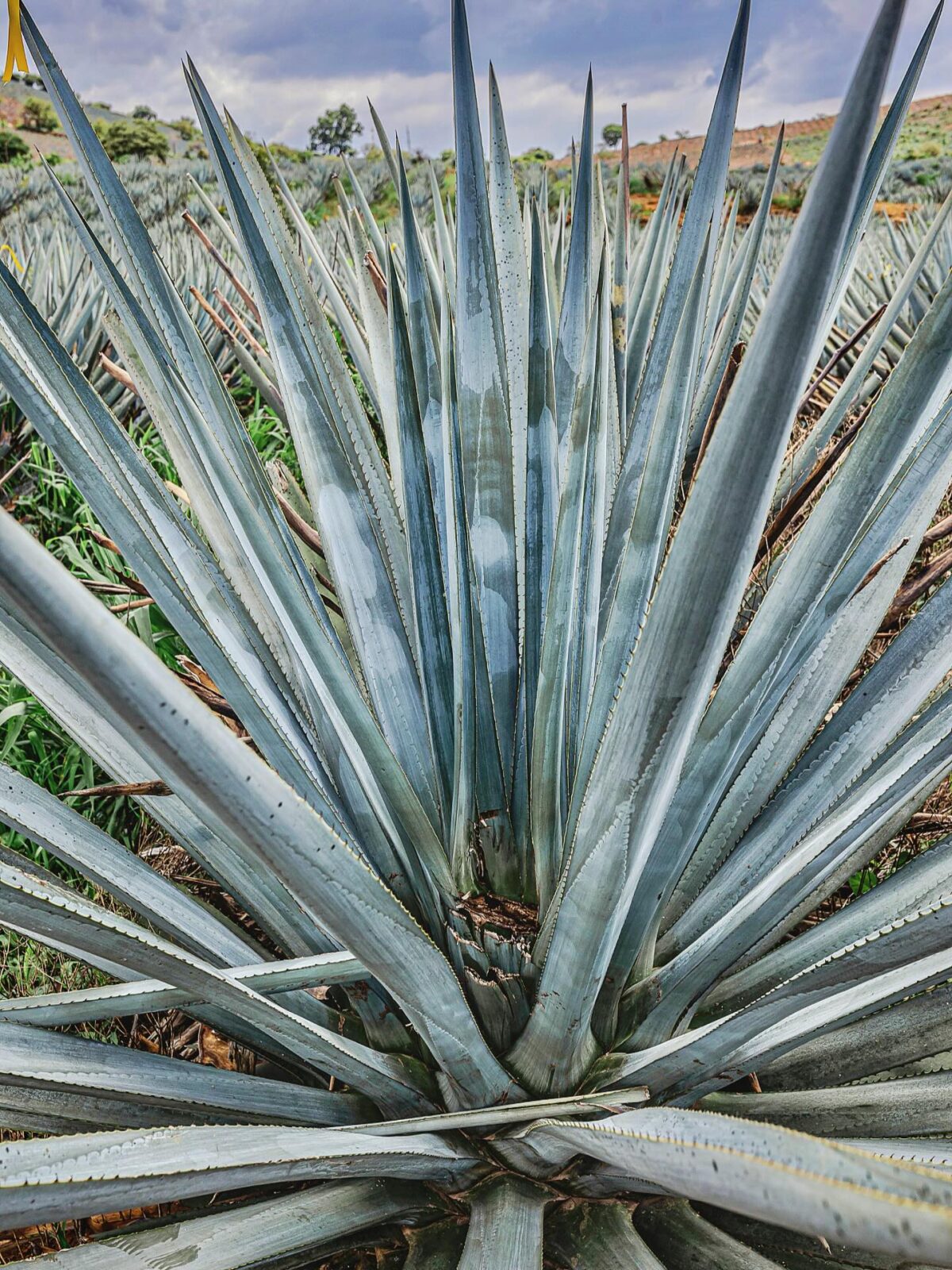
Tequila? Made from agave, a succulent. Dragonfruit? From a cactus. Nopales, the cactus paddles common in Mexican cooking? Also a cactus. Aloe vera juice, stocked in every health food store? Succulent. Prickly pear syrup? Cactus fruit.
The edible succulent category is surprisingly large and runs from the mundane (aloe in a gel pack) to the extraordinary (a 25-year-old agave plant finally sending up its once-in-a-lifetime flowering spike, so its descendants can eventually be distilled into mezcal). Next time you order a tequila, consider raising it to the plant.
10. Some Only Bloom Once. Then Die.
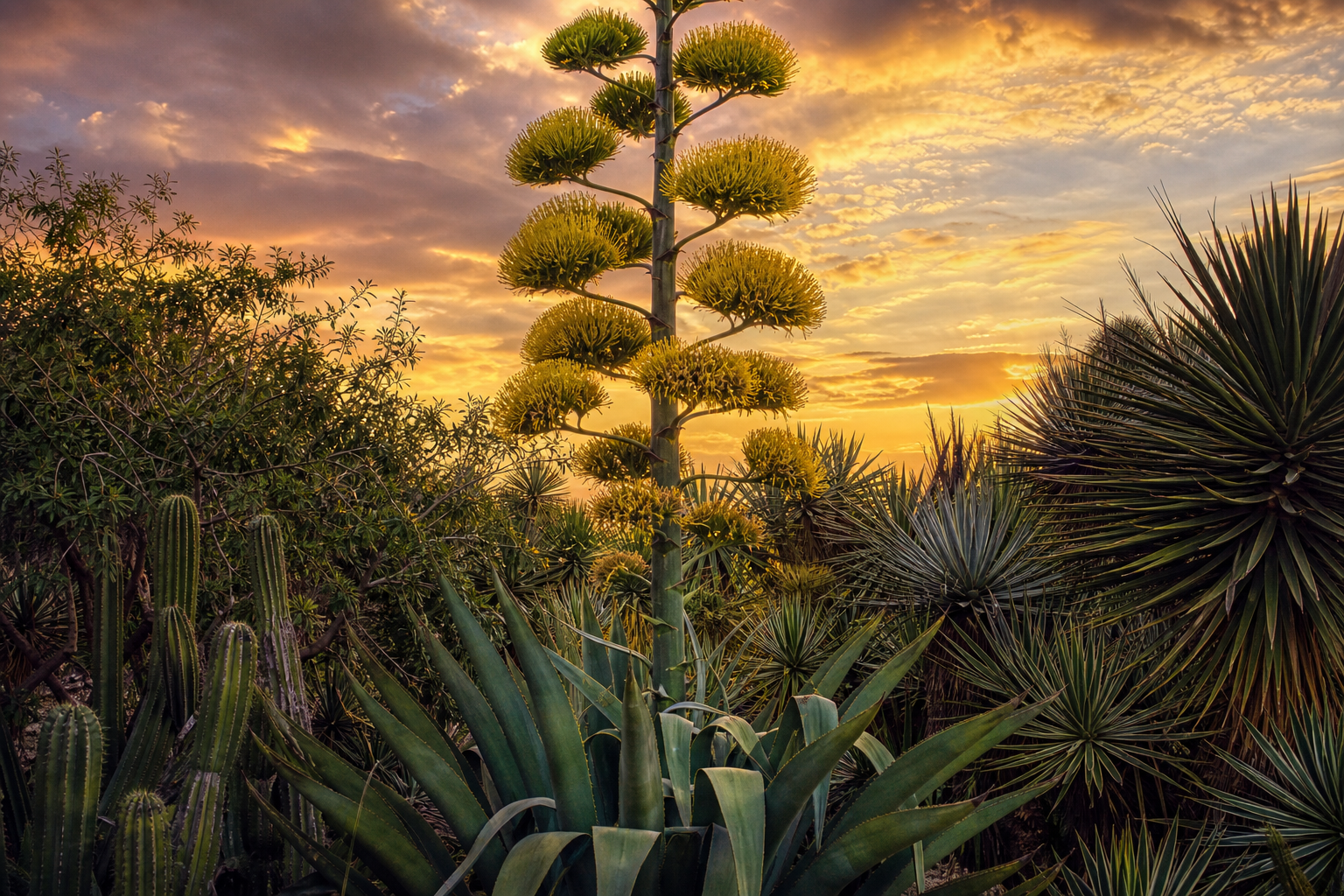
Monocarpic plants bloom once in their lifetime, set seed, and die. Several succulents fall into this category, most dramatically the agave.
The common name “century plant” is slightly exaggerated: most agaves bloom after 10 to 30 years, not 100. But when it does finally bloom, it’s extraordinary. A flowering spike can shoot up to 10 metres in a matter of weeks, producing hundreds of flowers. Then the main plant slowly dies, leaving behind small offsets called pups at the base to carry on.
It’s a dramatic exit. Arguably the most dramatic in the plant kingdom.
11. Some Thrive in Blizzards
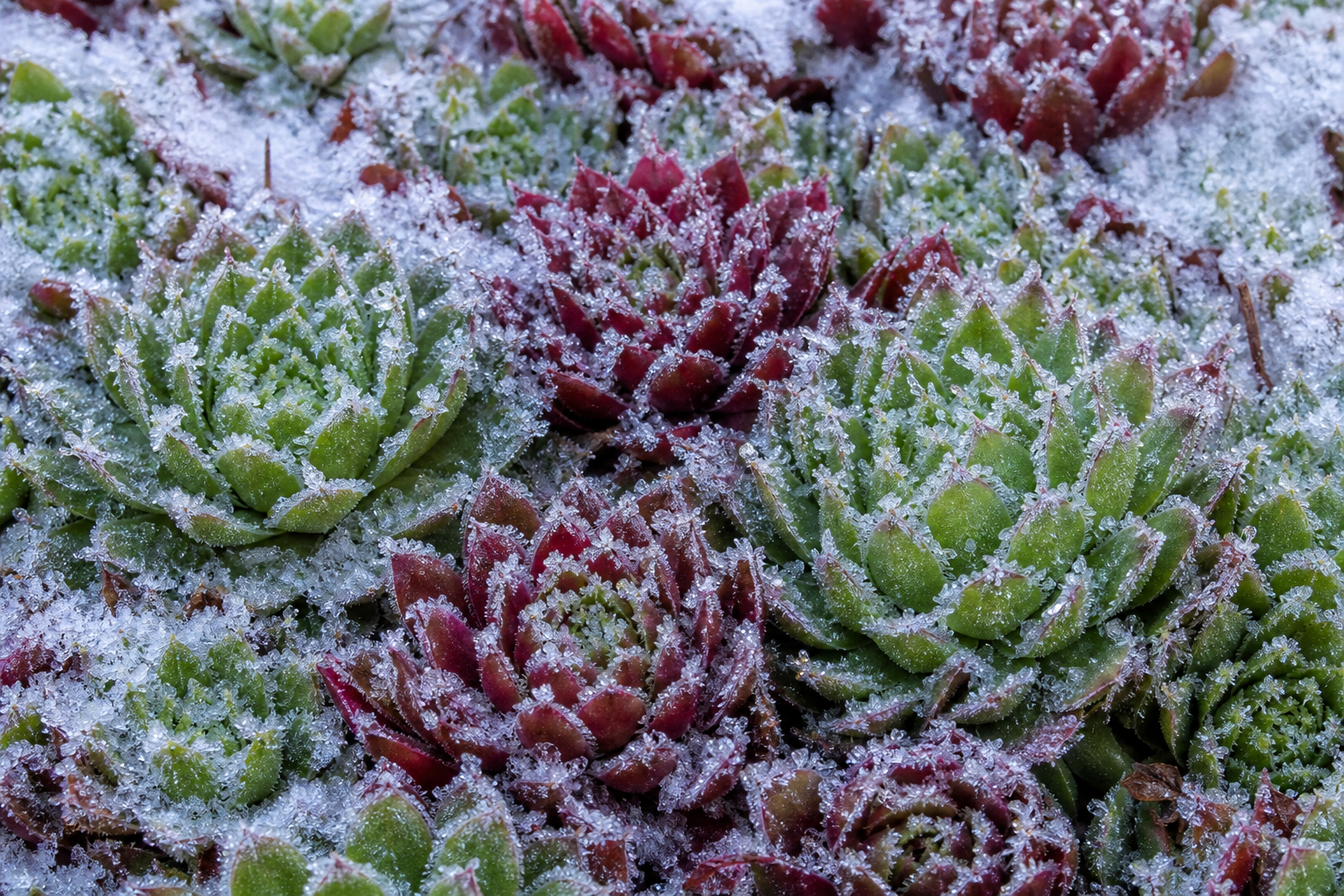
The idea that succulents need heat is a misconception. Sempervivum (common name: hens and chicks) is cold-hardy down to USDA Zone 3, which means it can survive temperatures of minus 40 degrees Celsius. Cold exposure often triggers the best colour in the plant: deep reds, rich purples, intense burgundy.
Sedums are similarly tough. Several species survive snow and ice without any protection, and look genuinely beautiful doing it. If you live somewhere cold and assumed succulents weren’t for you, it’s worth revisiting that assumption. There’s an entire cold-hardy category just waiting to prove you wrong.
12. One Leaf Is All You Need
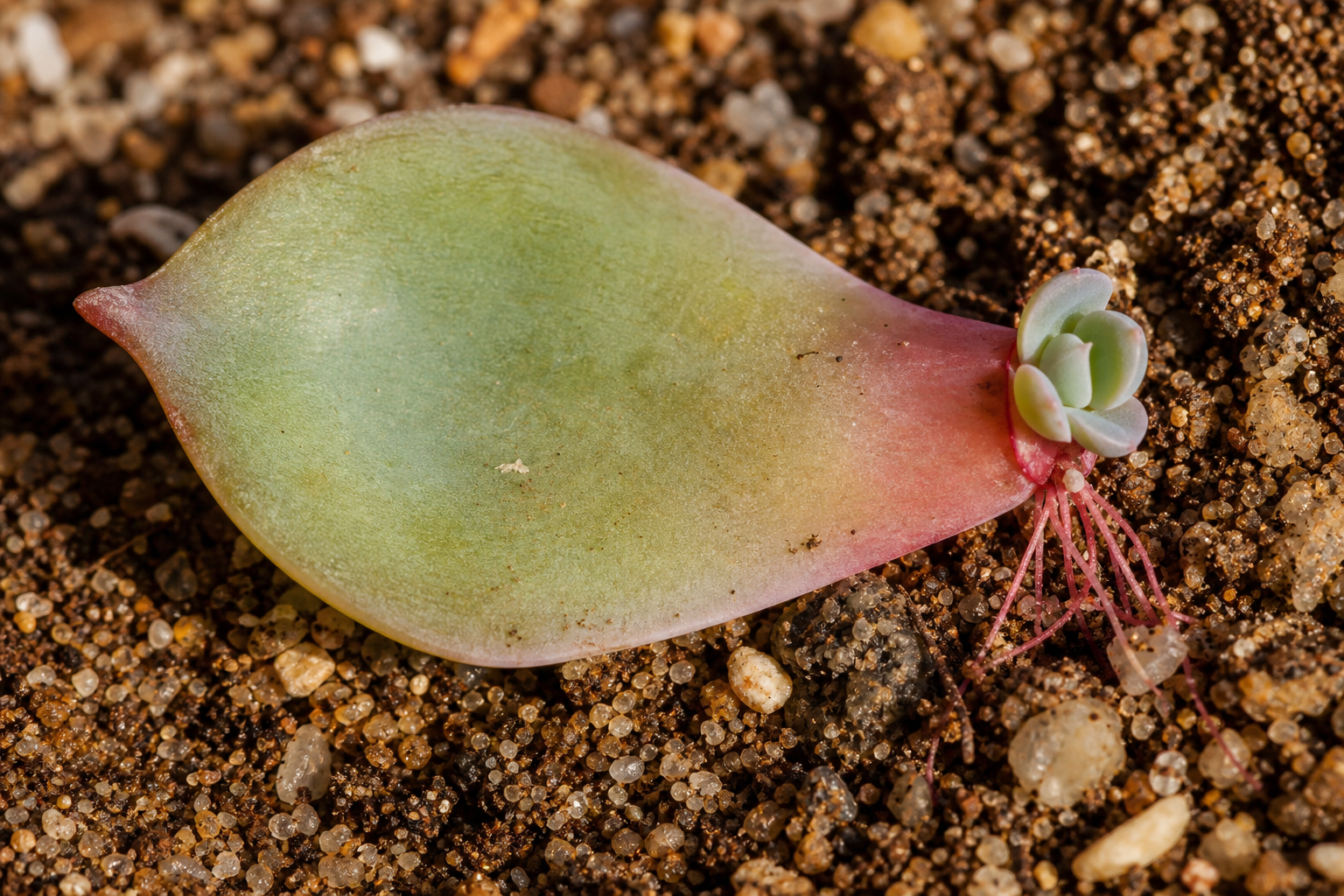
Drop a single, healthy echeveria leaf on dry, gritty soil. Do almost nothing. Wait a few weeks.
A tiny plantlet will emerge from the base of the leaf. Then roots. Then a full rosette. The original leaf shrivels as it donates its stored nutrients to the new plant, and eventually falls away. The new plant is genetically identical to its parent.
It’s propagation in its simplest form, and it works. You need a small terracotta pot, some well-draining gritty mix, and patience. You can grab small terracotta pots on Amazon for a few dollars. Succulents don’t ask for much.
Frequently Asked Questions
Are all cacti succulents?
Yes. All cacti are succulents because they store water in fleshy tissue. But succulents span more than 60 plant families, and cacti are just one of them.
Why are succulents so popular?
They’re low-maintenance, visually diverse, and easy to propagate. They also photograph well, which doesn’t hurt in an era where plants get shared on social media.
How long do succulents live?
It varies widely by species. Small decorative succulents might live 3 to 10 years indoors. Hardy garden species like Sempervivum can live for decades. Some agaves live 25 to 100 years before their single bloom. Baobabs can live over 1,000 years.
Can succulents survive without water for a long time?
Yes, but the timeframe depends on the species, the size of the plant, and the conditions. Small indoor succulents can typically go 2 to 4 weeks without water. Larger, established outdoor species can go months. Overwatering kills more succulents than drought does.
Are succulents toxic to cats and dogs?
Some are, some aren’t. Aloe vera is toxic to cats and dogs. Echeveria and Haworthia are generally considered non-toxic. If you have pets, check the ASPCA toxic plant database before buying a new variety.
The Bottom Line
Succulents aren’t just the low-maintenance plant of the moment. They’re ancient, globally diverse, edible, cold-hardy, artfully disguised, and occasionally explosive in bloom. Most of us grow them without knowing any of that. Knowing it makes them a little more interesting to look at.
Now go check whether your plant is a cactus.
We may earn a small commission if you purchase through links on this page, at no extra cost to you. We only recommend products we’d actually use.
