
The right duct size depends on the airflow it has to carry, measured in CFM.
At a friction rate of 0.08, a 6 inch round metal duct carries about 96 CFM, an 8 inch about 210 CFM and a 12 inch about 625 CFM. Flex duct of the same size carries roughly a quarter less.
Use the calculator for your own CFM, tons or BTU, or go straight to the HVAC duct size charts below it.
Updated October 2026: calculator added, round duct charts rebuilt against ACCA Manual D and ASHRAE figures.
Duct Size Calculator
Enter the airflow, pick the kind of duct, and the calculator gives the round size, the matching rectangular sizes and the air velocity.
Duct size calculatorUses ACCA Manual D velocity limitsRecommended size16 inround sheet metal duct for a supply trunkAbove recommended velocity3 tons x 400 CFM per ton = 1,200 CFMDuctA branch is the run to one room.ShapeMaterialRectangular sizes are for sheet metal.Friction rateIn. w.c. per 100 ft. 0.06 gives larger ducts; 0.10 is the Manual D example.Airflow1,200 CFMAir velocity859 fpmFriction per 100 ft0.064 in. w.c.Recommended up to 700 fpmMaximum 900 fpmVelocity is above the 700 fpm Manual D recommends for a sheet metal supply trunk, but under the 900 fpm maximum. Going up to 18 in brings it down to 679 fpm.Same airflow in rectangular sheet metal (width x height)28 x 8 in 771 fpm22 x 10 in 785 fpm18 x 12 in 800 fpm14 x 14 in 882 fpmFormula: friction loss per 100 ft = f x (1200 / D) x 0.075 x (V / 1097)2, where V is CFM divided by the duct area and f comes from the Altshul-Tsal equation. The answer is the smallest standard size at or under your friction rate, moved up a size if the air would be faster than the Manual D maximum.
Rectangular sizes use the Huebscher equivalent diameter, 1.30 x (a x b)0.625 / (a + b)0.25.
Sources: ACCA Manual D for the friction rate method and the Table 3-1 velocity limits, and the ASHRAE Handbook, Fundamentals, for the friction equations and duct roughness (0.0003 ft for galvanized steel, 0.015 ft for flex), as printed in LBNL-49012. 400 CFM per ton is the usual rule of thumb.
This is a sizing guide for straight duct. A permit or a new system needs a full ACCA Manual D calculation, which adds up the fittings and uses your blower’s own data.
Duct CFM Chart at a Glance
These are the most each standard round duct size carries in a straight run.
| Round duct size | Sheet metal, max CFM | Flex duct, max CFM |
|---|---|---|
| 4 inch | 32 | 24 |
| 5 inch | 59 | 44 |
| 6 inch | 96 | 72 |
| 7 inch | 145 | 105 |
| 8 inch | 210 | 150 |
| 10 inch | 380 | 275 |
| 12 inch | 625 | 445 |
| 14 inch | 945 | 670 |
| 16 inch | 1,355 | 955 |
| 18 inch | 1,850 | 1,305 |
| 20 inch | 2,445 | 1,720 |
How To Choose The Correct Size Duct
Fully designing a duct system is complex, but simple rules and charts take a lot of the work out of it.
Three numbers decide a duct size: the airflow in CFM, the friction rate and the air velocity.
Friction rate is the pressure the air loses to the duct walls over 100 feet. Velocity is how fast the air moves, in feet per minute (fpm).
The duct size calculator above works all three out for you.
If you want to see the charts and data behind the calculator, they are all below.
How Many CFM Do You Need?
For a whole system, the usual rule of thumb is 400 CFM per ton of cooling. ACCA notes it can be nearer 350 in humid climates and 450 in dry ones.
Your blower’s own airflow table is the real figure, so use that if you have it.
For a single room, the CFM comes from a room-by-room load calculation (ACCA Manual J). Each supply run is then sized for the CFM of the room it feeds.
| System size | Cooling capacity | Airflow at 400 CFM per ton |
|---|---|---|
| 1.5 ton | 18,000 BTU/h | 600 CFM |
| 2 ton | 24,000 BTU/h | 800 CFM |
| 2.5 ton | 30,000 BTU/h | 1,000 CFM |
| 3 ton | 36,000 BTU/h | 1,200 CFM |
| 3.5 ton | 42,000 BTU/h | 1,400 CFM |
| 4 ton | 48,000 BTU/h | 1,600 CFM |
| 5 ton | 60,000 BTU/h | 2,000 CFM |
How To Use These HVAC Duct Size Charts
- Identify the volume of air (in CFM) that will be passing through the duct.
- Choose the appropriate duct size from the table based on the identified volume of air.
- In case the desired airflow exceeds the maximum CFM rating provided in the table, increase to the next larger size duct.
- The figures are for straight duct. Bends, fittings and sagging flex all cut airflow, so treat them as upper limits and fit dampers for fine control.
- If the duct run is long or has several bends and transitions, use the next larger size duct.
- You can print the rectangular charts with the “Print Chart” button at the bottom of each one.
Each chart lists the friction rate it was built on.
ACCA Manual D works the real friction rate out from your blower and the length of your ducts. That is why charts from different sources rarely match each other.
Standard Air Duct Sizes
We have included charts for most of the popular standard air duct sizes.
These include:
- Round flex duct: 4 inch – 20 inch
- Metal round pipe: 4 inch – 20 inch
- 4 inch rectangular duct: 6 inch – 24 inch wide
- 6 inch rectangular duct: 4 inch – 30 inch wide
- 8 inch rectangular duct: 4 inch – 36 inch wide
- 10 inch rectangular duct: 4 inch – 40 inch wide
- 12 inch rectangular duct: 4 inch – 42 inch wide
Round Flex Duct Sizing Chart
| Duct size | Max CFM at 0.06 | Max CFM at 0.08 | Max CFM at 0.10 | CFM at 600 fpm | CFM at 700 fpm |
|---|---|---|---|---|---|
| 4 inch | 21 | 24 | 27 | 52 | 61 |
| 5 inch | 38 | 44 | 50 | 81 | 95 |
| 6 inch | 62 | 72 | 81 | 115 | 135 |
| 7 inch | 94 | 105 | 120 | 160 | 185 |
| 8 inch | 130 | 150 | 170 | 205 | 240 |
| 9 inch | 180 | 210 | 235 | 265 | 305 |
| 10 inch | 240 | 275 | 310 | 325 | 380 |
| 12 inch | 385 | 445 | 500 | 470 | 545 |
| 14 inch | 580 | 670 | 750 | 640 | 745 |
| 16 inch | 825 | 955 | 1,070 | 835 | 975 |
| 18 inch | 1,125 | 1,305 | 1,460 | 1,060 | 1,235 |
| 20 inch | 1,485 | 1,720 | 1,925 | 1,305 | 1,525 |
The last two columns are the airflow at 600 fpm and 700 fpm, the recommended and maximum velocities ACCA Manual D gives for flex duct.
Use the lower of the friction figure and the velocity figure.
Why Flex Duct Carries Less Air Than Metal
Compare this chart with the metal one below. Flex duct of the same size carries less air because its inner liner is rougher than sheet metal.
It gets worse when the duct is not pulled tight. A Lawrence Berkeley National Laboratory study found that the moderate compression typical of real installations can raise the pressure drop by a factor of four.
So cut flex to length and pull it straight. The Building America Solution Center gives the installation rules: support it at least every 4 feet, and allow no more than half an inch of sag per foot.
Metal Round Duct CFM Chart
| Duct size | Max CFM at 0.06 | Max CFM at 0.08 | Max CFM at 0.10 | CFM at 700 fpm | CFM at 900 fpm |
|---|---|---|---|---|---|
| 4 inch | 27 | 32 | 36 | 61 | 78 |
| 5 inch | 50 | 59 | 67 | 95 | 120 |
| 6 inch | 82 | 96 | 105 | 135 | 175 |
| 7 inch | 125 | 145 | 165 | 185 | 240 |
| 8 inch | 175 | 210 | 235 | 240 | 310 |
| 9 inch | 245 | 285 | 325 | 305 | 395 |
| 10 inch | 325 | 380 | 430 | 380 | 490 |
| 12 inch | 530 | 625 | 705 | 545 | 705 |
| 14 inch | 805 | 945 | 1,070 | 745 | 960 |
| 16 inch | 1,155 | 1,355 | 1,525 | 975 | 1,255 |
| 18 inch | 1,580 | 1,850 | 2,085 | 1,235 | 1,590 |
| 20 inch | 2,095 | 2,445 | 2,755 | 1,525 | 1,960 |
The 700 fpm column is the Manual D maximum for a return trunk and the recommended speed for a supply trunk. 900 fpm is the maximum for sheet metal supply ducts.
Rectangular Duct Size Charts
The rectangular charts below are grouped by duct height and use a friction rate of 0.07.
Checked against the ASHRAE friction equation, every figure sits 2 to 13 percent under the calculated capacity, so they lean to the safe side.
A rectangular duct is matched to a round one with the equivalent diameter formula. A 12 x 12 inch duct, for example, moves the same air as a 13.1 inch round duct.
4 Inch Rectangular Duct Size Chart (Max 330 CFM)
| Duct Size (inches) | Max Airflow (0.07 Friction Rate) |
|---|---|
| 6×4 | 60 CFM |
| 8×4 | 90 CFM |
| 10×4 | 120 CFM |
| 12×4 | 150 CFM |
| 14×4 | 180 CFM |
| 16×4 | 210 CFM |
| 18×4 | 240 CFM |
| 20×4 | 270 CFM |
| 22×4 | 300 CFM |
| 24×4 | 330 CFM |
6 Inch Rectangular Ducts Size Chart (Max 775 CFM)
| Duct Size (inches) | Max Airflow (0.07 Friction Rate) |
|---|---|
| 4×6 | 60 CFM |
| 6×6 | 110 CFM |
| 8×6 | 160 CFM |
| 10×6 | 215 CFM |
| 12×6 | 270 CFM |
| 14×6 | 320 CFM |
| 16×6 | 375 CFM |
| 18×6 | 430 CFM |
| 20×6 | 490 CFM |
| 22×6 | 540 CFM |
| 24×6 | 600 CFM |
| 26×6 | 650 CFM |
| 28×6 | 710 CFM |
| 30×6 | 775 CFM |
8 Inch Rectangular Ducts Size Chart (Max 1500 CFM)
| Duct Size (inches) | Max Airflow (0.07 Friction Rate) |
|---|---|
| 4×8 | 90 CFM |
| 6×8 | 160 CFM |
| 8×8 | 230 CFM |
| 10×8 | 310 CFM |
| 12×8 | 400 CFM |
| 14×8 | 490 CFM |
| 16×8 | 580 CFM |
| 18×8 | 670 CFM |
| 20×8 | 750 CFM |
| 22×8 | 840 CFM |
| 24×8 | 930 CFM |
| 26×8 | 1,020 CFM |
| 28×8 | 1,100 CFM |
| 30×8 | 1,200 CFM |
| 32×8 | 1,300 CFM |
| 34×8 | 1,400 CFM |
| 36×8 | 1,500 CFM |
10 Inch Rectangular Duct Sizing Chart (Max 2350 CFM)
| Duct Size (inches) | Max Airflow (0.07 Friction Rate) |
|---|---|
| 4×10 | 120 CFM |
| 6×10 | 215 CFM |
| 8×10 | 310 CFM |
| 10×10 | 430 CFM |
| 12×10 | 550 CFM |
| 14×10 | 670 CFM |
| 16×10 | 800 CFM |
| 18×10 | 930 CFM |
| 20×10 | 1,060 CFM |
| 22×10 | 1,200 CFM |
| 24×10 | 1,320 CFM |
| 26×10 | 1,430 CFM |
| 28×10 | 1,550 CFM |
| 30×10 | 1,670 CFM |
| 32×10 | 1,800 CFM |
| 34×10 | 1,930 CFM |
| 36×10 | 2,060 CFM |
| 38×10 | 2,200 CFM |
| 40×10 | 2,350 CFM |
12 Inch Rectangular Ducts Sizing Chart (max 3050 CFM)
| Duct Size (inches) | Max Airflow (0.07 Friction Rate) |
|---|---|
| 4×12 | 150 CFM |
| 6×12 | 270 CFM |
| 8×12 | 400 CFM |
| 10×12 | 550 CFM |
| 12×12 | 680 CFM |
| 14×12 | 800 CFM |
| 16×12 | 950 CFM |
| 18×12 | 1,100 CFM |
| 20×12 | 1,250 CFM |
| 22×12 | 1,400 CFM |
| 24×12 | 1,600 CFM |
| 26×12 | 1,750 CFM |
| 28×12 | 1,950 CFM |
| 30×12 | 2,150 CFM |
| 32×12 | 2,300 CFM |
| 34×12 | 2,450 CFM |
| 36×12 | 2,600 CFM |
| 38×12 | 2,750 CFM |
| 40×12 | 2,900 CFM |
| 42×12 | 3,050 CFM |
Maximum Air Velocity in a Duct
A duct can pass the friction check and still be too small, because the air has to move too fast to get through it. Fast air is noisy air.
ACCA Manual D sets a recommended and a maximum velocity for each kind of duct.
| Duct | Sheet metal: recommended / maximum | Flex: recommended / maximum |
|---|---|---|
| Supply trunk | 700 / 900 fpm | 600 / 700 fpm |
| Supply branch | 600 / 900 fpm | 600 / 700 fpm |
| Return trunk | 600 / 700 fpm | 600 / 700 fpm |
| Return branch | 400 / 700 fpm | 400 / 700 fpm |
| Return grille (face velocity) | 500 fpm maximum | 500 fpm maximum |
| Filter grille (face velocity) | 300 fpm maximum | 300 fpm maximum |
To find the velocity in a duct, divide the CFM by the duct’s cross-section in square feet. The calculator above does it for you and warns you when a size is over the limit.
You can also measure it. Hold an anemometer at a register to read the air speed in feet per minute.
Supply vs Return Duct Size
The return side has to carry the same air as the supply side, but Manual D holds it to a lower speed: 700 fpm at most in a return trunk, against 900 fpm in a sheet metal supply trunk.
So for the same CFM, the return duct usually comes out a size or two larger than the supply trunk.
Our return air duct size chart lists the return size for 1.5 to 5 ton systems.
What Happens When a Duct Is Undersized
An undersized duct cannot deliver the air the room needs. ACCA lists what follows from wrong-sized ducts:
- The room ends up too warm or too cool.
- The air is drafty or noisy.
- The fan works harder, uses more energy and may fail sooner.
- The furnace or air conditioner safety devices can shut the equipment down.
If one room is always uncomfortable, compare the size of its duct with the chart before you blame the equipment.
Tools for Checking and Sealing Ducts
Size is only half of it. ENERGY STAR says a typical house loses 20 to 30 percent of the air in its ducts to leaks, holes and poor connections.
It recommends sealing them with mastic sealant or metal tape, and never with cloth duct tape, which does not last.
These four cover measuring and sealing. All were in stock on Amazon when we checked in October 2026.
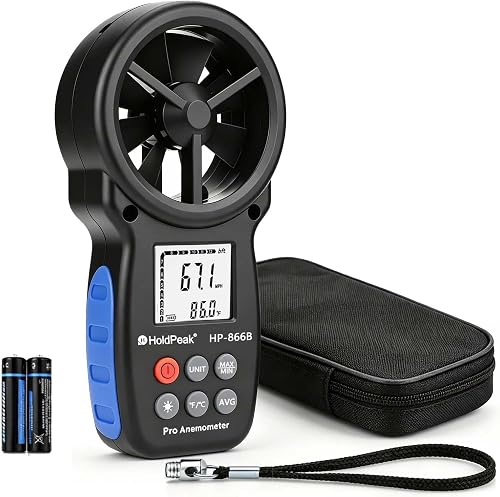
- Used for Reading air speed at a register or grille
- Reads in Feet per minute, among other units
- Tells you Whether a duct is over its velocity limit

- Used for Measuring static pressure across the system
- Reads in Inches of water, among other units
- Tells you How hard the blower is working against the ducts

- Used for Sealing joints and seams
- Rating UL 181A-M and 181B-M, per the maker
- Works on Metal, fiberglass and flex duct

- Used for Taping flex duct and duct board connections
- Rating UL 181A-P and 181B-FX listed
- Not the same as Cloth duct tape
We may earn a commission if you buy through this link. It costs you nothing extra.
Frequently Asked Questions
what size duct do i need for 1600 cfm?
For an airflow of 1600 CFM in a supply trunk, your options are:
- 20 inch round sheet metal (733 fpm)
- 22 inch round flex (606 fpm)
- 26 x 10 inch rectangular sheet metal (886 fpm)
- 22 x 12 inch rectangular sheet metal (873 fpm)
- 20 x 14 inch rectangular sheet metal (823 fpm)
- 16 x 16 inch rectangular sheet metal (900 fpm)
These use a friction rate of 0.08 and stay under the Manual D maximum velocity. 1,600 CFM is a 4 ton system.
what size duct do i need for 2000 cfm?
For an airflow of 2000 CFM in a supply trunk, your options are:
- 22 inch round sheet metal (758 fpm)
- 24 inch round flex (637 fpm)
- 32 x 10 inch rectangular sheet metal (900 fpm)
- 28 x 12 inch rectangular sheet metal (857 fpm)
- 20 x 16 inch rectangular sheet metal (900 fpm)
- 18 x 18 inch rectangular sheet metal (889 fpm)
These use a friction rate of 0.08. 2,000 CFM is a 5 ton system.
what size duct do i need for 2500 cfm?
For an airflow of 2500 CFM in a supply trunk, your options are:
- 24 inch round sheet metal (796 fpm)
- Round flex: no single duct up to 24 inch fits, so split it across two runs
- 40 x 10 inch rectangular sheet metal (900 fpm)
- 34 x 12 inch rectangular sheet metal (882 fpm)
- 26 x 16 inch rectangular sheet metal (865 fpm)
- 20 x 20 inch rectangular sheet metal (900 fpm)
At this size a single flex duct is no longer practical.
what size duct do i need for Larger Airflow Amounts Like 3000, 4000, or 6000 CFM?
For larger systems with CFM ratings of 3000, 4000, 6000 or higher, contact a professional HVAC installer to help you plan the system correctly.
Even a small mistake in planning a high airflow system can be expensive to put right.
How many CFM can a 6 inch duct handle?
A 6 inch round sheet metal duct handles about 96 CFM at a friction rate of 0.08, and a 6 inch flex duct about 72 CFM.
An 8 inch metal duct handles about 210 CFM and a 10 inch about 380 CFM.
What are the standard duct sizes?
The standard round duct sizes in these charts are 4, 5, 6, 7, 8, 9 and 10 inch, then 2 inch steps: 12, 14, 16, 18 and 20 inch.
The rectangular charts cover even-inch widths on heights of 4, 6, 8, 10 and 12 inches.
Why is Velocity Important?
When determining the correct duct size for an HVAC system, velocity plays a crucial role. Velocity refers to the speed at which air is circulated, or ‘flows,’ through the ductwork.
A well-calculated velocity ensures optimal efficiency in heat distribution and air circulation, maintaining a comfortable environment in your home.
Too high a velocity leads to noise and makes the fan work harder. Too low may result in inadequate air distribution, causing uneven temperatures.
Therefore, velocity must be carefully calculated and considered during duct sizing to ensure the HVAC system functions at its best.
