
Yes, battery operated heaters exist, but they don’t work the way most people expect. A battery can’t hold enough energy to run a normal space heater for more than a few minutes.
The cordless heaters that really warm a garage, cabin or tent burn propane and use the battery for the fan and ignition. Battery power on its own is best used to heat you, not the room.
Below we explain the four types with the runtime math, then compare the heaters we’d pick for a car, campsite, workshop or power outage.
Updated October 2026: new cordless heater picks and battery runtime figures.

Do Battery Operated Heaters Exist? The 4 Types That Work
Yes. Walk into any hardware store and you’ll find heaters labelled cordless or battery powered. The catch is that in almost all of them, the battery isn’t what makes the heat.
Here’s how much energy each power source holds, and how long it could run a standard 1,500W space heater (about 5,100 BTU an hour).
| Power source | Energy stored | Runs a 1,500W heater for |
|---|---|---|
| 18V 5Ah tool battery | About 90 Wh | About 3.5 minutes |
| 1,024 Wh portable power station | About 870 Wh usable after inverter losses | About 35 minutes |
| 1 lb propane cylinder | About 21,600 BTU (6.3 kWh of heat) | About 4 hours of the same heat |
That gap is why every cordless heater that warms a real space burns propane or diesel. The battery just runs the fan, the igniter and the lights.
There are four kinds of battery operated heater worth knowing about.
1. Cordless Propane Heaters (the Battery Runs the Fan)
These are what most people mean by a battery operated heater. Propane makes the heat, and a power-tool battery runs the fan, the electronic ignition and extras like USB ports.
The DeWalt DXH12B is the one to get for indoor use. It’s a 12,000 BTU radiant heater that takes any DeWalt 20V MAX or FlexVolt battery.
It’s certified indoor-safe, with a factory-fitted low-oxygen sensor and a tip-over shut-off. Two 1 lb cylinders give up to 7 hours, or you can run it from a 20 lb tank with the optional hose.

Best cordless heater for indoor use: DeWalt DXH12B
12,000 BTU of radiant heat, low-oxygen and tip-over shut-off, and a fan that runs off your DeWalt 20V battery. Battery not included.
For a garage, barn or jobsite, the DeWalt 68,000 BTU forced-air heater runs on a 20V MAX battery or a 120V outlet. DeWalt rates it for up to 1,700 sq ft.
It’s built for well-ventilated work spaces, not living areas, so keep it out of the house.
2. True Battery-Electric Mini Heaters
A few small heaters run straight off a power-tool battery with no fuel at all. They draw about 170 watts, which works out to roughly 580 BTU an hour.
That’s enough to warm your hands at a desk or in a deer stand. It won’t heat a room, a tent or a car.
Runtime is short too. A 4Ah 18V pack holds about 72 Wh, so at 170W you get around 25 minutes, even when the listing promises more.
We haven’t linked one, because the ones we checked don’t show a UL or ETL safety listing. If you buy one, look for that mark first.
3. Battery Heated Blankets and Hand Warmers
If the goal is to keep you warm rather than the room, a battery goes a lot further. A heated blanket only needs a few watts because it sits right against you.
The Makita DCB200A runs off any Makita 18V LXT battery. Makita rates it at up to 35 hours on the low setting with a 6.0Ah pack.

Best use of a battery: the Makita DCB200A heated blanket
Up to 35 hours on low from one 6.0Ah battery, per Makita. Great for camping, tailgates and power cuts. Battery and charger sold separately.
For pockets and gloves, rechargeable hand warmers like the OCOOPA 2-pack charge over USB-C and reach up to 137°F on the top setting.
4. A Portable Power Station and a Plug-In Heater
A power station will run an ordinary space heater, just not for long. A good rule of thumb is capacity in watt-hours x 0.85, divided by the heater’s watts.
A 1,024 Wh station gives a 1,500W heater about 35 minutes. Swap in a 500W heater like the Amazon Basics ceramic model below and it stretches to about 1 hour 45 minutes.
Check the station’s inverter rating too. It has to supply the heater’s full wattage the whole time.
Safety First!
When you’re dealing with heat or flames, it’s important to follow heating safety guidelines.
While Fuel-based heaters are a great source of heat during a power outage, they also create smoke or gas from combustion, which can cause health problems if there isn’t proper ventilation. There is also the risk of something coming in contact with the flame (if exposed), which can lead to fires starting or burns if safety precautions aren’t in place.
Electric heaters are also dangerous because the coils they use to create heat reach exceptional temperatures. Contact with a heating element can lead to bad burns and setting things on fire with longer exposure.
Quick Portable Heater Comparison Table
Use this handy comparison table to quickly compare models or keep scrolling to the full reviews.
- Fuel Propane (battery runs the fan)
- Output 12,000 BTU
- Battery DeWalt 20V MAX or FlexVolt
- Safety Low-oxygen and tip-over shut-off

Mr. Heater MH4B Little Buddy
- Fuel Propane
- Coverage Up to 95 sq ft
- Power needed None, cordless
- Safety Tip-over and low-oxygen shut-off

Mr. Heater MH9BX Buddy
- Fuel Propane
- Output 4,000-9,000 BTU
- Coverage Up to 225 sq ft
- Safety Low-oxygen shut-off

AmazonBasics 500W Ceramic Mini Heater
- Power Wall outlet, 500W
- Size Fits on a desk or table
- Safety Tip-over shut-off

Maradyne Santa Fe 12V Heater
- Power 12V, heats from engine coolant
- Output 13,200 BTU/hr
- Vents Adjustable louvers

- Fuel Diesel
- Output 8 kW
- Power 12V or 24V DC
- Tank 5L built in

Sengoku HeatMate Kerosene Heater
- Fuel Kerosene
- Output 10,000 BTU
- Runtime Up to 14 hours per 1.2 gal tank
- Power needed None, push-button start
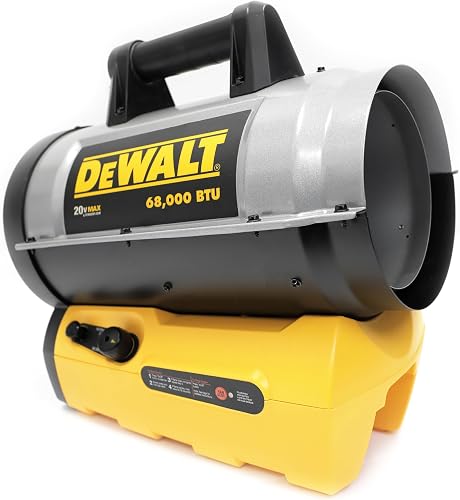
- Fuel Propane
- Output 27,000-68,000 BTU
- Power 20V MAX battery or 120V
- Use Well-ventilated jobsites and workshops
Makita DCB200A Heated Blanket
- Type Battery heated blanket
- Battery Makita 18V LXT, sold separately
- Runtime Up to 35 h on low with a 6.0Ah pack (Makita)
We may earn a commission if you buy through these links, at no extra cost to you.
The Best Battery Powered Heater Alternatives
Mr. Heater F215100 is a viable alternative to a battery-powered heater because its smaller size mimics the portability batteries would allow for, while still producing effective heat. Its oxygen sensor and tipping sensors also make it usable indoors and residentially, making it versatile as well.
This heater is fueled by 1-pound propane canisters (or larger tanks with a hose connection) that allow it to burn at 3800 BTU and cover almost 100 sq. ft. With a small profile and weighing only 6 pounds with the propane canister in, it can easily attach to a hiking bag, sit in a van until needed, or keep your tent warm.
The F215100 can be used indoors or outdoors, boasting a low-oxygen sensor that turns it off if the emissions become too strong. To make the most of this option, ensure there is ventilation so that it can run interrupted. Plus, when you run it overnight, you can be confident that it is safe thanks to the auto shut-off feature. If it tips over, the heater will turn off to help avoid burns or ignition.
The Mr. Heater F232000 is a portable indoor and outdoor heater that can provide an ample amount of heat without major emissions. Outside of burning fuel, this option is very similar to a battery-powered heater. It doesn’t need to be plugged in, and the oxygen sensor prevents overuse without proper ventilation, protecting from hazardous emissions.
With a BTU rating between 4,000 and 9,000 depending on your setting of choice, you can adapt your power usage to your needs. It has a high efficiency, which, coupled with the propane fuel source, allows for a clean burn that allows it to be used indoors with proper ventilation or short-term use.
Areas as small as a tent or as large as a garage would benefit from the Mr. Heater F232000. With auto shut-off features for oxygen levels, pilot light failure, and tipping, you can also achieve safer heat in fragile environments.
This portable propane heater is the perfect camping companion due to its portability, simplicity in fueling, and high heat output.
The F232000 heater is available on Amazon.
The electric Amazon 500W ceramic heater is so small, it looks like it could be battery powered. It produces no emissions which means it can be used indoors, and especially fits well on a desk as a personal heater. The main difference is that you need an outlet nearby to use it.
Amazon’s 500W ceramic heater is a budget option for those who are not looking to heat more than a small area. Built to sit comfortably on a desktop or table, this small heater features a heavy base and tip-over protection to stop it from igniting or burning anything from a fall.
This 500W heater option has the equivalent of about 1700 BTUs coming from a ceramic coil located inside of the device. This heat radiates outwards through the grate on the front of the device with the help of a fan, which directs it wherever you face the heater.
Yes, electric space heaters have a cord, but the size of this model can make it very convenient on many occasions.
This model would excel as a deskmate but requires an AC outlet nearby.
A battery operated heater would struggle to put out enough heat to keep larger areas warm, but the Maradyne H-400012 sure doesn’t. It requires a bit of setup and is much less portable than battery powered, but it creates plenty of heat for most cars, trucks, and other mobile quarters.
For those who are looking to create exceptional warmth for their vehicle or truck cab, the Maradyne H-400012 Santa Fe heater is for you. This high-output model puts out about 13,200 BTUs using a 12V connection in your car, and must be connected to the cooling line to create heat.
After mounting the H-400012 onto your cab and connecting the hoses, you can control the heat output with 2 fan speeds and adjustable louver columns. This allows you to distribute heat when and where you need it.
This option is primarily meant to be used for trucks, cabs, and larger vehicles that need temperature control, so don’t expect to use it at home.
VEVOR 8KW All-in-One Diesel Air Heater
Key Specifications
- 8 kW heat output on 12V or 24V DC
- Remote control with a 98 ft range
- LCD screen with temperature control from 32-104°F
- Built-in 5L (1.3 gal) tank with fuel gauge
If you need serious heat in a vehicle with no mains power, the VEVOR 8KW diesel heater does it from one self-contained box.
It is built for RVs, campers, trucks and boats, and at 8 kW it is the most powerful heater on this list.
VEVOR rates it for spaces of about 161-215 sq ft, which covers a typical van, RV or boat cabin.
This is the all-in-one version, so the tank, pump and heater sit in a single unit. A ceramic igniter starts it quickly in cold weather, and it runs on 12V or 24V DC.
The exhaust pipe has a heat-insulated shield, and the fuel cap is leak-proof for rough roads.
The remote works from up to 98 ft away, so you can warm the cabin before you get in. That saves an ice-cold trip to the van or truck in the morning.
On the unit itself, the LCD screen sets the temperature anywhere from 32-104°F, and a fuel gauge tells you when to top up.
It burns about 0.18-0.36 L of diesel an hour, which VEVOR puts at around a gallon a night.
Like any fuel-burning heater, run it only with the exhaust routed outdoors and the space ventilated.
Sengoku HeatMate Kerosene Heater
- 10,000 BTU, for indoor and outdoor use
- Cordless with a push-button start, so it needs no power outlet in an outage
- 1.2-gallon tank runs for up to 14 hours
We may earn a commission if you buy through this link, at no extra cost to you.
Key Specifications
- 10,000 BTU output, up to 14 hours per tank
- Electricity-free push-button start
- Flame adjuster knob for better heat control
- Includes auto shut-off feature for tipping over and protective safety gears
Offering more heat output and longer usage times, the adjustable HeatMate heater is another clear alternative to battery power. While it requires ventilation because of the fumes it creates, it can be used in a variety of outdoor situations to produce effective heat no matter where you place it.
The Sengoku HeatMate is a kerosene heater you can use indoors (with ventilation) or outdoors for camping.
Its 1.2-gallon tank runs for up to 14 hours, enough to keep a campsite, patio or gazebo warm all night.
This option includes a push-button starter that ignites the kerosene without electricity, batteries, or matches for easy startup. It also has a dial that you can adjust the amount of heat with, ensuring you always have enough to keep you warm.
For safety, the HeatMate has protective grills to keep people and things away from the heat source.
A tip-over switch also shuts it off automatically if it falls, which helps prevent fires.
This model would thrive as a patio, deck, or outdoor area’s heat source so that you don’t have to abandon your yard in the colder months.
Learn more: Common kerosene heater problems and how to fix them
Why a Battery Can’t Run a Normal Space Heater for Long
It isn’t the current. Tool batteries can push out hundreds of watts, which is how cordless heat guns work.
The problem is stored energy. A 1,500W space heater turns out about 5,100 BTU an hour, and an 18V 5Ah pack only holds about 90 watt-hours. That’s under four minutes of full heat.
A 1 lb propane cylinder holds roughly 70 times as much energy. That’s why every cordless heater that warms a real space burns fuel.
Battery Powered and Cordless Heater Buying Guide
Battery heaters do exist, but the battery is rarely what makes the heat.
So the first decision is the fuel, and the model comes second.
Fuel Types
The right fuel type for you will depend on how you plan to use your heater. Some fuels provide a higher BTU output, are more portable, or are 100% emissions-free. So, it’s important to decide which fuel source you want your heater to use as one of the first steps when buying a heater.
AC Powered – Electric Space Heaters
AC power, mains power, or any other name for the often 120-volt AC power that comes from your power outlets is a 100% emissions-free fuel type. They often work by using electricity to superheat a coil, producing heat that radiates from the heat source either through the use of a fan or exhaust.
In general, AC power struggles to produce high BTU counts for a similar reason that battery heaters aren’t used in large-scale heating. They cannot draw enough power to produce immense heat in the same way combustion can.
However, for use in an office, bedroom, or other interior location without large heat requirements, an AC heater can get the job done.
12V Power
12V-powered heaters are often used in cars. These heaters connect to the car’s battery through the cigarette lighter, which provides the amperage required to produce effective heat.
12V power sources come in a variety of BTU outputs, with some personal heaters falling around 1000 BTUs and larger options exceeding 10,000. However, there is more power drawn as the BTUs increase.
Propane Heater
Propane is a convenient fuel source for powering your heater because it can be contained in tanks. Propane also burns very cleanly, which lessens emissions (though ventilation is still required). These models come with a hose or a connection that allows the tank to be connected. This enables the propane to flow into the heater, ignite, and create heat that is circulated by an exhaust or fan.
Propane tanks use combustion, which allows them to provide more heat more easily. To create this reaction, an ignitor is powered by a battery, electricity source, friction, or a pilot light is lit.
Propane tanks are readily available in stores and often used for camping or smaller-scale heating solutions like a ventilated outdoor cabin or garage.
Diesel and Kerosene
Both diesel and kerosene are liquid fuels that create heat when ignited. They also use an ignition source like a battery, electrical igniter, friction, or a pilot light. They should have proper ventilation for safety reasons due to their higher emissions and the unsavory smells they put out along with the heat.
Diesel burns less cleanly than kerosene but can produce more BTUs in many cases. However, both produce odors. Generally, they are also the hottest-burning fuels.
A garage or other larger outdoor location is where these two fuel types would excel.
Safety
Any appliance that creates heat or emissions poses a potential safety hazard. Whether it’s a live flame burning, incredibly hot coils that are exposed, or harmful gasses that are created by burning fuel, it’s essential that you take safety precautions.
When it comes to safe use of your heater, the location where you are using it is the most important factor to consider. Indoor locations without ventilation have very different options to consider than an outdoor, well-ventilated area.
For indoor use in smaller locations or locations without proper ventilation, electricity-powered (AC or 12V) options are the safest. They provide no emissions because they don’t burn fuel. They also often include auto-shutoff for tipping and grates to protect you from the burning coils, which helps keep users safe and prevent igniting something you didn’t intend to.
If ventilation is adequate but the location is still indoors, electrical and propane are usable fuel sources. As long as the propane emissions are able to escape and the heat source is protected from contact with anything, semi-interior use can be safe when caution is exercised.
For outdoor locations, any fuel source can be used as long as the flames or heating elements are protected from contact. However, if ventilation is obscured, these heaters can pose a serious risk of harm. An oxygen depletion sensor also helps to encourage safe use by shutting off the heater before a problem occurs.
Which Battery Operated Heater Should You Buy?
Heaters are a lifesaver when it turns cold, but anything that makes heat can burn you or fill a space with fumes.
Match the heater to where you’ll use it.
Depending on where you want to use your heater, the right choice for you may vary.
Electrical heaters are generally safer and less expensive, but they can struggle to produce the heat required to cover a whole room.
Meanwhile, gas heaters are able to produce more BTUs, but also require you to consider ventilation to be safe (and supply fuel to burn).
Hybrid options like a diesel air heater can provide a good combination of both benefits, but require the correct connections to work properly.
If you want cordless heat for a room, get a propane heater that uses a battery for its fan, like the DeWalt DXH12B.
If you just want to stay warm on battery power, a heated blanket like the Makita DCB200A goes much further. Stay toasty!
Battery Heater FAQ
Is There a Battery Powered Tent Heater?
Not one that heats the air in a tent for long. A battery heated blanket is the safest way to stay warm in a tent on battery power alone.
If you use a propane heater like the Buddy in a tent, follow Mr. Heater’s ventilation instructions, keep it clear of fabric and turn it off before you sleep.
How Can I Heat a Small Room Without Power?
There are a few options when it comes to keeping a small space warm with no power available.
If none of the options above suit you, then you could try one of the following:
- A propane heater with a low-oxygen shut-off, like the Mr. Heater Little Buddy
- A battery heated blanket, like the Makita DCB200A
How Long Does a Battery Powered Heater Last?
It depends on the type. A 170W battery mini heater lasts about 25 minutes on a 4Ah tool battery.
A cordless propane heater like the DeWalt DXH12B runs up to 7 hours on two 1 lb cylinders, because the battery only powers the fan.
A battery heated blanket lasts longest: Makita rates the DCB200A at up to 35 hours on low with a 6.0Ah pack.

Thankyou for making this a lot clearer . I’ve been sourcing battery operated machines without success for ages !!
I just wanted the heat occasionally – without any cords dragging with the machine .
(My outlet socket is too far away from the place to be heated . All the cords are too short that are provided with any machine .)
Do any of the machines “charge up” like a kindle – phone – or computer ? This would solve the problem . I could then switch on and use until it needed “charging” again …
If not , I will probably have to have an electrician to provide another socket !!
Hi May, you could just use an extension lead. Available at Amazon.