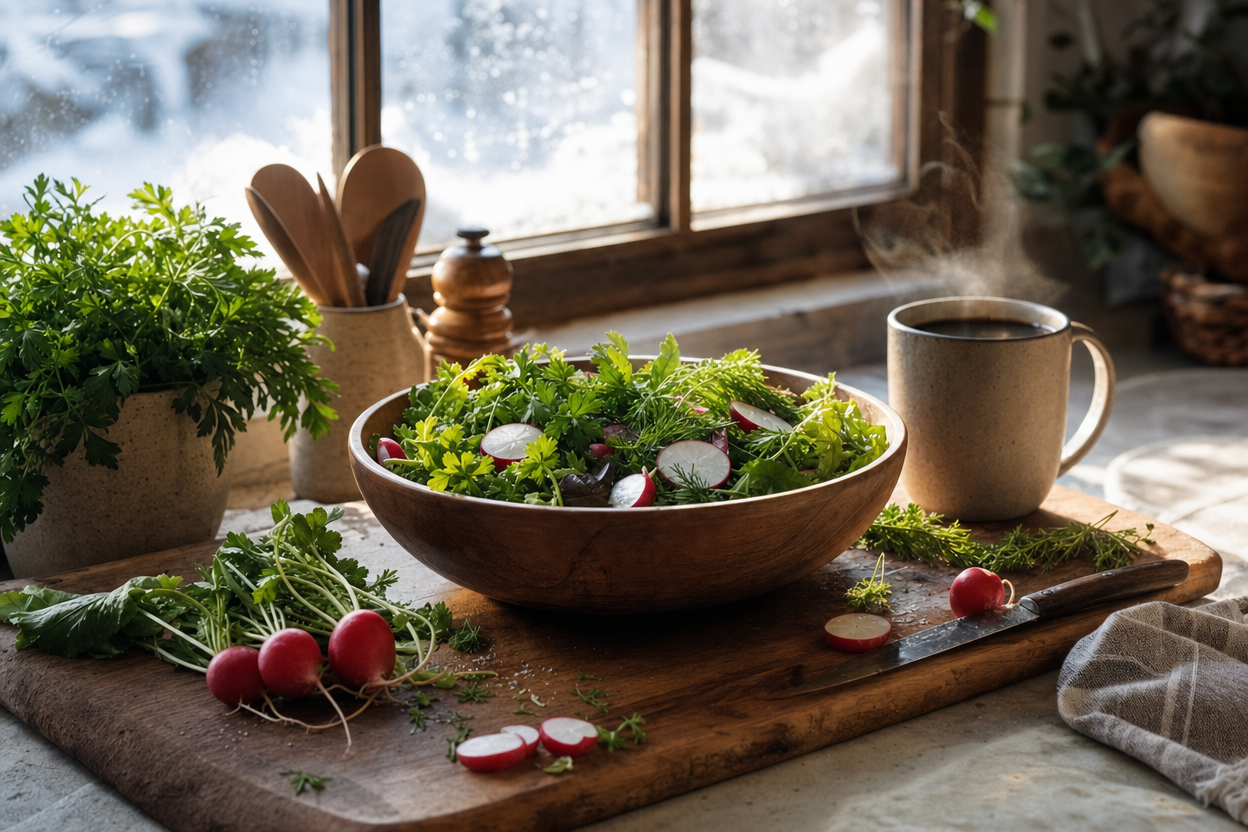
Here’s the thing. Staring at a dead outdoor garden in January while reluctantly tossing a $7 bag of wilting supermarket spinach into your trolley is a specific kind of sad. The spinach is half-yellow. You paid more for it than your morning coffee. And somewhere in the back of your mind, a small voice whispers: there has to be a better way.
There is. It’s your windowsill.
I’ve been growing vegetables indoors through winter for a few years now, and what started as “let’s see if this works” has turned into a legitimate kitchen garden situation: fresh salad greens in February, herbs I actually use, and the kind of smug satisfaction that comes from watching snow fall while harvesting something for dinner. These 10 vegetables will thrive in a sunny sill, a shallow container, and a bit of patience. No greenhouse required.
This post contains affiliate links. We may earn a commission if you purchase through links at no extra cost to you.
1. Lettuce: The People-Pleaser That Never Lets You Down
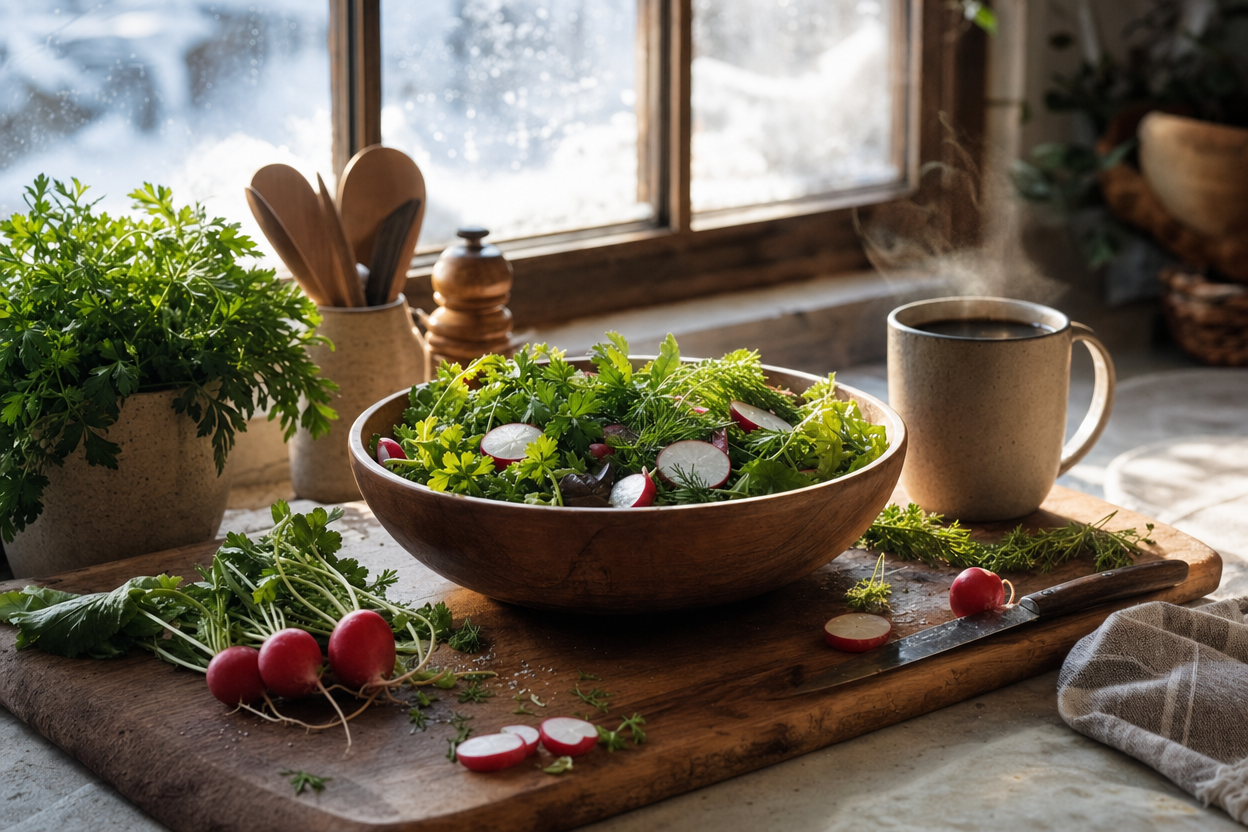
If there’s one vegetable I’d recommend to literally anyone starting an indoor winter garden, it’s lettuce. It’s forgiving, fast, and genuinely doesn’t seem to care whether you’re an expert or you once killed a cactus. Loose-leaf varieties like ‘Little Gem’ and ‘Buttercrunch’ are your best bet: they grow in shallow containers (even a repurposed colander works), need minimal light, and are harvestable in around four weeks.
The trick is to cut outer leaves as you need them and let the centre keep producing. You get multiple harvests from one planting, and the leaves are better than anything in that plastic bag from the supermarket. The flavour is noticeably better when it’s come straight from a pot six inches from your kitchen sink.
Plant a new container every two weeks for continuous supply. It’s the indoor gardening equivalent of always having bread in the house.
2. Spinach: The Overachiever That Sweetens With a Sulk
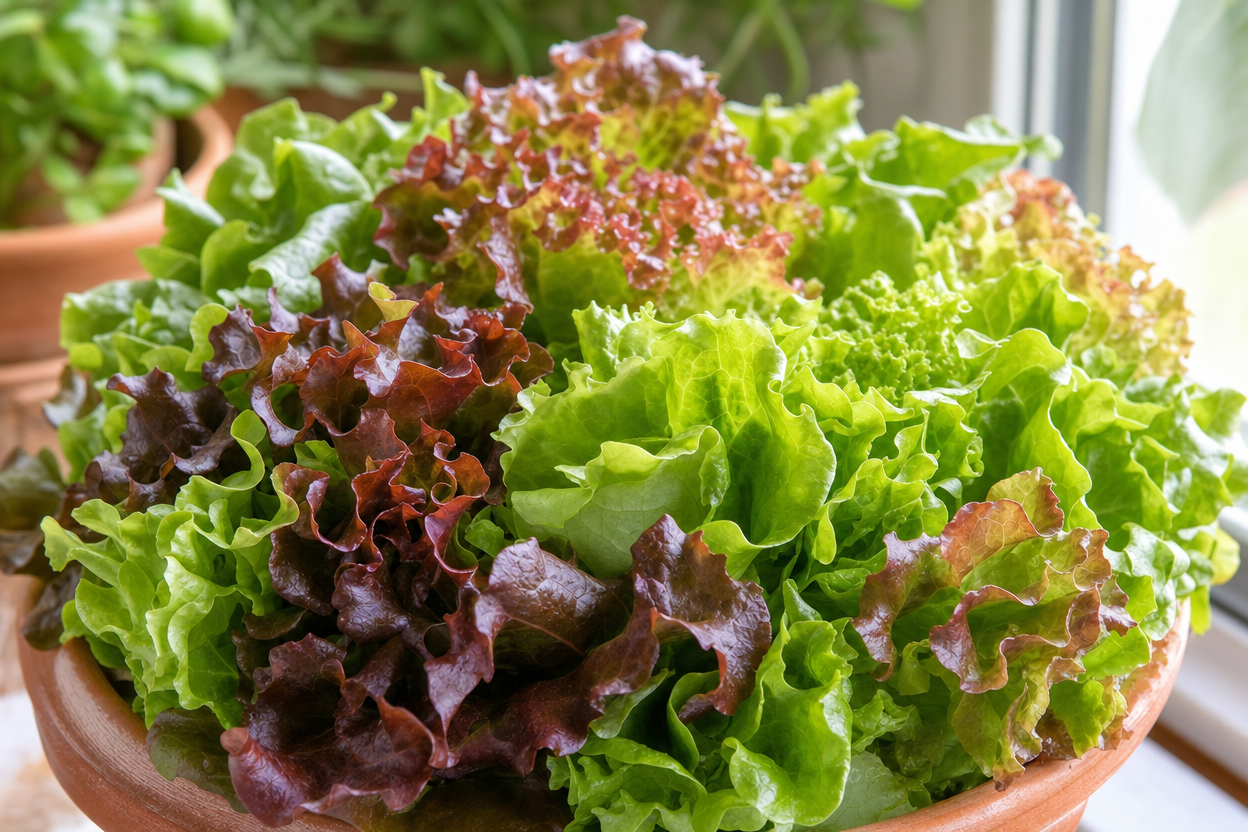
Spinach has a personality quirk that works in your favour indoors: it actually prefers the cooler temperatures of a winter kitchen over the heat of summer. The cold brings out a natural sweetness in the leaves that makes it infinitely better for pesto, salads, and smoothies than the limp, flavourless stuff in grocery bags.
‘Bloomsdale’ is my go-to variety for indoor growing. It’s crinkled, robust, and produces consistently well in containers. Keep it in a spot that gets 4–6 hours of light, water consistently (but don’t drown it), and you’ll be harvesting baby leaves every three weeks or so. It sulks in summer heat. Give it a cool sill and it becomes an overachiever.
Winter pesto made from homegrown Bloomsdale spinach, a handful of pine nuts, and good olive oil is, genuinely, one of the better things you can do with a windowsill.
3. Kale: The Drama-Free Diva That Outlasts Everything
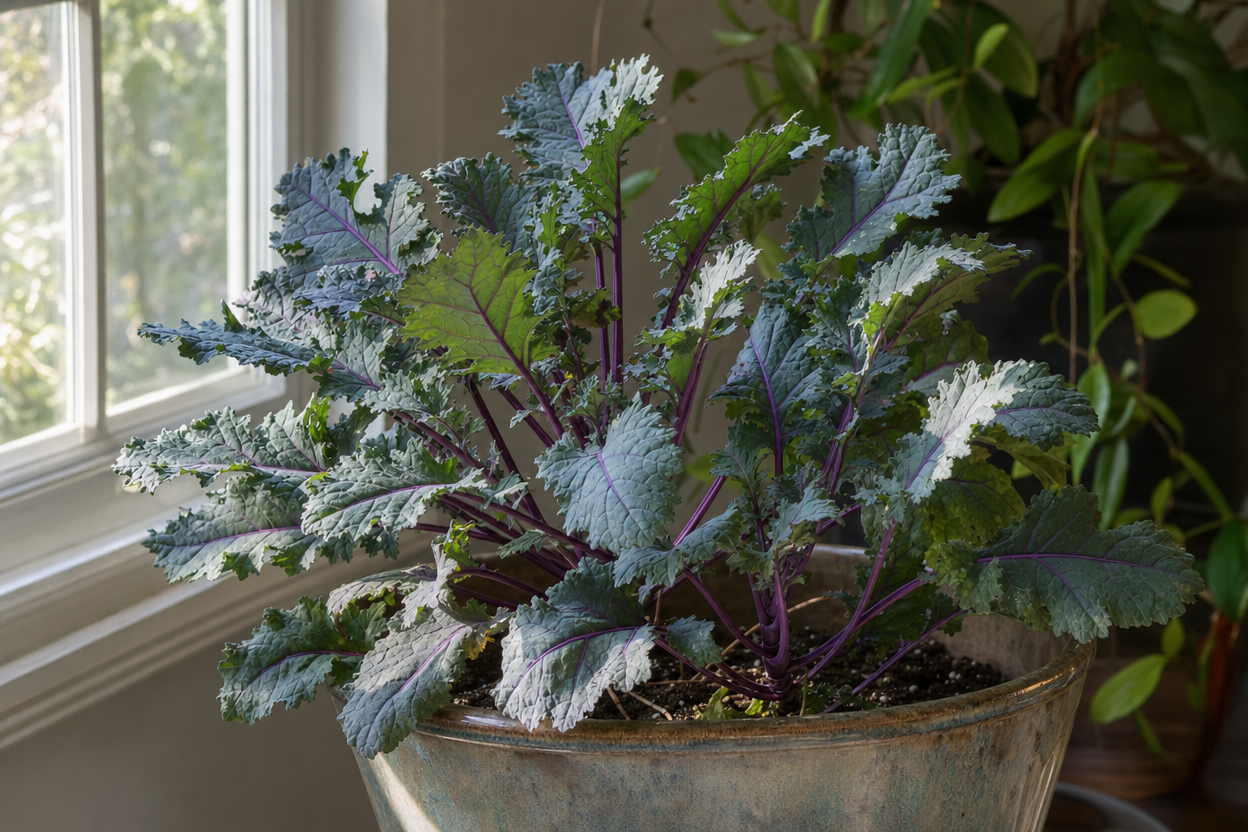
Kale gets a reputation for being fussy because people try to grow it in the wrong seasons. Indoors in winter, it’s actually one of the most resilient things you can put in a pot. ‘Red Russian’ has beautiful, flat, serrated leaves with purple stems that look genuinely striking on a sill. ‘Dwarf Blue Curled’ is the compact option if space is tight. It grows to about 30cm and doesn’t crowd out everything else.
The cut-and-come-again method is your friend: harvest outer leaves regularly and the plant keeps producing for months. Cold tolerance means it’s genuinely unbothered by a cool windowsill near a draughty window in January.
Food outcomes range from the obvious (kale chips, smoothies) to the underrated. Thinly sliced and sautéed with olive oil and garlic, freshly picked kale from a pot is in a different category entirely from bagged kale that’s been sitting in a distribution centre for a week.
4. Scallions: The Freeloader That Pays Rent in Flavour
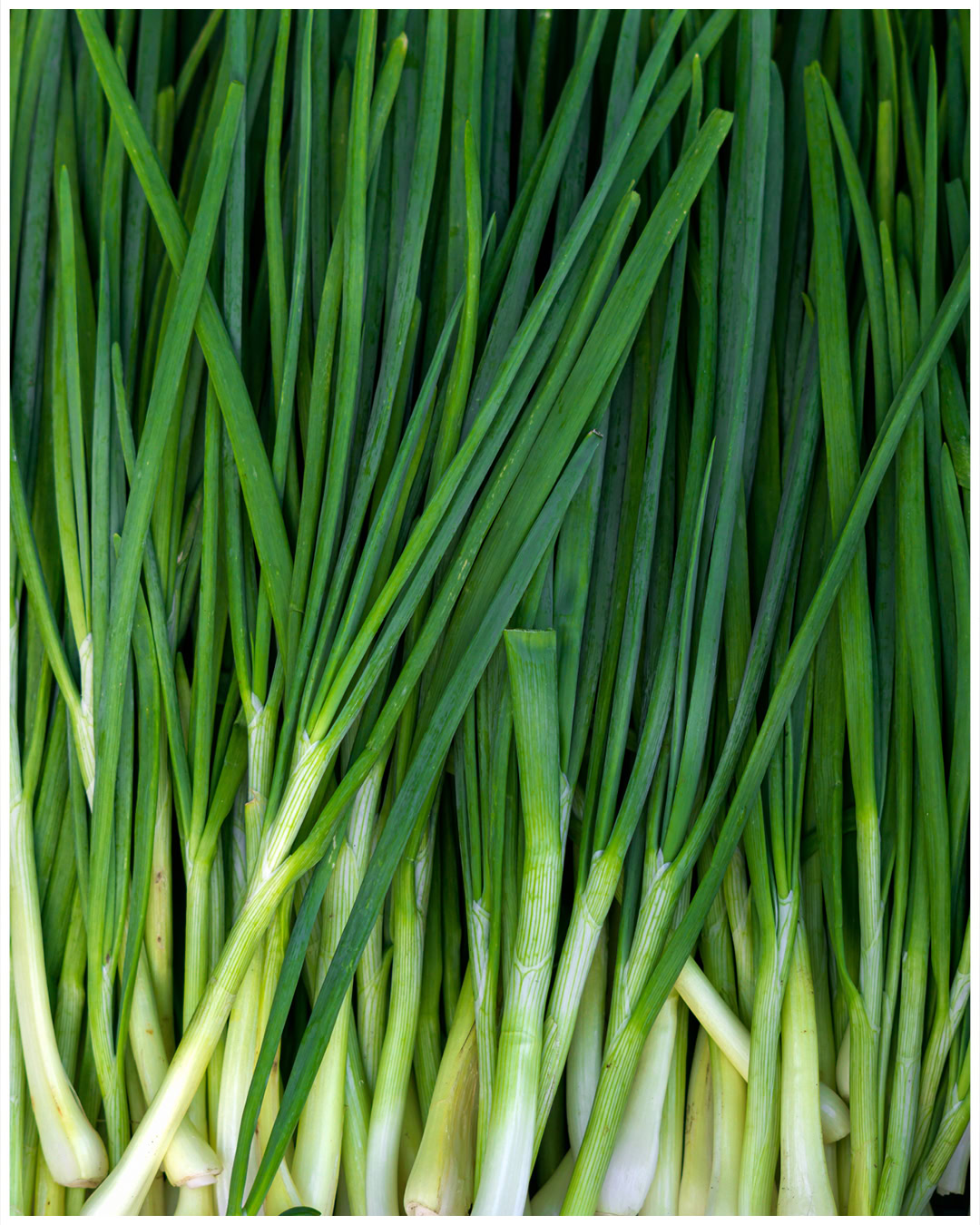
Here’s the one that genuinely feels like a cheat code: scallions you can regrow for free, indefinitely, from the bunches you already buy at the supermarket. Trim your scallions, leave about 3cm of the white root end, and drop them in a glass of water on your windowsill. Within a few days they’re growing again. Change the water every few days, snip what you need, and they keep going.
This is genuinely one of the most-saved pins in the indoor gardening world for a reason. It’s instant gratification, zero cost, and a glass of regrowing scallions on a kitchen windowsill looks like something out of a very aspirational lifestyle magazine.
Once you get bored of the water method (or if you want longer, more robust growth), transplant them into a pot of compost and they’ll take off. Either way, you’ll never buy a full bunch just to use two scallions and watch the rest go soggy again.
 Source: hillstreetgrocer
PIN IT
Source: hillstreetgrocer
PIN IT
5. Radishes: The Sprinter That’s Done Before You Remember Planting Them
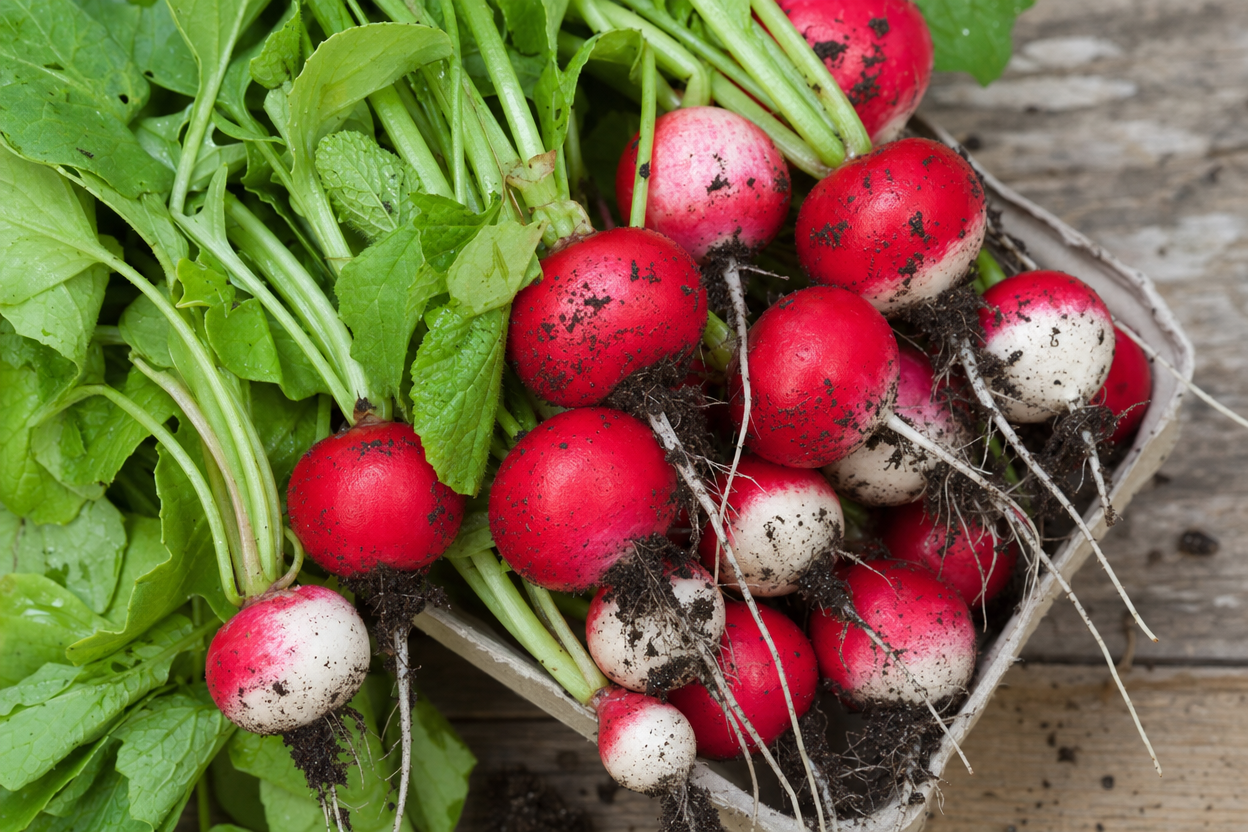
Twenty-five days. That’s all it takes for ‘Cherry Belle’ radishes to go from seed to table. For a beginner who needs a quick confidence win, this is it. There’s something deeply satisfying about planting something on a Monday and eating it for dinner before the month is out.
‘French Breakfast’ is the other excellent indoor option: slightly elongated, mild and crisp, and extremely photogenic if you’re the type who photographs your food (no judgement). Both varieties do well in containers 15–20cm deep; they need room for the root but not much else.
The harvest moment (pulling a cluster of bright red radishes with the soil still on them) is one of those small joys that doesn’t quite make sense until you do it. Sliced thin on buttered bread, or tossed into a salad still cold from the windowsill. Trust me on this one.
6. Microgreens: The Tiny Overachievers With Main Character Energy
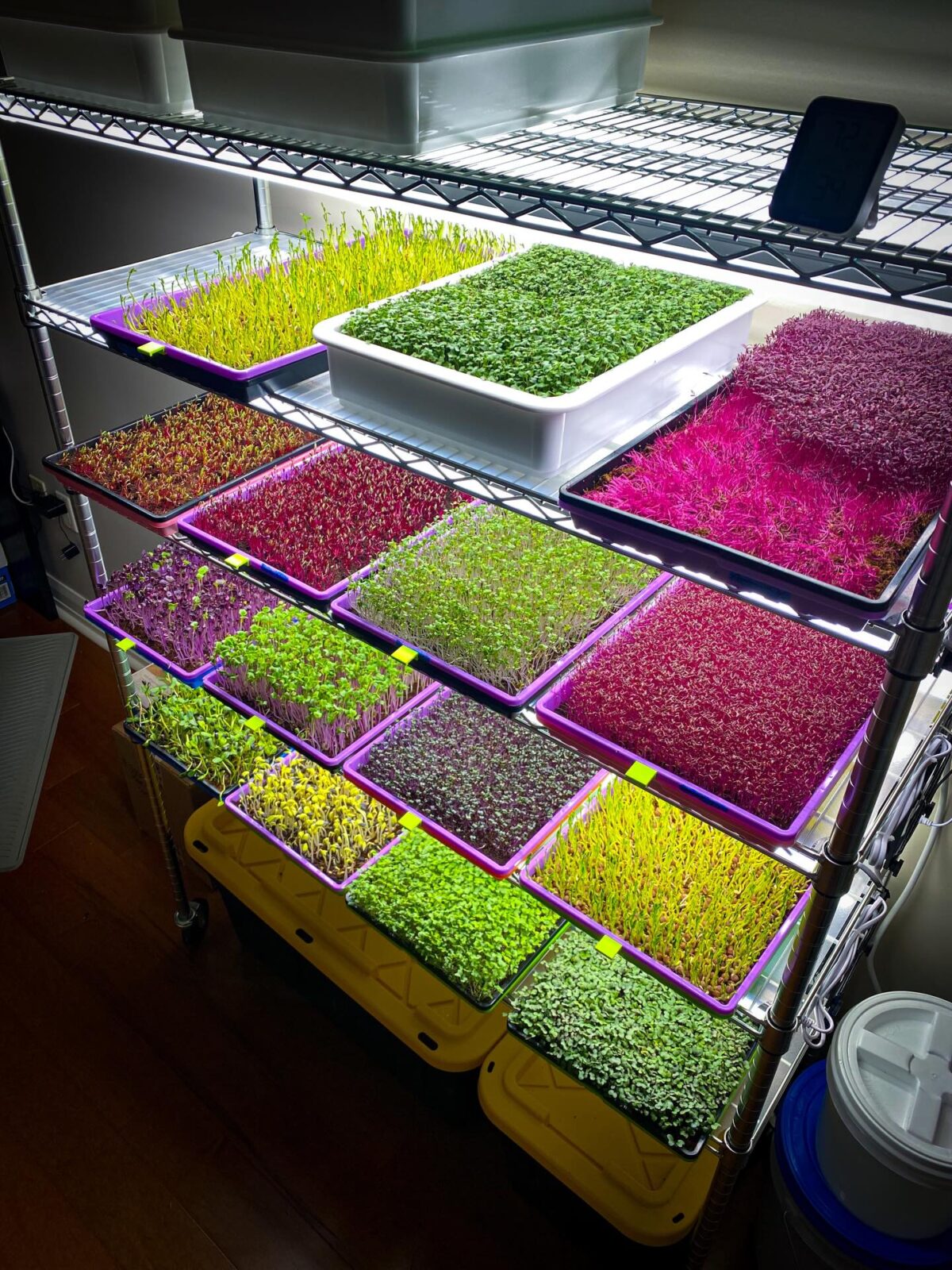
If scallions are the cheat code, microgreens are the speedrun. Ten days from seed to harvest. You don’t even need soil: a flat tray, some growing medium, seeds, and light are all it takes. Peppery radish microgreens and sweet pea shoots are the two I come back to constantly; both have intense flavour and the kind of feathery, lush appearance that makes a plate look like it came from a restaurant kitchen.
The key investment here is a decent starter kit: flat trays with drainage, a good quality growing medium, and seeds suited for microgreen production (regular vegetable seeds work but microgreen-specific mixes give better density). Check out the microgreen starter kits on Amazon if you want to get going without sourcing parts individually.
A tray of freshly cut microgreens on a kitchen counter is one of those things that looks impressive to everyone who walks in. The fact that it took less effort than sourdough is your secret.
We may earn a commission on purchases through the links above, at no extra cost to you.
 Source: rawnattyn8
PIN IT
Source: rawnattyn8
PIN IT
7. Herbs: The Kitchen Counter Ensemble That Earns Its Square Foot
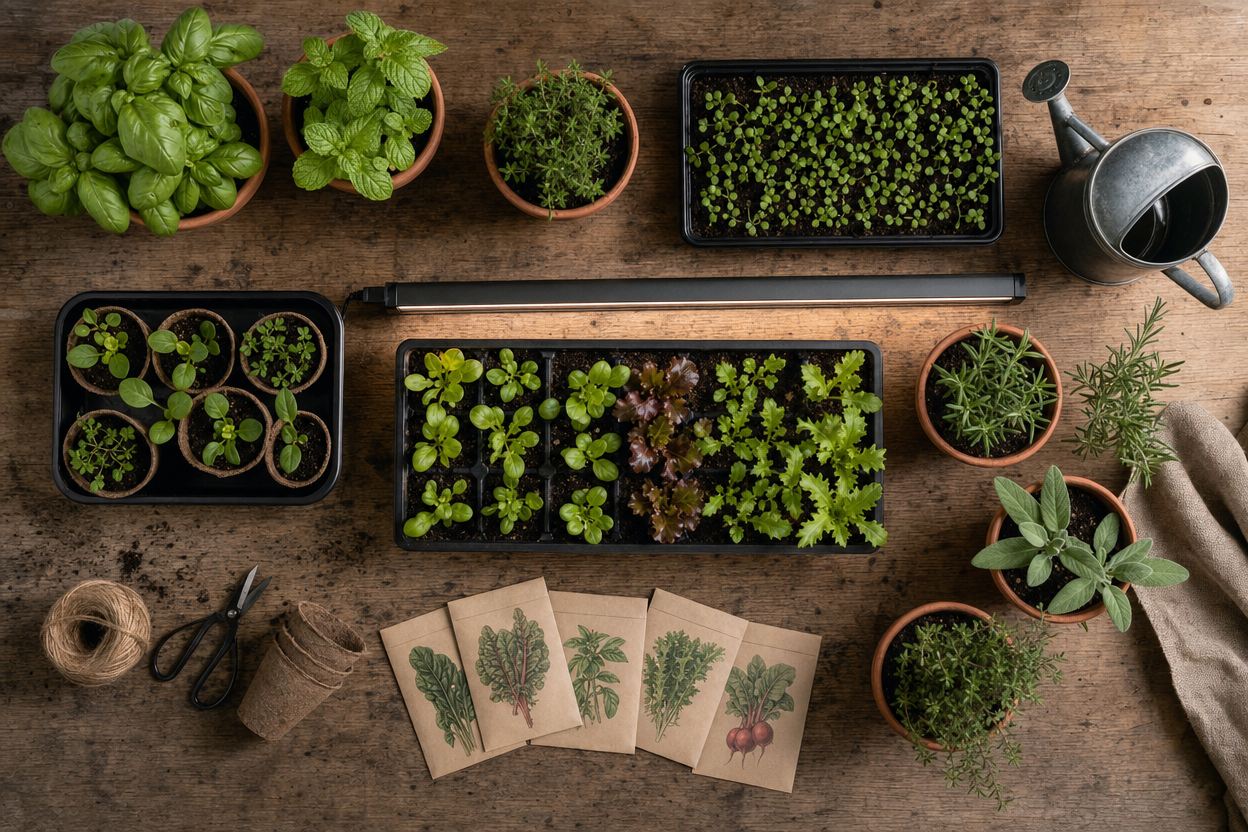
I’ll put herbs on this list with one caveat: they only count if you actually use them. The basil plant that gets watered twice and then quietly dies on your windowsill is not an indoor garden. It’s a guilty purchase. So this section comes with a challenge: pick the herbs you reach for every single week.
For most people that’s basil (the obvious one), parsley (the workhorse), and chives (the one that keeps going even when you ignore it). Keep them in small individual pots close to your cooking area. Snip as you go. The flavour difference between dried herbs from a jar and fresh from the sill is significant enough that people will ask what you did differently to the pasta.
Indoor herb garden kits with individual pots and a matching tray are a surprisingly useful buy if you want everything to look cohesive without hunting down five different pot sizes. I have one on my kitchen bench and it genuinely earns its square foot every week.
8. Micro Cherry Tomatoes: The Mini Divas Worth the Patience
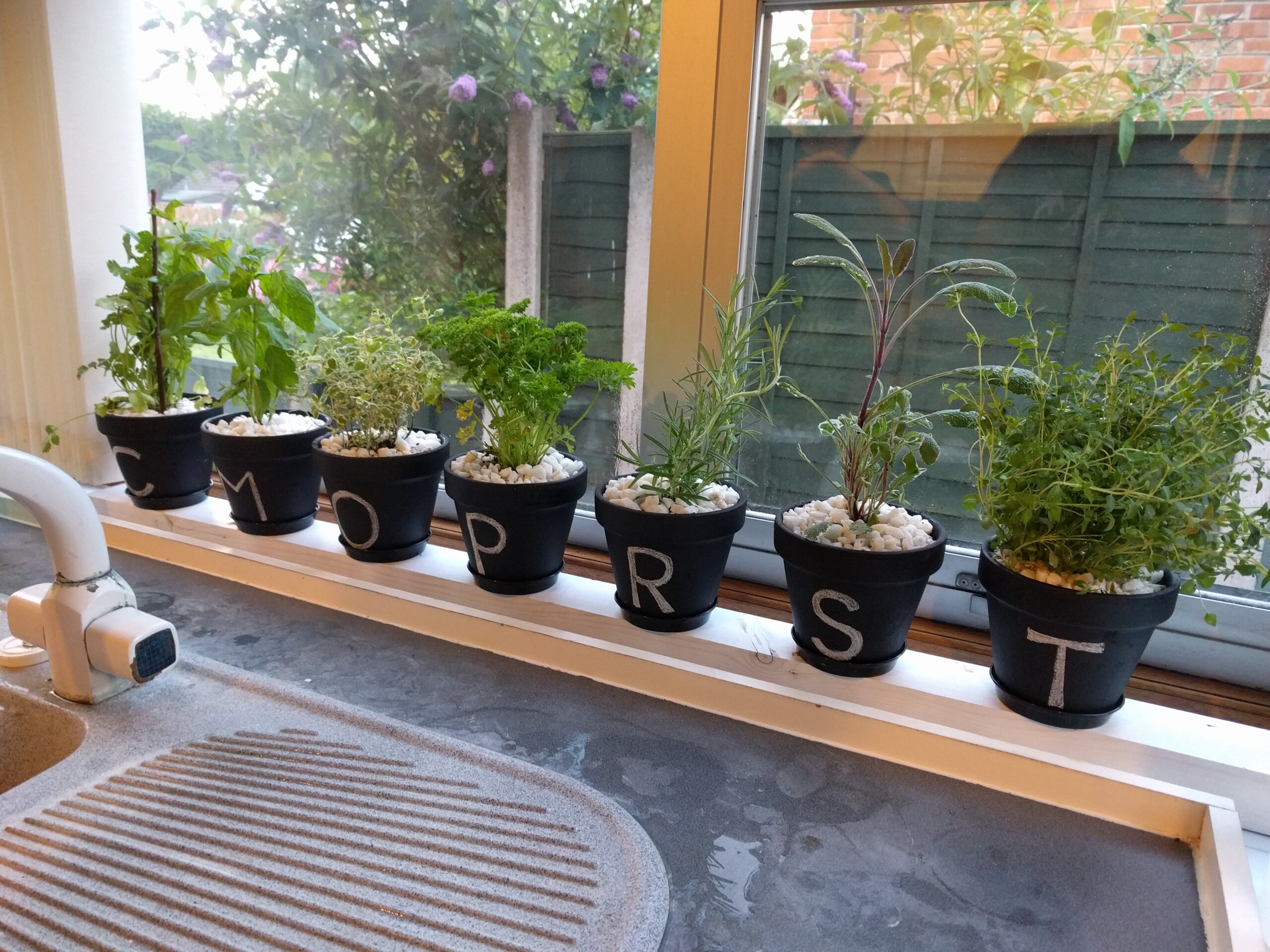
I’ll be straight with you: tomatoes are the most demanding item on this list, and full-size tomato plants indoors in winter will make you miserable. But ‘Tiny Tim’ and ‘Red Robin’ (the dwarf cherry tomato varieties specifically bred for container growing) are a genuinely different proposition. They stay compact (40–50cm), they produce clusters of cherry-sized tomatoes, and they are extremely satisfying to grow.
Here’s the honest part: you will almost certainly need a grow light for tomatoes indoors in winter. Natural window light in January isn’t usually enough to trigger fruiting. A basic LED grow light on a timer for 14 hours a day solves this cleanly. It’s not a huge commitment, and for the payoff (actual homegrown tomatoes in February), it’s worth it.
Get the right seeds (Tiny Tim and Red Robin seed packs are widely available). Start in small pots, pot up once. Patience pays off here more than with anything else on this list.
9. Arugula: The Peppery Show-Off With Opinions
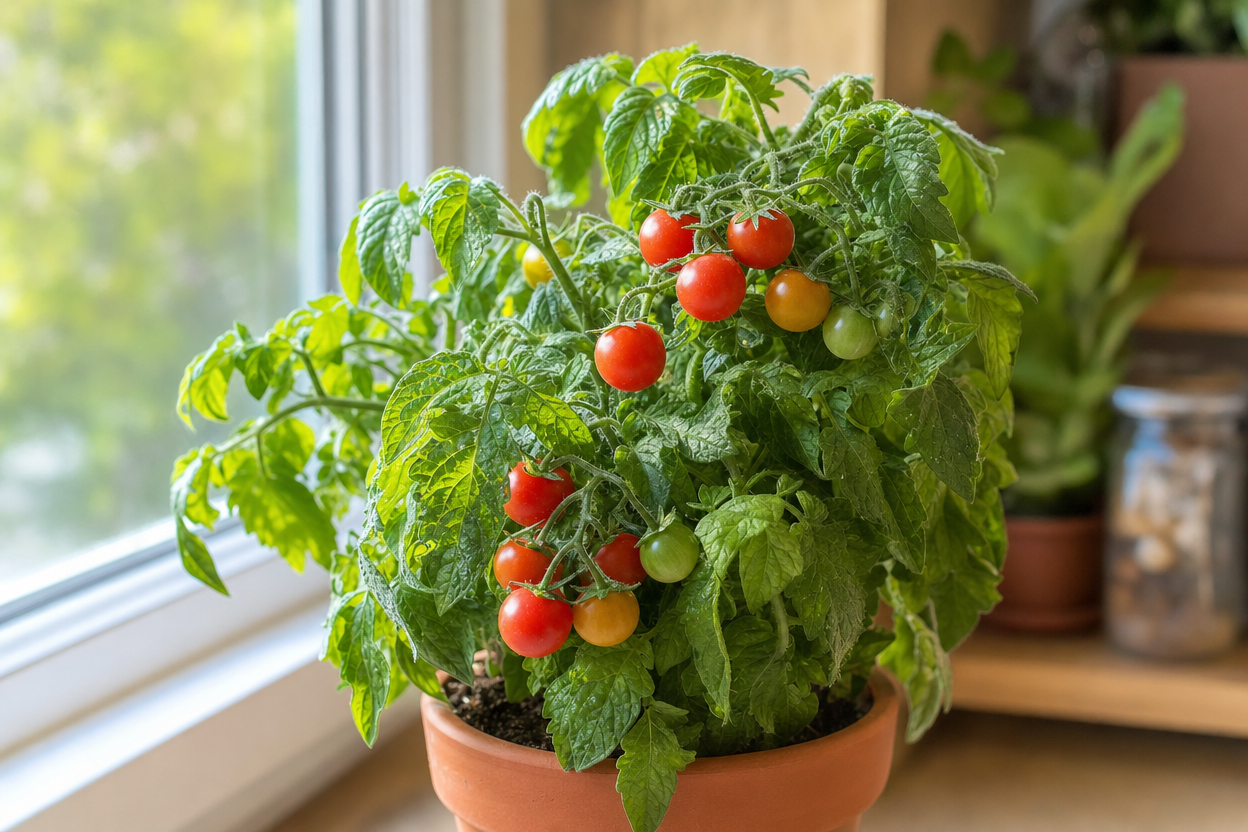
Arugula (rocket, if you’re from this side of the Atlantic) has a strong flavour personality that not everyone loves but that I find impossible to give up once I’ve had it fresh. The peppery bite of a leaf picked straight from the pot is genuinely different: more intense, more interesting than the pre-washed bagged version.
It’s also one of the faster crops: baby leaves are ready in three weeks, the ruffled leaves look beautiful in a wide shallow planter, and it doesn’t need much depth to grow well. Paired with sliced pears, parmesan, and a sharp dressing, it turns a midweek lunch into something you’d order in a restaurant.
Grow it cool and harvest young. Let it get warm and bolt to flower and it will make its opinions known sharply. Keep it on a cooler sill, treat it right, and it rewards you consistently all winter.
10. Swiss Chard: The Rainbow Flex That’s Basically Edible Décor
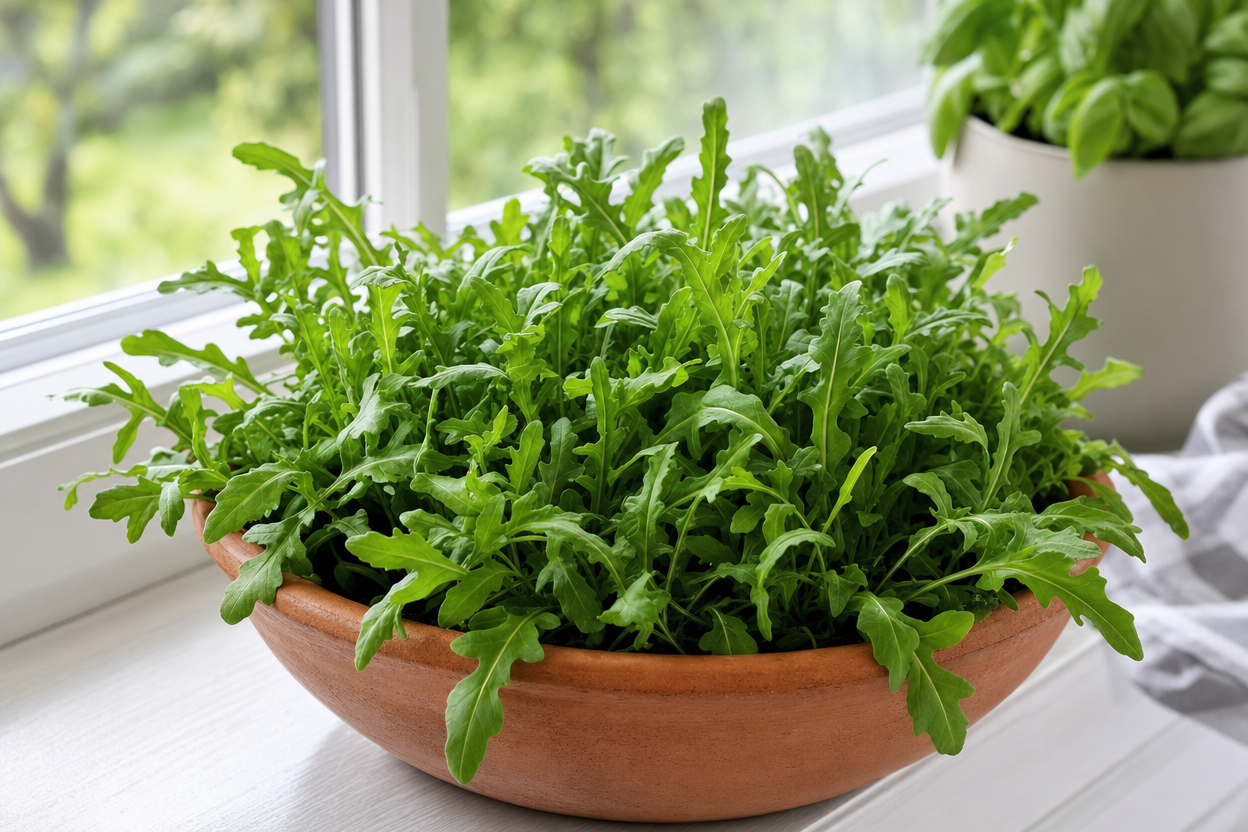
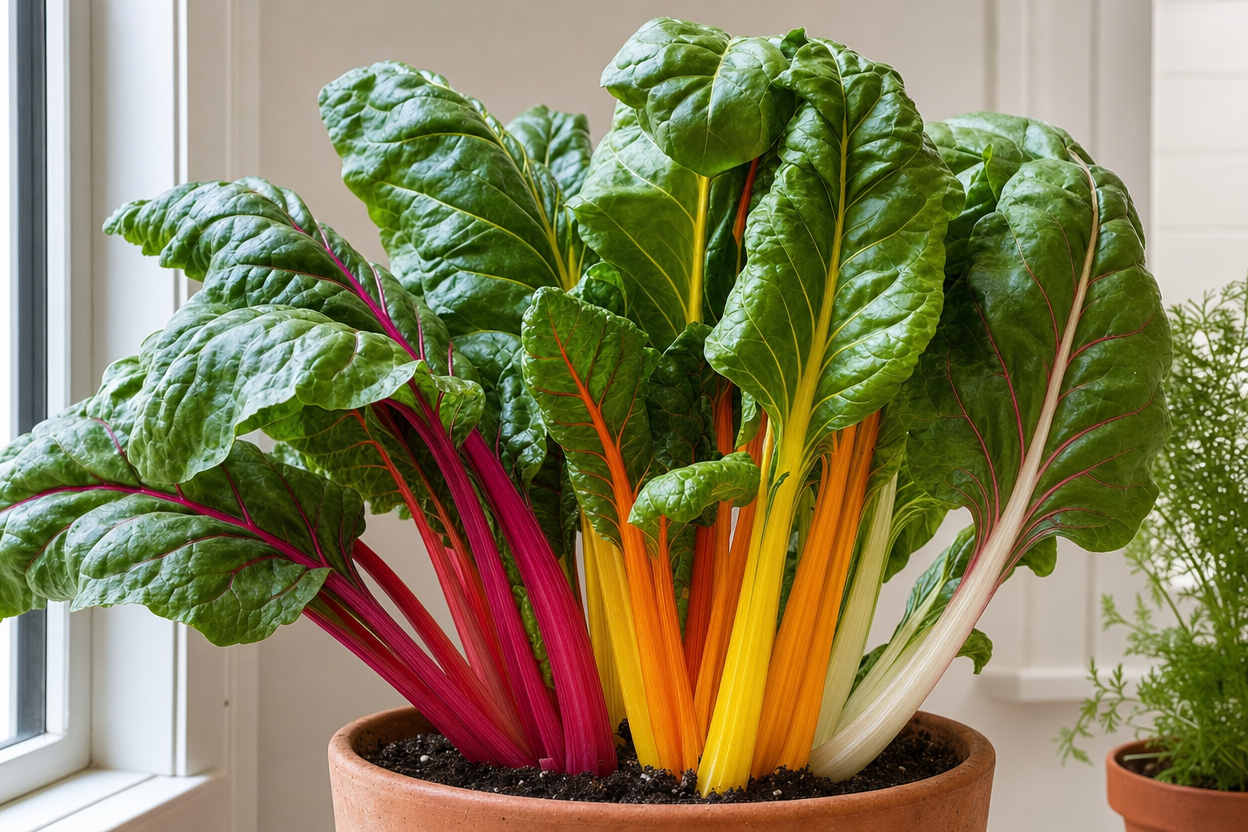
‘Bright Lights’ Swiss chard might be the most visually striking thing you can grow on a windowsill. The stems come in magenta, yellow, orange, and white (sometimes all on one plant), and the glossy, dark green leaves make the whole thing look more like a deliberate design decision than a vegetable container.
It’s also genuinely easy to grow and produces reliably through winter indoors. Cut-and-come-again like kale, but faster-growing and with a milder, slightly earthy flavour that works brilliantly sautéed with garlic and olive oil. It’s one of those vegetables that makes people ask “what’s that?” when they see it on your bench, and “can I try some?” when you’re cooking with it.
If you want an indoor garden that looks as good as it performs, ‘Bright Lights’ chard earns its spot. Plant it in a wide container, give it consistent moisture, and let it turn your windowsill into something worth photographing.
Bonus: Oyster Mushrooms (The Plot Twist That Doesn’t Even Need Sunlight)
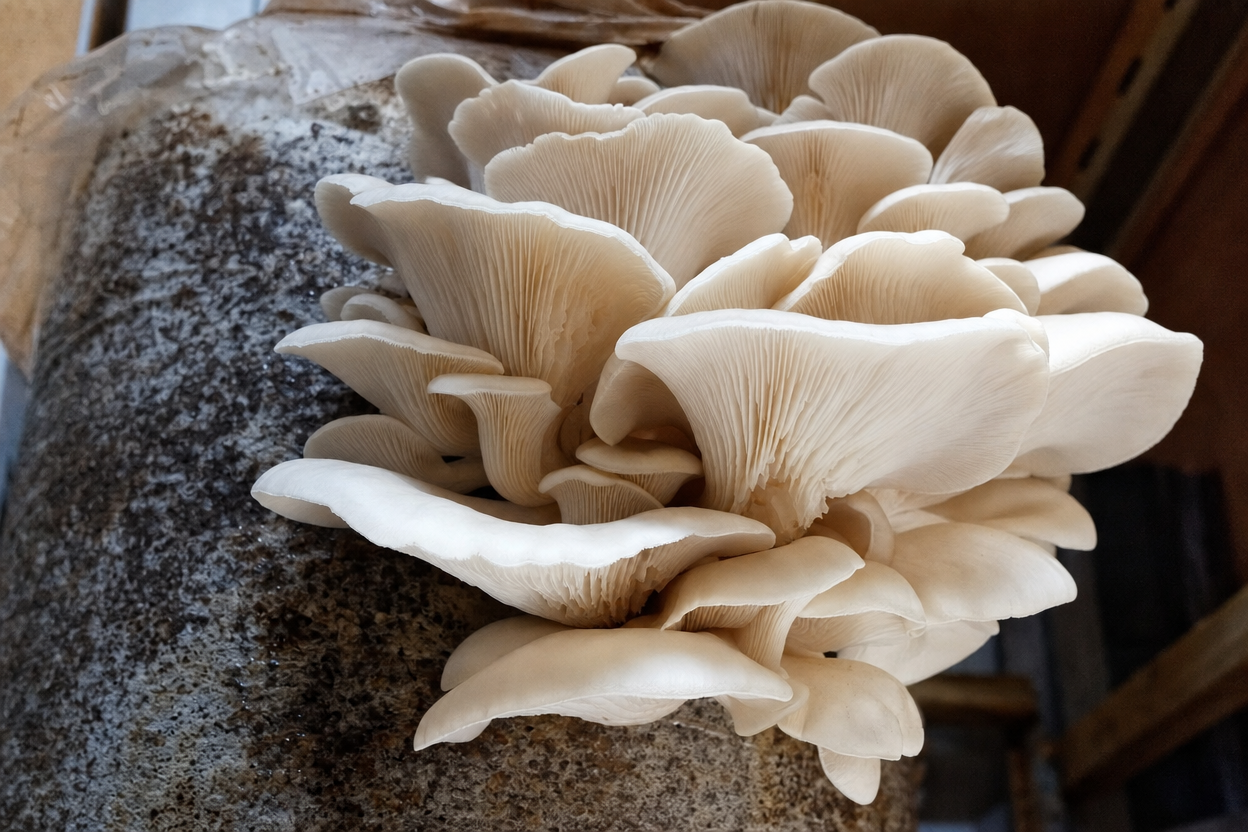
Everything else on this list needs a window. Oyster mushrooms need a dark cupboard. That might be the most liberating information in this whole article.
A good oyster mushroom grow kit (typically a pre-inoculated block or bag) produces clusters of cream-white mushrooms in about two weeks with minimal intervention. Mist it, keep it somewhere cool and dim, and watch it fruit. The “wow” factor when you pull a full cluster of oyster mushrooms out of what looks like a bag of substrate is real. Sautéed in butter, they’re remarkable.
Where to Start
If you’re new to indoor growing and want instant confidence, start here: scallions + microgreens + lettuce. Three plants, three different timescales (days / 10 days / 4 weeks), and all three will produce something usable before you lose enthusiasm. From there, everything else on this list is a natural expansion.
Save this pin so you can come back to it when you’re ready to add the next crop. And if this helped you dodge even one $7 bag of wilting spinach, I’d genuinely love if you shared it.
Affiliate disclosure: This post contains affiliate links. If you purchase through links on this page, we may earn a small commission at no extra cost to you. We only recommend products we’d use ourselves.
Frequently Asked Questions
Can I grow these vegetables indoors without a grow light?
Yes, for most of them. Lettuce, spinach, kale, arugula, Swiss chard, scallions, radishes, and microgreens all grow well in a south- or west-facing window that gets 4–6 hours of natural light per day. The exception is cherry tomatoes: they need supplemental light in winter to actually fruit. A basic LED grow light on a timer handles this without much fuss.
How long until I can actually harvest something?
Microgreens are ready in 10 days. Scallions regrown from scraps show new growth in 3–5 days. Radishes take about 25 days. Lettuce and arugula are harvestable (baby leaf stage) in 3–4 weeks. Spinach, kale, and chard take 4–6 weeks to their first harvest but then keep producing for months. Tomatoes are the longest commitment: expect 60–80 days from transplant to fruit.
What’s the easiest indoor vegetable for a complete beginner?
Scallions regrowing in a glass of water: zero cost, zero failure rate, and it works within days. If you want to plant something from scratch, loose-leaf lettuce in a shallow pot is the next most beginner-friendly option: forgiving on water, fast to harvest, and almost impossible to kill on a decent windowsill.
Can I really grow tomatoes indoors in winter?
With the right variety, yes. Standard tomato plants are not suited to indoor winter growing. They get leggy, fail to fruit, and generally give up on life. ‘Tiny Tim’ and ‘Red Robin’ dwarf varieties are specifically bred for container growing and will produce fruit indoors with supplemental light. It takes patience, but it’s one of the most satisfying things on this list when it works.
What’s the minimum sunlight hours my window needs?
Most of the crops on this list need 4–6 hours of direct or bright indirect light per day. A south-facing window is ideal in the northern hemisphere; west-facing works well too. North-facing windows are generally too dim for most vegetables. Microgreens and scallions are the exception. If your light situation is limited, a small LED grow light is the practical fix rather than trying to push plants into inadequate light.
