
A pellet stove that won’t light, won’t feed or keeps shutting down usually has one of a handful of causes, and most of them you can fix yourself with a vacuum and a screwdriver.
Below are the 19 most common problems and how to fix each one. If your stove is showing a code, jump to error codes by brand for Englander, Harman, Grand Teton, Master Forge, Comfortbilt and King stoves.
Updated October 2026: added manufacturer error codes for six brands and what E2 means on each.
[ez-toc]
The Parts of a Pellet Stove

As with any complex machine, understanding how a pellet stove works will give you a much better chance of being able to fix any problems you come across. You can get a good understanding of how a pellet stove works here.
Most of the fixes below come down to cleaning, sealing or testing. These are the tools they call for.

- Motor 10 amp
- Hose Heat-resistant metal
- Filter Washable, fire-resistant

Rutland 3-Inch Pellet Stove Vent Brush
- Brush 3 in, soft poly bristles
- Handle 10 ft, flexible
- For 3 in pellet vent pipe

Midwest Hearth Stove Gasket Kit, 5/8 in x 84 in
- Rope Graphite impregnated
- Includes 2,000°F adhesive cement
- Sizes 1/4 in to 1 in sold

Rutland Conditioning Glass Cleaner
- Bottle 8 oz
- For Ceramic stove glass
- Leaves A silicone coat
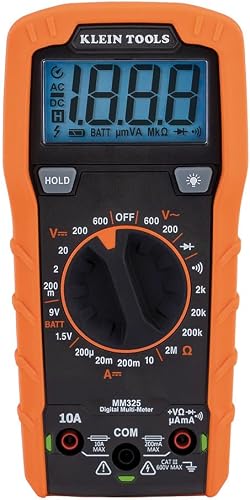
Klein Tools MM325 Multimeter
- Tests Continuity, AC/DC voltage
- Range Up to 600V
- Display Backlit

Cable Matters Single Outlet Surge Protector
- Rating 15A, 1,875W
- Listed ETL
- Indicator LED protection light
We may earn a commission if you buy through this link. It costs you nothing extra.
E2 Error on a Pellet Stove (What It Means by Brand)
On most pellet stoves, E2 means the stove failed to light. The control board didn’t see the exhaust get hot enough during start-up, so it shut the stove down.
But E2 isn’t a universal code. Here’s what it means on the brands we cover:
| Brand | What E2 means |
|---|---|
| Englander, Summers Heat, Timber Ridge | Failed to start or light |
| Grand Teton, Master Forge, Cleveland Iron Works | Failed to ignite the pellets in the fire pot |
| King KP5522 (US Stove) | Airflow (vacuum) switch tripped: blocked hose, door open, or blower fault |
| King / Ashley 5500 series | Err2: ran out of fuel while running |
| Harman, Comfortbilt, Castle | No E2 code. They use blink counts, named alarms or a fault light |
On an Englander, an E-2 right after the first 20-minute run with an empty hopper is normal. Fill the hopper and start it again.
If your stove’s E2 means it failed to light, work through these steps.
How To Fix It
If your stove is giving you an E2 Error, wait for the stove to cool (as applicable) and follow these steps:
- Clean the burnpot – remove dust, debris, and pellets for a thorough cleaning.
- Ensure the igniter isn’t plugged in with ash. This can prevent airflow through the system, causing the error code.
- Verify the igniter rod is positioned correctly. If it’s too close to the hole in the pot, it will restrict airflow and prevent the fire from starting.
- Ensure the exhaust blower is functioning correctly.
- Check the heat sensor. Ensure it’s connected and functional, as this will cause an E2 code.
Pellets Are On The Sides
Although pellets aren’t the priciest source of heat on the market, it’s still not ideal to waste them. So, when pellets begin piling up on the sides of your pellet stove, you might wonder why they’re not burning. Some things can cause this, including damp pellets, poor-quality pellets, and a too-fast feed rate.
How To Fix It
If pellets are piling up on the firebox’s sides, it could result from a few issues. Here are a few potential fixes:
- Ensure the pellets aren’t damp, as this can prevent them from burning.
- Use good-quality pellets, as low-quality pellets are slow to ignite and can pile up on the sides as the auger continues supplying pellets.
- Ensure the feed rate isn’t too fast. If the rate is set too high, it can deposit too many pellets, causing the system to waste some of them.
Doesn’t Blow Hot Air

Chilly air from a pellet stove isn’t ideal. You might notice the stove releases bursts of cool air, sometimes when the system initially starts or maybe intermittently throughout the operation. When this happens, it can result from a few culprits, such as a poor air-to-pellet ratio, poor-quality pellets, or a dirty stove.
How To Fix It
Since your pellet stove is supposed to heat your home, it’s not ideal when it blows cool air. Here are a few potential fixes:
- Check the air-to-pellet ratio. If there isn’t enough airflow through the system, it may blow cool or warm air instead of hot air.
- Ensure you’re using good-quality pellets. Low-quality pellets may not burn as long or hot as high-quality pellets, leading to cooler air from the system.
- Ensure the stove is clean and free of dust and gunk buildup. Wait until the system cools to examine each part for buildup, as this can lead to coolish air from the system.
Ash and fine dust are behind a lot of weak heat. Clean the stove only when it’s completely cold, and use an ash vacuum rather than a household one, which fine ash clogs fast.
Not Feeding Pellets

Since pellet stoves require a steady diet of pellets to produce heat, a lack of pellets causes a significant issue. You might notice the system will turn on, but since pellets don’t move through the system, it automatically shuts off due to a lack of fuel.
How To Fix It
- Check the hopper. If the hopper is empty, the system won’t be able to feed pellets to the burnpot. Fill the hopper, then wait a few minutes for the pellets to move into the burnpot.
- Ensure the front door, ash pan, and hopper lids have snug seals. Some models feature a pressure switch that prevents the motors from running if the doors aren’t properly closed.
- Check the vent for proper airflow. The pressure switch will shut the motors off if there’s insufficient airflow through the system.
- Ensure the feed motor is functioning correctly. If it’s worn out, it can’t move pellets from the hopper to the burnpot.
- Check for obstructions in the hopper and feeder (after the stove cools). Remove any blockages.
Can’t Adjust Feed Rate
The feed rate is the amount of pellets that move through the system at a given time. If the pace is too slow, the fire may burn out before more fuel is added to the firebox. If the rate is too high, it might cause you to waste pellets.
How To Fix It
The process of adjusting the feed rate varies from one model to the next, so there isn’t a one-size-fits-all solution. Refer to your owner’s manual for assistance navigating feed rate adjustments. If you can’t find what you need in the manual, contact the manufacturer for help.
Pellet Stove Auger Jamming

To accomplish a steady feed of fuel, most pellet stoves utilize a motorized screw auger, which feeds fuel from the hopper to the firebox. If the auger repeatedly jams, it’s probably the result of dust buildup, improperly sized pellets, poor quality pellets, a blocked pellet chute, or a worn auger motor.
How To Fix It
- Remove the blockage using the manual auger feed function if your stove has one.
- Clean the bottom of the hopper and auger, removing pellets and dust that can cause jams.
- Clean the pellet chute if you can reach it.
- Ensure the auger motor is functioning correctly. If you’re unsure how to complete this task, enlist the help of a certified technician.
- Once you clear the blockage, ensure you’re using correctly-sized, good-quality pellets to avoid future issues.
Flame Dying Out / Doesn’t Stay Lit
Tinkering with a wood-burning stove that won’t stay lit is one thing, as it could be a user error, but since most pellet stoves operate without your help, a dying flame can be puzzling. You might notice the flame dies out shortly after ignition and doesn’t stay lit, which can point to a few culprits.
How To Fix It
If your pellet stove’s flame continues to die out or won’t remain lit, try these fixes:
- Check the air-to-pellet ratio. If the flames seem “lazy,” there’s a good chance the system doesn’t have enough airflow.
- Adjust the feed rate. Ensure the system has enough fuel to keep it burning. If the feed rate is too low, the fire might die before receiving more pellets.
- Check the vents for debris. If the vents are blocked, they may reduce airflow enough to cause the fire to die out shortly after lighting.
Rutland 3-Inch Pellet Stove Vent Brush
A vent brush pushes ash and debris out of the vent pipe. This one fits 3 inch pipe. Some stoves use 4 inch, so measure yours first, and only clean the vent when the stove is cold and unplugged.
- 3 inch poly brush on a 10 foot handle
- Flexible handle gets through bends and angles
- Soft bristles will not scratch the pipe
We may earn a commission if you buy through this link. It costs you nothing extra.
Start-Up Sequence Failure
The stove may fail to ignite in its start-up sequence. Generally, when this happens, it’ll give a code, usually E2. Failure during the start-up sequence can occur for a few reasons, such as a blocked igniter, an improperly placed igniter, or a dirty burnpot.
How To Fix It
Since this problem mimics the same issue as an E2 code, follow the instructions in the “How To Fix It” section of E2 codes. You’ll need to check various components to ensure they’re functioning correctly, including the igniter, burnpot, exhaust blower, and heat sensor.
Missed Ignition Alarm
Although every stove is different, most will offer some type of missed ignition alarm. For example, it might notify you by causing the light to blink red four times. Check your owner’s manual if you’re unsure what the blinks mean.
How To Fix It
Usually, this alarm stems from a few common problems, which are easy to correct. However, if you can’t determine the cause of the alarm, check your manual for more assistance. Otherwise, follow these steps:
- Check the proof of fire switch for proper function.
- Check the system for dirt, dust, and grime. Clean the system as necessary.
- Check for obstructions in the flue vent.
Pellet Stove Auto Ignition Stops Working
The auto-ignition function on a pellet stove is essential for proper function. The igniter uses electricity to light itself, saving you the hassle of lighting the stove yourself. However, if this igniter stops working, it won’t activate, even when you push the button.
How To Fix It
A bad igniter often causes the auto-ignition function to stop working. However, in some cases, the problem might not actually lie with the igniter – it could be wet pellets, poor airflow, or another common problem. So, ensure it isn’t one of those issues before addressing the igniter.
Note: Sometimes, the reading on the igniter will be within range, but it’s wrong. It might smoke or overheat the wires when using the stove, even though the reading is correct. In this case, you’ll need to replace the igniter.
Pellet Stove Blower Turns On and Off
If your stove’s blower turns on and off, it could result from overheating. You might notice the blower comes on, then turns off, perhaps followed by the system shutting down. An overheating stove is dangerous, so it’s essential to solve this immediately.
How To Fix It
- Check for air leaks in the system, such as in the door gasket. If air leaks out, it could cause the system to overheat as it tries to compensate. Address any leaks as necessary.
- Ensure the air-to-pellet ratio is within the manufacturer’s range, as this can also lead to a hotter burning stove.
- If nothing works, consult a professional for assistance.
Midwest Hearth Stove Gasket Kit, 5/8 in x 84 in
If your door gasket is flattened or frayed, replace it with the stove cold. Gasket rope comes in several diameters, so check your manual for the size before you order. This is the 5/8 inch kit.
- 84 inches of graphite-impregnated rope
- Includes 2,000°F adhesive cement
- Sold in sizes from 1/4 inch to 1 inch
We may earn a commission if you buy through this link. It costs you nothing extra.
Soot On Glass

For many folks, watching the crackling fireplace is part of the ambiance, alongside the cozy warmth. However, soot can effectively block your view when it overtakes the glass. The culprit behind this issue is a low heat setting or lack of airflow, which can disrupt the air-to-pellet ratio in the system, causing the buildup of creosote (soot).
How To Fix It
Thankfully, fixing this issue is simple if you follow these steps:
- Adjust the air-to-pellet ratio and heat settings to correct the problem.
- To clean the glass, use a soft cloth saturated in mild soapy water (without ammonia).
- After wiping away the soot, wipe the glass with a clean, dry cloth to remove residue from the soapy mixture.
We have a full guide on cleaning fireplace glass here.
Rutland Conditioning Glass Cleaner, 8 oz
If soapy water doesn't shift the soot, use a cleaner made for stove glass. Only clean the glass when it's cold.
- Made for ceramic glass on gas and wood stoves
- Micro scrubbers that won't scratch the glass
- Leaves a silicone coat that slows the next buildup
We may earn a commission if you buy through this link. It costs you nothing extra.
Stove Randomly Shuts Down
Perhaps your pellet stove fires up usually and efficiently builds a crackling fire, but after a while, it randomly shuts down. It might happen abruptly, or the fire might slowly die out. When this happens, the culprit is usually mechanical or sensor issues.
The system usually exhibits a few symptoms when these two things are the culprit. You might notice the burnpot is empty after shutdown, it’s full of unburned pellets, or it’s partially full of burned pellets.
How To Fix It
First, the random shutdowns could be the result of an empty burnpot. If there isn’t residual fuel in the burnpot, a few things could happen. Here’s what you need to do:
- Check the feed motor, bearing, and plate for signs of wear and tear or dust accumulation. Replace worn components and clean as necessary.
- Look for dust accumulation throughout the system. Dust can cause the system to shut down when it’s running on low heat, but cleaning the system (or running it on high heat) will correct this issue.
- Examine the pressure switch. Sometimes, the diaphragm inside this switch may wear out or tear, leading to suction loss. This causes the contacts to open and close instead of staying closed. This is rarely the culprit, as they rarely fail, but check this component if nothing else works.
Note: If the burnpot is full of partially burned pellets, the most likely cause of this is a power change. When the system loses power, it’ll leave behind partially burned pellets, resulting from a faulty proof of fire switch or even a high-limit safety reset switch that tripped. Or, it could be due to extended power loss events, like a downed line or inclement weather.
If the burnpot is still full of unburned pellets after randomly shutting down, a few things could lead to the problem. Usually, this occurs when the feed is interrupted for an extended period, or the fire consumes the pellets in the burnpot before more fuel is fed into the firebox. Rule out the potential culprits by following these steps:
- Check the hopper and feed chutes for foreign objects. Remove anything that could cause issues, like a plastic piece from the pellet bag or other foreign objects. If there’s a considerable dust accumulation, remove it from the system.
- Ensure there aren’t pellets bridging in the hopper. Verify there aren’t too many pellets longer than 1 ¼ inch, as they can block the hopper’s opening and prevent the system from feeding correctly.
- Check the draft. Some systems have a draft restriction or damper rod. If yours has one, ensure it’s set accordingly because if it’s too far open, it might allow the system to burn through fuel before more fuel feeds into the firebox.
- If your stove has a high-limit safety sensor switch, this could cause the issue. The stove may overheat, causing the switch to turn off the system and shutting down the fire. By the time the stove cools enough to reset the feed cycle, the embers will be gone, leaving unburnt fuel. Try lowering the heat setting or closing the draft/damper.
- Check the venting connections on your pellet stove. If the vent extends straight out of your house, a gust of wind may cause a burst of air to move down the pipe, snuffing the fire out.
Unburned Pellets / Pellets Don’t Ignite

If everything seems to be functioning correctly in your pellet stove, but the pellets won’t ignite, there’s usually one of two reasons behind the issue. First, the pellets might be damp. If they’re damp, they won’t ignite easily.
Secondly, it could be an issue with the air-to-pellet ratio. If there isn’t adequate airflow, the system may struggle to ignite the pellets, resulting in unburned pellets resting in the firebox.
How To Fix It
Follow these steps to fix the problem:
- If the pellets are damp, remove them from the hopper. Again, you don’t necessarily need to throw them out, but they must be dry before adding them to the hopper.
- Replace the wet fuel with dry fuel and check for proper function.
- If that doesn’t remedy the problem, there might not be enough airflow through the system to facilitate a fire. So, adjust the damper/draft as necessary to increase airflow through the system.
- Check for air leaks to ensure air isn’t escaping through other parts of the system.
Overfeeding But Not Burning
You might notice your pellet stove feeds the firebox, but the pellets don’t burn, resulting in overfeeding. Generally, this happens because the stove or vent is dirty, preventing adequate airflow through the system. So, since there isn’t enough air in the system, it can’t burn the fuel as fast as the stove is feeding it in, resulting in unburned pellets.
How To Fix It
Here’s what you need to do:
- Clean the stove and vent to remove gunk and buildup.
- If cleaning doesn’t work, check the damper. A fully closed damper can snuff out the flame before it can establish.
- Check the burnpot for gunk. Clean the holes as necessary.
- Examine the ashpan, doors, and other openings for air leaks. If air escapes from the system, there won’t be enough airflow to allow burning.
- Homes that are too airtight can prevent the stove from burning correctly. Try opening a window (only a tiny amount) in the room where the stove is to see if this remedies the problem.
Make the weekly clean a 5-minute job: PowerSmith ash vacuum
A dedicated ash vacuum pulls fine ash out of the burnpot, firebox and vent without clogging. Only use it on a stove that has fully cooled.
Pellet Stove Doesn’t Shut Off / Stove Continues Running
A stove that won’t power down is a hazard, as it could burn too hot and present a fire danger. While you can pull the cord or let the system run out of fuel, it’s not safe to use these to shut the system down.
How To Fix It
So, if your stove won’t power down when you attempt to turn it off, here’s what you need to look for:
⚠ Essential Safety Warning
- Unplug the stove and let it cool completely before you open any panel.
- Never bypass or jumper a safety switch to keep the stove running.
- If the stove is over-firing and won’t shut down, let it burn out with the hopper lid closed and call a technician.
- Check the low-limit switch (the proof-of-fire switch on some stoves). If it’s stuck closed, the stove thinks there’s still a fire. Unplug the stove, let it cool, then test the switch for continuity with a multimeter, or have a technician check it. Replace it if it stays closed when cold.
- Some models feature a digital controller with a plastic decal. If the decal cracks, it can prevent the buttons from popping back up. Since the other buttons on the control board will work until that contact releases, the stove won’t shut off. Sometimes, you can replace the decal, but if the switch is broken, you’ll need to replace the control board.
- Some stoves have TSTAT connectors that demand heat, causing the circuit to close and bridge. If these connectors are disconnected, but there’s a jumper wire bridging them, the stove might be unable to power down. So, remove the jumper or TSTAT wires to see if it remedies the problem.
- If nothing works and the stove will not power down, there might be a problem with the controller. While this is a rare culprit, it can happen. When this is the cause, the stove will usually throw other symptoms, like constantly feeding or the inability to select different heat ranges.
Related Article: Battery Backup for Pellet Stoves
Blinking Flue Light on Pellet Stove
The light indicator on a pellet stove is designed to notify owners of issues or functions. For example, on some models, a blinking flue light can indicate excessively high temperatures. Or, it could point to a blocked flue. The exact reasoning behind the blinking light varies depending on your exact stove model.
How To Fix It
Since light sequences and indicators on pellet stoves vary from model to model, there isn’t a one-size-fits-all solution. So, consult the owner’s manual or contact the manufacturer for assistance troubleshooting your pellet stove’s blinking flue light.
Won’t Regulate Temperature

While your stove will naturally become hotter as it moves into its cycle, it shouldn’t fluctuate heat constantly. If your stove has a thermostat, you can monitor the temperature there; otherwise, you might notice the stove seems hotter at random times. If this is the case, there are a few potential culprits to work through.
How To Fix It
If your stove struggles to regulate its temperature, try the following repairs:
- Ensure there’s proper airflow. Not enough airflow can cause the system to shut down.
- Check the feed rate. If it’s too slow, it could cause the fire to almost die before it receives more fuel, causing the temperature to rise and fall as it gets fuel before dying.
- Verify there aren’t any air leaks, as this can cause the stove to overheat. Check the gaskets along the doors, the ash pan, and the hopper lids for air leaks, and repair any you find.
- Ensure the heat sensor is functioning correctly. Enlist the help of a certified technician for assistance.
Pellet Stove Won’t Power On
Sometimes, your stove might not start at all. Despite your best efforts, you might be unable to turn the unit on. Everything seems to be okay – there are pellets in the hopper, the stove is plugged in, and there are no apparent issues.
So, now what? Generally, this happens when you leave the stove plugged in year-round and have a power surge at some point during the off-season. Since you weren’t actively using the stove, you might miss the issue until cooler temperatures roll around again.
How To Fix It
If your stove has a manual reset high-limit switch, it may have tripped during the power surge. Press the reset button, usually on the back or side of the stove, to restore power.
Most control boards also have fuses on the back to protect them, and a surge can blow the main one. Unplug the stove, find the fuse and check it.
Replace a blown fuse with one of the same rating. If the new one blows straight away, stop and call a technician.
To stop it happening again, unplug the stove for the summer or plug it into a surge protector. A battery backup also keeps the fans running if the power cuts out mid-burn.
A single-outlet surge protector is all one stove needs. This Cable Matters unit is ETL listed, rated for 15A and 1,875W, and has an LED that shows the protection is still working. Check your stove’s rating plate against those figures first.
Pellet Stove Error Codes by Brand
Find your stove’s brand and model on the label on the back or inside the hopper lid, then match it below. Every code here comes from the maker’s own manual.
Codes can change between control boards, so if yours doesn’t match, check the manual for your model.
Englander, Summers Heat and Timber Ridge Error Codes
Englander, Summers Heat and Timber Ridge stoves are all made by England’s Stove Works. The codes show in the Heat Range and Blower Speed windows.
Older vacuum-switch boards and newer proof-of-flame boards use some codes differently:
| Code | Vacuum-switch boards (e.g. 25-PDV, 55-SHP22, 55-TRP22) | Proof-of-flame boards (e.g. 25-PUF, 55-SHP240, 25-EP) |
|---|---|---|
| E-0 | No error | No error |
| E-1 | Vacuum lost: blocked flue, nests, blower failure or a power cut | Not used. Call technical support if it appears |
| E-2 | Failed to start | Failed to light (the board didn’t see enough heat) |
| E-3 | Over-temperature limit, often a blower failure | Exhaust too hot: check the room blower, flue and pellet quality |
| E-4 | Not listed | Flame lost, usually an empty hopper, open lid or open door |
To clear an Englander code:
- Press ON once to reset.
- Fix the cause in the table, such as clearing the flue or refilling the hopper.
- If the code comes back, call England’s Stove Works technical support at (800) 245-6489 before restarting it again.
- On proof-of-flame boards, run the blower speed and heat range at the same number. A blower set far above the heat range can trigger E-4.
Source: Englander 25-EP manual and 25-PDV manual.
Harman Error Codes (Status Light Blinks)
Harman stoves don’t use E-codes. Older digital boards flash the status light a set number of times, and newer EASY Touch stoves show a message on the screen.
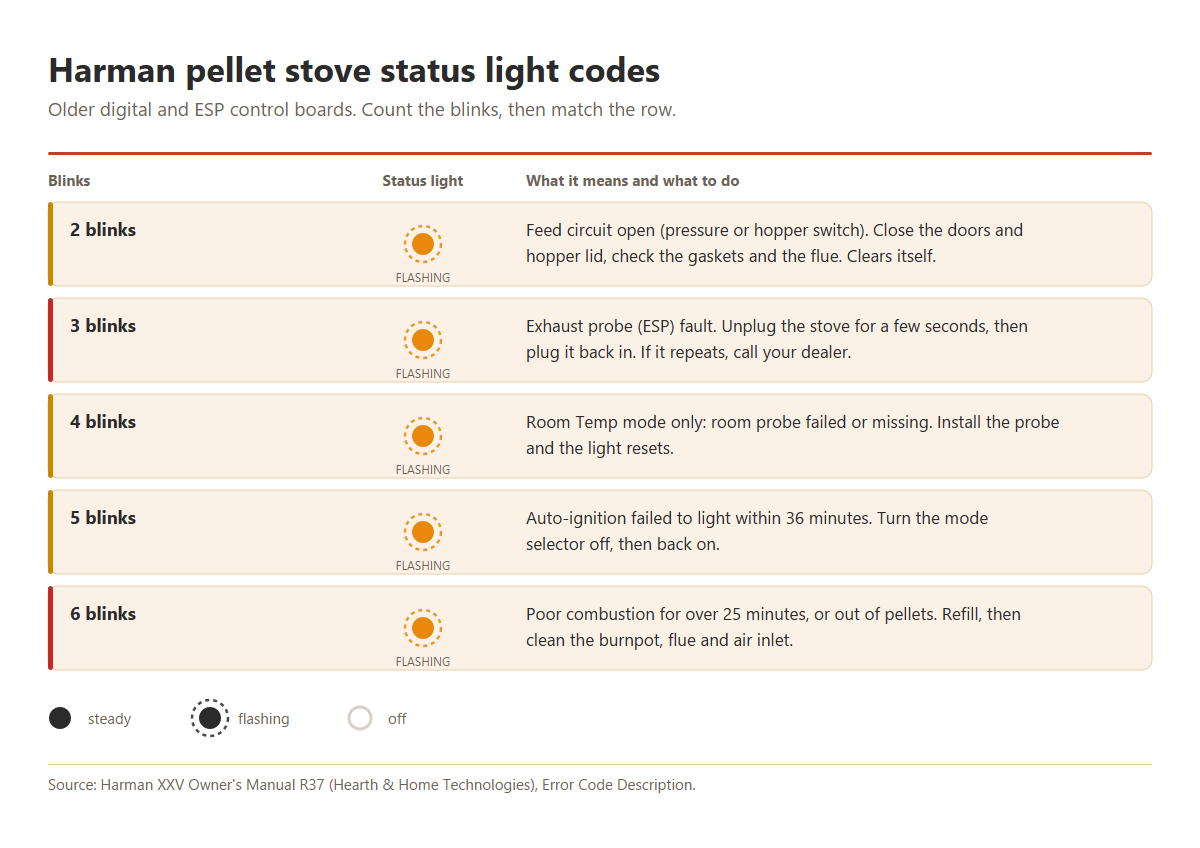
On EASY Touch models, the screen tells you what’s wrong in words: door open, hopper lid open, failed to ignite, ESP failed or clean stove. Close the door or lid, scrape the burnpot or clean the stove as it asks.
Harman’s advice for anything that keeps coming back is to call your dealer, and these stoves are mostly dealer-serviced. Source: Harman XXV owner’s manual.
Grand Teton, Master Forge and Cleveland Iron Works Error Codes
These three brands are all made by Enerco Group, the parent company of Mr. Heater, so they share one code table. Press Confirm to clear a code.
| Code | What it means | What to do |
|---|---|---|
| E1 | Exhaust temperature too low, so the fire went out | Check the hopper has pellets and the auger is feeding the fire pot |
| E2 | Failed to ignite the pellets | Clear clinkers, seat the fire pot, check the igniter and the exhaust temperature sensor |
| E5 | Low pressure at the vacuum switch | Close the door and ash drawer, check the exhaust for blockages, check the combustion fan |
| E6 | High-temperature sensor tripped | Check the switch. If the stove is overheating, call customer service |
| E7 | Power failure | Press Confirm and restart. A few minutes of smoke after a power cut is normal |
| E9 | Hopper low on pellets (Grand Teton manual only) | Refill the hopper |
| ESC1-3 / ESO1-3 | A temperature sensor wire is shorted or open | Check the sensor wires and connections |
After an E5 or E6, the manuals say to inspect and clean the stove before you run it again. Sources: Grand Teton PS20WTS manual and Master Forge manual.
Comfortbilt Alarm Messages
Comfortbilt stoves show named alarms instead of numbered codes, with a red alarm light. Hold the On/Off button for 5 seconds to clear an alarm and restart.
| Alarm | What it means | What to do |
|---|---|---|
| Failure to Ignite | No fire, or not enough heat reached the proof-of-fire sensor | Check the igniter glows within 3 minutes, the burn pot is seated, pellets are feeding and the door is sealed |
| Low Temperature | The fire died down, usually because feeding stopped | Check the pellet level and the hopper lid, and look for pellets bridging over the auger |
| High Temperature | The stove isn’t shedding heat | Check the room blower spins freely and nothing blocks the airflow |
| Lost Connect | The control panel can’t talk to the board | Reseat the 4-pin cable at both ends |
| ERR (in place of room temp) | Bad room temperature sensor reading | Check the sensor wire behind the stove for damage. The stove still runs in Manual mode |
If Failure to Ignite or Low Temperature keeps coming back, Comfortbilt ships a backup proof-of-fire sensor already installed. The manual explains how to move the wires to it. Source: Comfortbilt manuals.
King and US Stove Error Codes
US Stove’s King KP5522 flashes these codes:
| Code | Likely cause | What to do |
|---|---|---|
| E1 | Room blower overheated and tripped the high limit | Clean dust off the blower, run on a lower setting, use wood pellets only |
| E2 | Airflow switch tripped (or the door was open over 30 seconds) | Clear the switch hose, clean the stove and vent, check the door gasket |
| E3 | Out of pellets, or no ignition within 12 minutes | Refill, clean the burnpot, clear any auger jam |
| E4 | Fire went out: blocked air paths, empty hopper or auger jam | As for E3, and check the proof-of-fire switch |
| E5 | Room temperature sensor unplugged or damaged | Reconnect or replace the sensor |
King and Ashley 5500-series stoves use Err1 to Err8 instead. Err1 is the high limit, Err2 means it ran out of fuel, Err3 means it didn’t warm up in time, and Err4 is a power cut. Err5 to Err8 are blown fuses for the auger, igniter, draft fan and room fan. Sources: KP5522 manual and 5500 manual.
Castle stoves don’t use numbered codes. A fault light and the diagnostic screen tell you whether the stove ran out of fuel or overheated, and the troubleshooting chart in the manual covers both.
